Stake attention in this memory
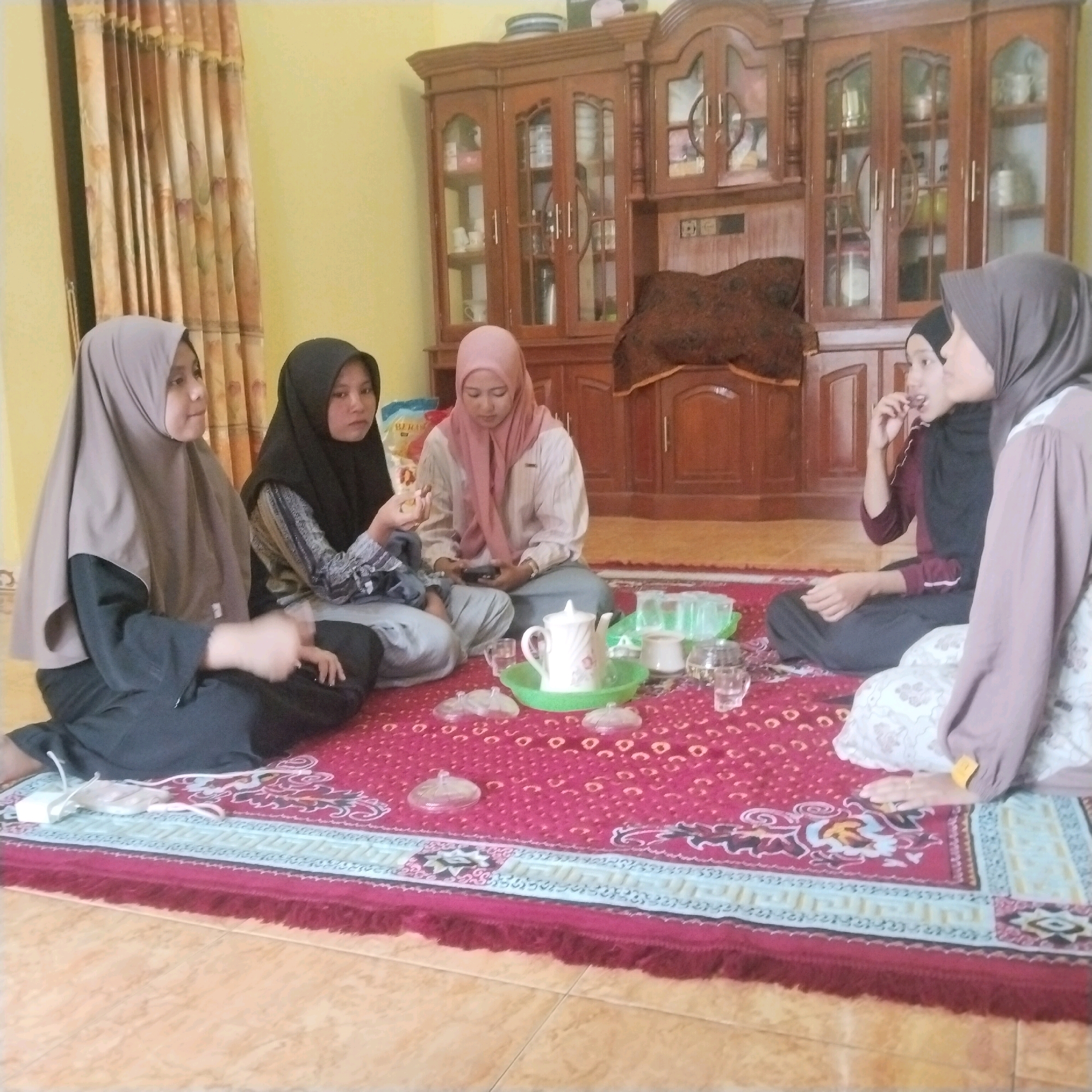
The image depicts five young women, all wearing hijabs, seated on a patterned red rug on a tiled floor in what appears to be a domestic setting. The women are gathered around a low table or mat laden with drinks and snacks. In the background, a large wooden cabinet with glass doors stands against a yellow wall, suggesting a living room or dining area. Specifically, the women are arranged in a semi-circle. The woman on the far left wears a light brown hijab and a dark outfit. To her right, another woman in a black hijab is visible. Next to her is a woman in a pale pink hijab and a light-colored, striped shirt. The fourth woman from the left wears a black hijab and a burgundy long-sleeved shirt, and she is actively eating. The woman on the far right has a beige hijab and is looking towards the woman in the pink hijab. On the rug in front of them are several items, including a white teapot with floral motifs, several clear glasses, and what appear to be bowls or dishes holding food. Some of the women's hands are visible, engaged in eating or gesturing. The overall atmosphere appears relaxed and social, suggesting a casual gathering or meal. The scene is indoors, with natural light coming from an unseen source, possibly a window to the left, indicated by the curtains visible in the upper left portion of the image. The tiled floor has a light brown, speckled appearance. The cabinet in the background is detailed and appears to be a traditional piece of furniture, possibly containing decorative items or dishes within its glass compartments. There is also a dark-colored patterned cushion or throw behind the cabinet. The image captures a moment of shared activity among the women, highlighting their interaction and the communal aspect of the gathering. The presence of tea, snacks, and their relaxed postures all contribute to this impression. The setting itself, with the traditional wooden cabinet and patterned rug, suggests a home environment that might be found in a city like Banyubunih, Indonesia, given the attire and implied cultural context of the individuals depicted.
Loading AttnAds…
No transactions found