
Sign in
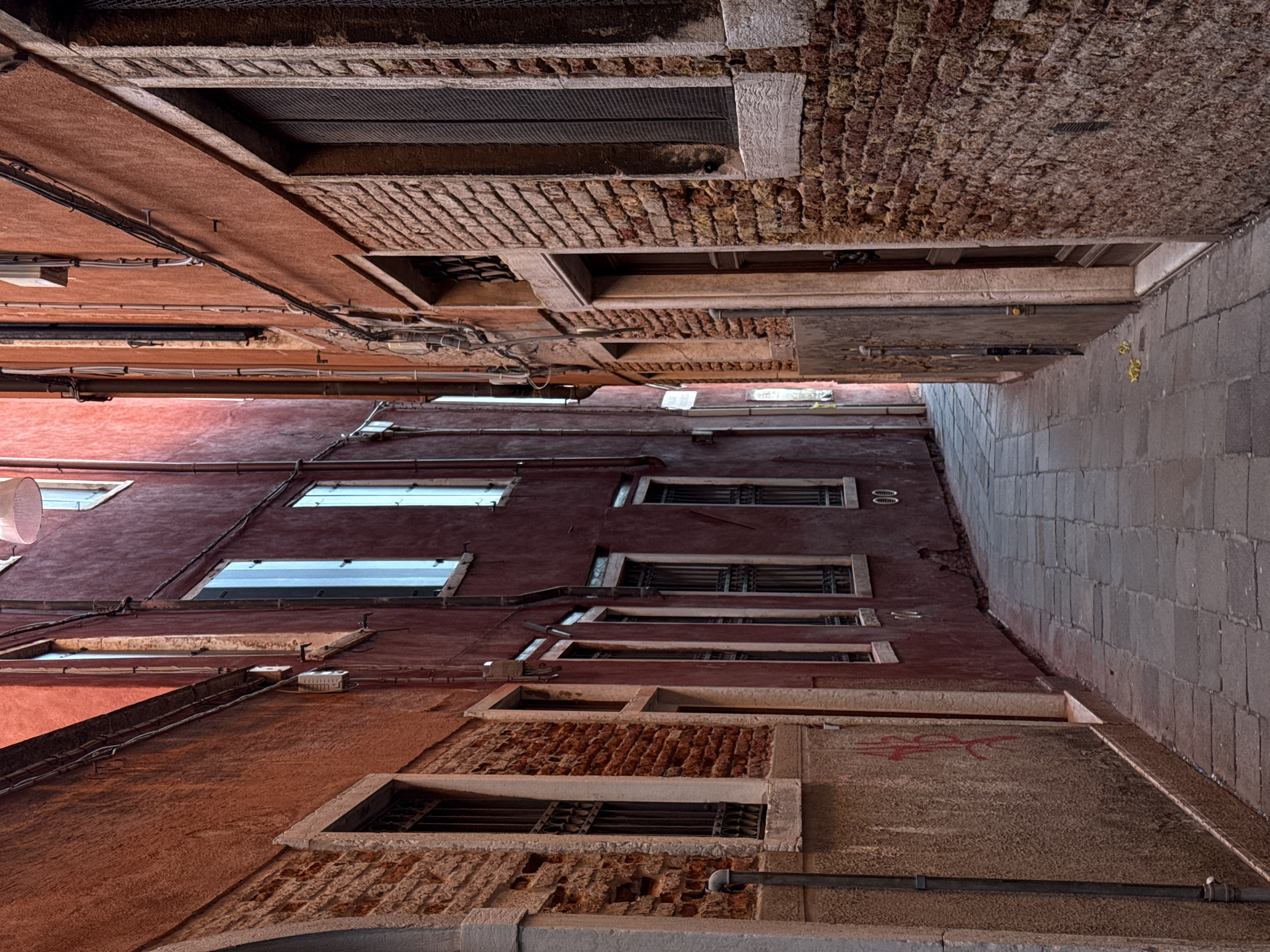
This image captures a view looking steeply upwards within a very narrow passage between buildings, likely an alleyway or a covered canal. The perspective is tilted, as if the camera were held at a low angle and pointed towards the sky, showcasing the intricate structures overhead and the close proximity of the surrounding edifices.

On the left side of the passage, a building with reddish-brown walls rises, featuring multiple windows arranged vertically. These windows have light-colored frames, and some appear to have internal grates or slatted blinds. Various pipes, electrical conduits, and wires are visible running horizontally and diagonally across the wall, indicating a dense network of utilities. The wall surface itself has a textured, aged appearance.

On the right side, a substantial wall constructed from large, grey, rectangular stone blocks forms a solid, imposing barrier. Small clusters of light-colored plant growth, possibly moss or weeds, can be seen clinging to this wall, particularly towards the upper sections.

Above, the passage is covered by multiple layers of bridges, walkways, and extensions of the buildings, creating a complex overhead canopy that largely obscures the sky. These overhead structures are a mix of materials:
*   Sections of exposed brickwork are prominent, some arranged in a classic pattern, others appearing more rough and weathered.
*   Flat, reddish-brown panels, resembling plaster or painted wood, cover other sections, often with visible seams and attachment points.
*   Metal grates or mesh are integrated into some openings and structural elements, providing ventilation or support.
*   Numerous pipes, cables, and wires are densely attached to the undersides of these overhead structures, weaving across the entire width of the passage.
*   Occasional light fixtures or utility boxes are also affixed to the overhead surfaces.

Notable details include a faint red graffiti-like marking on one of the lower overhead structures on the right side. High up on the reddish-brown wall on the left, a light-colored rectangular sign is visible, though its text is not decipherable. The overall lighting is somewhat dim and diffused, consistent with a narrow, enclosed space that receives limited direct sunlight. The dominant color palette consists of earthy tones: various shades of reddish-brown, terracotta, dark grey, and some lighter beige or off-white. The textures are rich and varied, from rough stone and gritty brick to smoother plaster and the taut lines of wires. No people are visible, and no specific activity is occurring, presenting a static, architectural study of an old, densely built urban environment.
FM-euyLP2

Feb 17, 2026

Venice, Italy

Stake attention in this memory

Venice
architecture
alley
urban
buildings

This image captures a view looking steeply upwards within a very narrow passage between buildings, likely an alleyway or a covered canal. The perspective is tilted, as if the camera were held at a low angle and pointed towards the sky, showcasing the intricate structures overhead and the close proximity of the surrounding edifices. On the left side of the passage, a building with reddish-brown walls rises, featuring multiple windows arranged vertically. These windows have light-colored frames, and some appear to have internal grates or slatted blinds. Various pipes, electrical conduits, and wires are visible running horizontally and diagonally across the wall, indicating a dense network of utilities. The wall surface itself has a textured, aged appearance. On the right side, a substantial wall constructed from large, grey, rectangular stone blocks forms a solid, imposing barrier. Small clusters of light-colored plant growth, possibly moss or weeds, can be seen clinging to this wall, particularly towards the upper sections. Above, the passage is covered by multiple layers of bridges, walkways, and extensions of the buildings, creating a complex overhead canopy that largely obscures the sky. These overhead structures are a mix of materials: * Sections of exposed brickwork are prominent, some arranged in a classic pattern, others appearing more rough and weathered. * Flat, reddish-brown panels, resembling plaster or painted wood, cover other sections, often with visible seams and attachment points. * Metal grates or mesh are integrated into some openings and structural elements, providing ventilation or support. * Numerous pipes, cables, and wires are densely attached to the undersides of these overhead structures, weaving across the entire width of the passage. * Occasional light fixtures or utility boxes are also affixed to the overhead surfaces. Notable details include a faint red graffiti-like marking on one of the lower overhead structures on the right side. High up on the reddish-brown wall on the left, a light-colored rectangular sign is visible, though its text is not decipherable. The overall lighting is somewhat dim and diffused, consistent with a narrow, enclosed space that receives limited direct sunlight. The dominant color palette consists of earthy tones: various shades of reddish-brown, terracotta, dark grey, and some lighter beige or off-white. The textures are rich and varied, from rough stone and gritty brick to smoother plaster and the taut lines of wires. No people are visible, and no specific activity is occurring, presenting a static, architectural study of an old, densely built urban environment.

transactions
revenues
stakers
Earliest
Latest
Highest stake

No transactions found

More from this user

More from Venice

FM-euyLP2

Feb 17, 2026

Venice, Italy

Licensed under Creative Commons Attribution 4.0 International License. You are free to share and adapt this content with proper attribution.