
Sign in
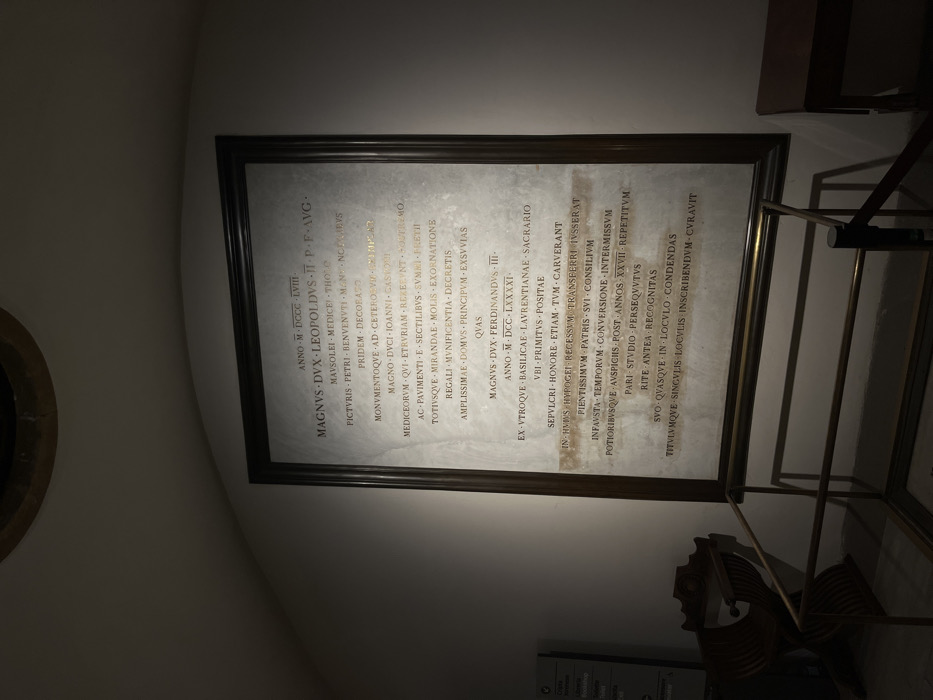
This media file displays a large, rectangular marble plaque with Latin inscriptions, mounted vertically on a light-colored wall in a dimly lit interior. The plaque is framed by a dark, simple border. The setting appears to be a historical or monumental building, likely a crypt or mausoleum, suggested by the architectural curves of the wall and the nature of the inscription.

The primary object is the inscription itself, which details historical events related to the Medici family. The text commemorates Grand Duke Leopold II (dated 1858) who oversaw the decoration of the Medici Mausoleum, including paintings by Pietro Benvenuti, and the paving with marble. It also mentions the transfer of the remains of Medici princes, which was initiated by Grand Duke Ferdinand III in 1791 from the Laurentian Basilica but was interrupted for 27 years due to "inauspicious times" before being resumed and completed by Leopold II. The inscription notes that each princely remain was placed in its own locker with an individual inscription.

Visible details include the pale marble of the plaque, dark shadows cast by the dim lighting, and a dark wooden frame. To the right of the plaque, parts of a brass railing or barrier are visible, along with an ornate, dark wooden piece of furniture, possibly a chair, in deep shadow. On the far left, a circular architectural detail or opening is partially visible on the wall. The location context of Firenze, Italy, aligns perfectly with the historical figures and events described on the plaque, strongly suggesting the setting is within the Medici Chapels or a similar part of the Basilica of San Lorenzo. The solemn tone of the inscription and the dim lighting contribute to a reverent atmosphere.
FM-oNt2k1

Feb 9, 2025

Firenze, Italy

Stake attention in this memory

This media file displays a large, rectangular marble plaque with Latin inscriptions, mounted vertically on a light-colored wall in a dimly lit interior. The plaque is framed by a dark, simple border. The setting appears to be a historical or monumental building, likely a crypt or mausoleum, suggested by the architectural curves of the wall and the nature of the inscription. The primary object is the inscription itself, which details historical events related to the Medici family. The text commemorates Grand Duke Leopold II (dated 1858) who oversaw the decoration of the Medici Mausoleum, including paintings by Pietro Benvenuti, and the paving with marble. It also mentions the transfer of the remains of Medici princes, which was initiated by Grand Duke Ferdinand III in 1791 from the Laurentian Basilica but was interrupted for 27 years due to "inauspicious times" before being resumed and completed by Leopold II. The inscription notes that each princely remain was placed in its own locker with an individual inscription. Visible details include the pale marble of the plaque, dark shadows cast by the dim lighting, and a dark wooden frame. To the right of the plaque, parts of a brass railing or barrier are visible, along with an ornate, dark wooden piece of furniture, possibly a chair, in deep shadow. On the far left, a circular architectural detail or opening is partially visible on the wall. The location context of Firenze, Italy, aligns perfectly with the historical figures and events described on the plaque, strongly suggesting the setting is within the Medici Chapels or a similar part of the Basilica of San Lorenzo. The solemn tone of the inscription and the dim lighting contribute to a reverent atmosphere.

transactions
revenues
stakers
Earliest
Latest
Highest stake

No transactions found

More from this user

More from Firenze

FM-oNt2k1

Feb 9, 2025

Firenze, Italy

Licensed under Creative Commons Attribution 4.0 International License. You are free to share and adapt this content with proper attribution.