
Stake attention in this memory
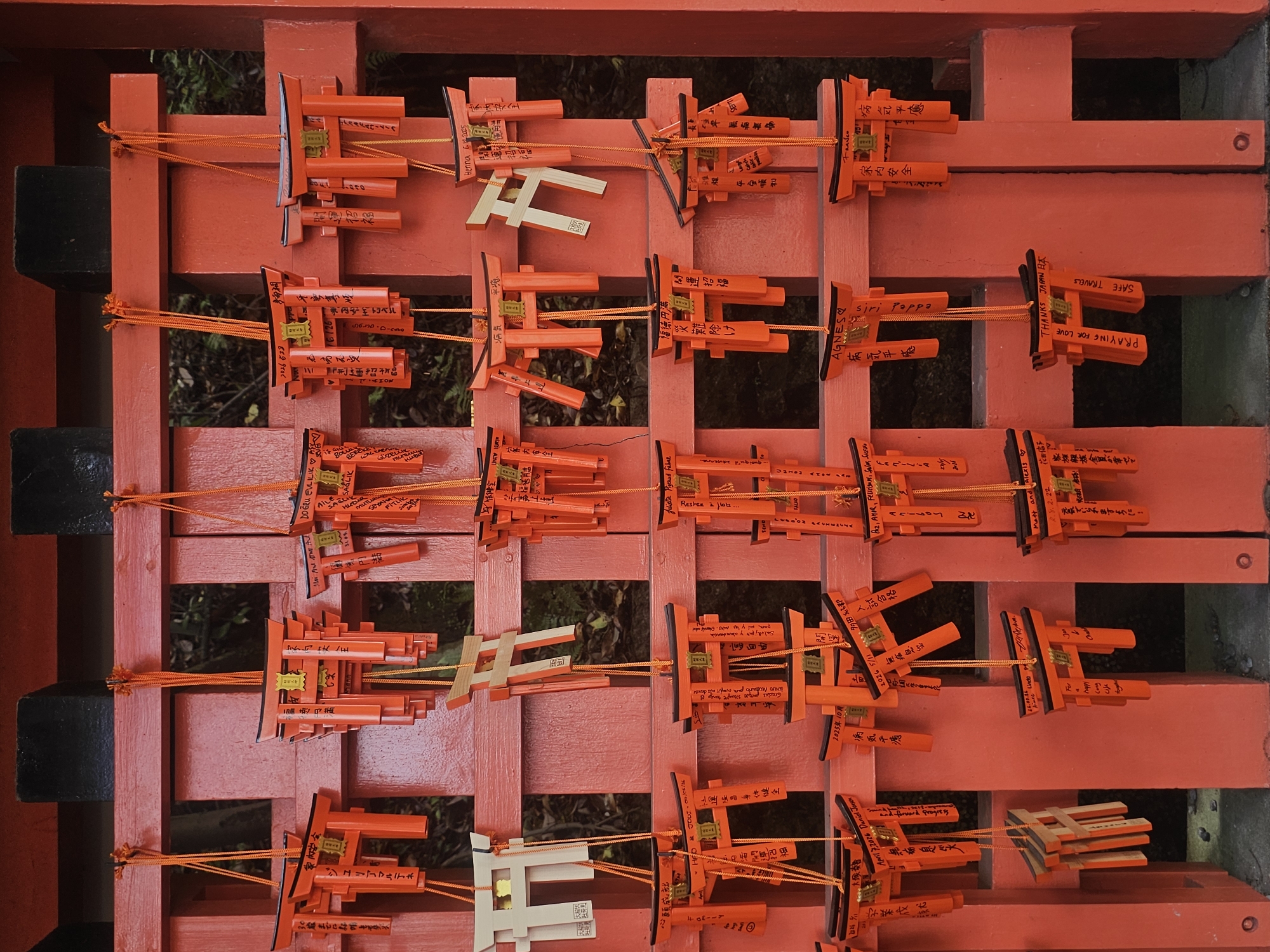
The image presents a dense display of vibrant orange, miniature torii gate-shaped votive tablets, known as "ema," affixed to a bright red wooden lattice or fence. Each ema is tied securely to the grid with thin orange strings, creating an intricate pattern across the frame. Through the gaps in the lattice, dark green foliage, possibly from trees or bushes, is visible in the background, suggesting an outdoor setting at a Shinto shrine. This scene depicts a common practice at Japanese shrines, such as those found in Kyoto, where visitors write down their wishes, prayers, or expressions of gratitude on these wooden tablets and then hang them for the kami (deities) to receive. The act symbolizes the offering of one's hopes and thanks. Notable details include the uniformity in the shape and primary color of the ema, with a few exceptions being unpainted or lighter wood. The red color of the lattice and tablets is characteristic of many Japanese shrines. The handwritten text on the ema is diverse, appearing in multiple languages including Japanese, English, French, Spanish, and Turkish, indicating a wide range of international visitors. Common themes among the visible wishes include requests for good health ("病気平癒," "無病息災," "Salud," "family health"), family safety ("家内安全," "Aile Salığı"), academic success ("学業成就"), love ("PRAYING FOR LOVE"), safe travels, the fulfillment of wishes ("心願成就"), and general good fortune ("開運招福"). Specific names and dates, such as "April 7, 2026," "HED & JODI 04/05/26," and "2.8.2.22," are also visible, personalizing many of the offerings.
Symbol
BA351
Volume
2,855
Creator
+$0.01
Revenue
+$0.00
TVL
$1.27