
Sign in
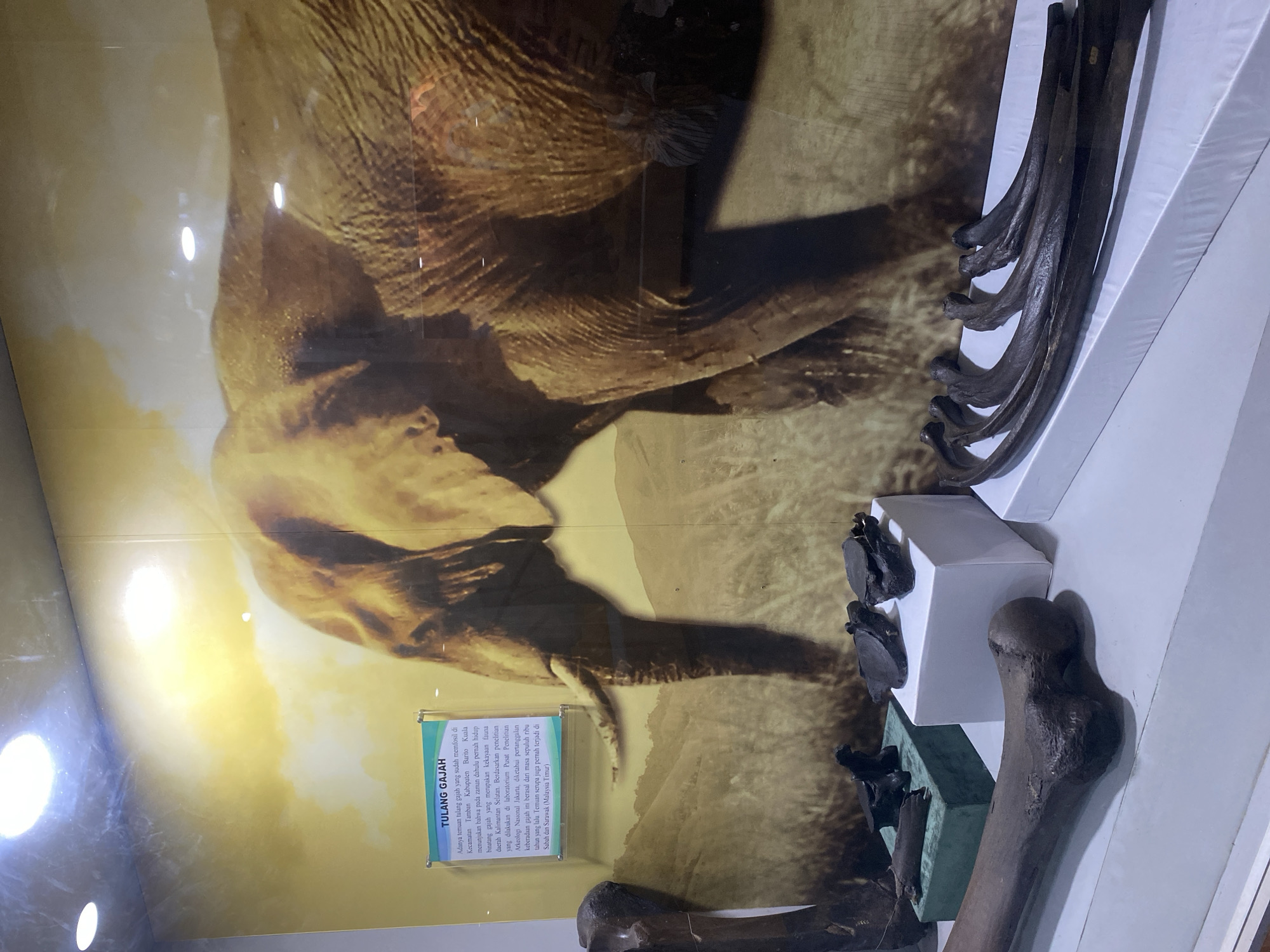
The image displays a museum exhibit featuring fossilized elephant bones. In the foreground, a large fossilized femur bone is positioned horizontally. Behind it, on display platforms, are smaller fossilized bone fragments and a set of fossilized ribs. A large, stylized backdrop of an elephant in a savanna landscape dominates the scene. To the left of the exhibit, a descriptive plaque in Indonesian, titled "TULANG GAJAH," provides information about the elephant fossils. The text on the plaque indicates that these elephant fossils were found in the district of Tamban, Barito Kuala Regency, South Kalimantan, and are evidence of the rich fauna that once lived there. The plaque also mentions research conducted at the National Archeology Research Center in Jakarta, which identified the elephant fossils as originating from the Pleistocene epoch, and notes that similar fossils have been found in Sabah and Sarawak, Malaysia. The exhibit appears to be located in a museum in Banjarbaru, Indonesia, as suggested by the context of the plaque's location. The lighting suggests an indoor setting with artificial lights illuminating the exhibit. There are no people visible in the image.
Eyachan

Jun 27, 2026, 4:24 AM

Banjarbaru, Indonesia

Stake attention in this memory

nostalgic
awe-inspiring
educational
ancient
curious

The image displays a museum exhibit featuring fossilized elephant bones. In the foreground, a large fossilized femur bone is positioned horizontally. Behind it, on display platforms, are smaller fossilized bone fragments and a set of fossilized ribs. A large, stylized backdrop of an elephant in a savanna landscape dominates the scene. To the left of the exhibit, a descriptive plaque in Indonesian, titled "TULANG GAJAH," provides information about the elephant fossils. The text on the plaque indicates that these elephant fossils were found in the district of Tamban, Barito Kuala Regency, South Kalimantan, and are evidence of the rich fauna that once lived there. The plaque also mentions research conducted at the National Archeology Research Center in Jakarta, which identified the elephant fossils as originating from the Pleistocene epoch, and notes that similar fossils have been found in Sabah and Sarawak, Malaysia. The exhibit appears to be located in a museum in Banjarbaru, Indonesia, as suggested by the context of the plaque's location. The lighting suggests an indoor setting with artificial lights illuminating the exhibit. There are no people visible in the image.

transactions
revenues
stakers
Earliest
Latest
Highest stake

No transactions found

More from this user

More from Banjarbaru

Eyachan

Jun 27, 2026, 4:24 AM

Banjarbaru, Indonesia

Licensed under Creative Commons Attribution 4.0 International License. You are free to share and adapt this content with proper attribution.