
Stake attention in this memory
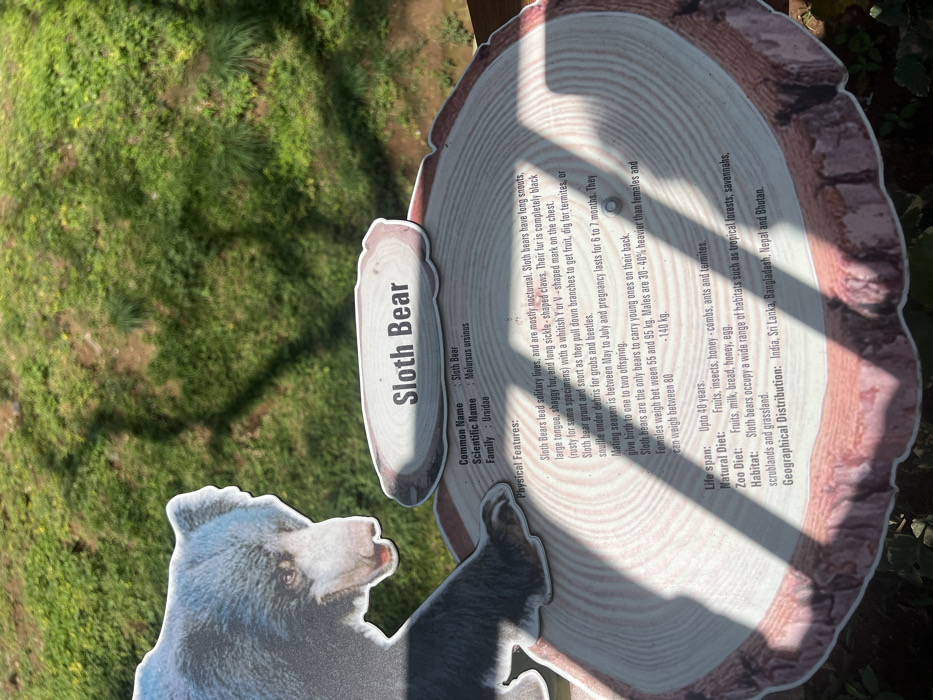
The image displays an outdoor scene, likely at a zoo or wildlife sanctuary in Mysuru, India, given the context. The main subject is an informational sign about a "Sloth Bear" (Melursus ursinus, Family: Ursidae), accompanied by a cutout image of the bear. The sign is shaped like a cross-section of a tree trunk, with a lighter, circular center containing the text and a darker, textured edge resembling bark. A smaller, similar-shaped cutout on the left provides the main title, "Sloth Bear." To the bottom left of the main sign, a separate, grey-toned cutout of a sloth bear's head and upper body is visible, partially obscured by shadow. The text on the sign details the Sloth Bear's characteristics: - **Physical Features:** Solitary, nocturnal, long snouts, large tongue, shaggy black fur (some rusty) with a whitish Y or V-shaped mark on the chest, sickle-shaped claws. They grunt and snort while foraging for fruit, termites, and grubs. - **Reproduction:** Mating season is May to July, with a 6-7 month pregnancy yielding one to two offspring. Uniquely, they carry their young on their back. - **Weight:** Females weigh 55-95 kg, males 80-140 kg (30-40% heavier). - **Life Span:** Up to 40 years. - **Diet:** Naturally, they eat fruits, insects, honeycombs, ants, and termites. In zoos, their diet includes fruits, milk, bread, honey, and egg. - **Habitat:** They occupy tropical forests, savannahs, scrublands, and grasslands. - **Geographical Distribution:** India, Sri Lanka, Bangladesh, Nepal, and Bhutan. The background consists of vibrant green vegetation, likely grass and possibly some trees, suggesting a natural environment. Bright sunlight casts distinct shadows across the sign, indicating it is daytime with clear weather. No people are visible, but the sign's presence implies an activity of visitor education.
No transactions found