
Stake attention in this memory
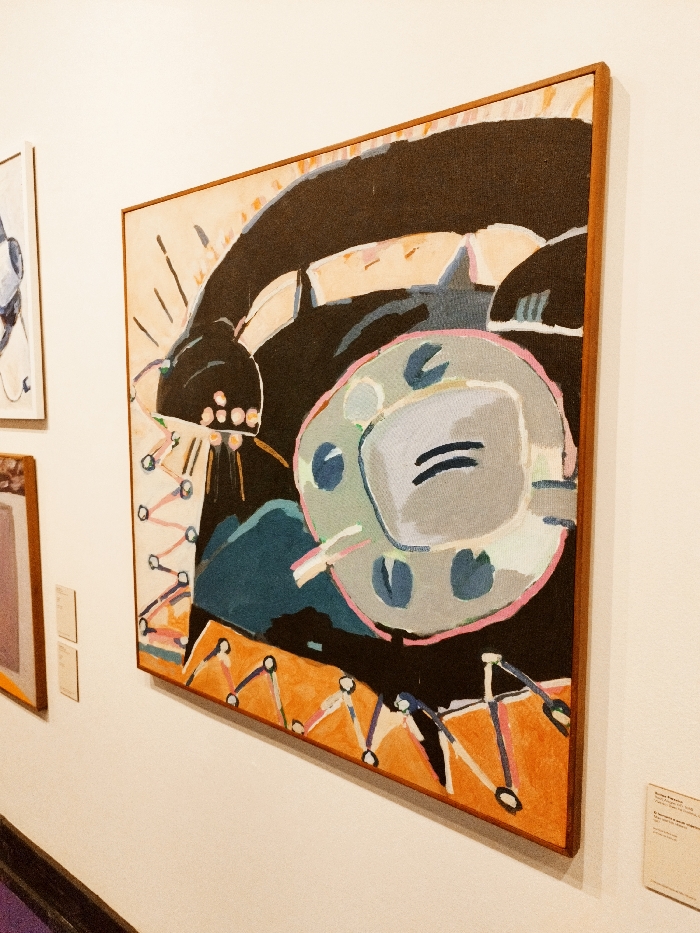
The scene depicts an interior view of an art exhibition space. A large, rectangular abstract painting, enclosed in a slender light brown wooden frame, is centrally displayed on a plain, light-colored (cream or off-white) wall. The painting features a stylized, semi-abstract representation of an antique rotary telephone, dominated by a dark (black/dark blue) background. A prominent light grey circular form, possibly the dial, is visible on the right side of the painting, accented with light blue and pink lines and shapes. A large, curved dark mass, suggestive of the telephone receiver, extends from the upper left. The lower section of the painting presents an orange-brown area with black and white geometric patterns. To the left of the main painting, a portion of another framed artwork is visible. Below this secondary artwork, two small, white informational placards are affixed to the wall. To the right of the main painting, a larger white informational placard is present, displaying text in Portuguese. The visible text includes "Bernardo Cid" (the artist's name) and a partial title, "O homem está a morrer de ciumes..." (The man is dying of jealousy...). The environment is brightly and uniformly lit, typical of a museum or gallery. No individuals, actions, or direct interactions are visible within the frame. Based on the identified artist, Bernardo Cid, and the work title "O homem está a morrer de ciúmes" (1966), which is part of its collection, the location is the Museu de Arte Moderna de São Paulo (MAM-SP), situated within Ibirapuera Park in the city of São Paulo, Brazil.
Loading AttnAds…
No transactions found