Sign in
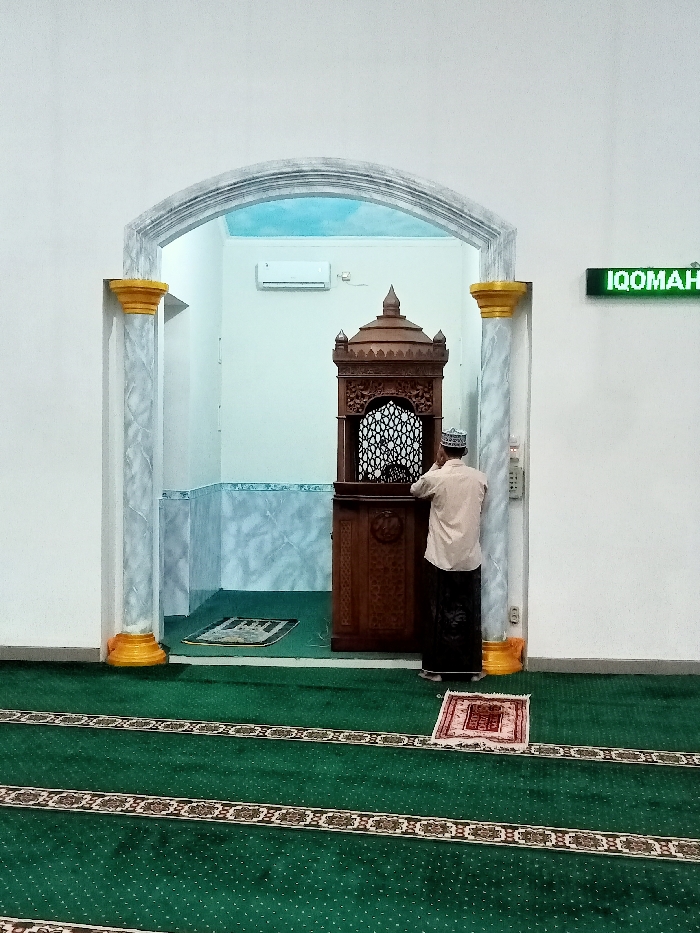
This image captures the interior of a mosque in Pati, Indonesia, characterized by its prayer space and religious furnishings. The scene is dominated by a central arched alcove, possibly indicating the mihrab area, framed by two decorative columns with golden capitals and bases. Inside the alcove, the lower walls feature a light blue and grey mottled tile pattern, and an air conditioning unit is mounted high on the back wall. The ceiling within the arch is painted to resemble a clear blue sky, adding an ethereal touch.

At the heart of the alcove stands an ornate, dark wooden structure, likely a minbar or a special prayer station. It features intricate carvings, latticework, and a multi-tiered domed top. A single man, seen from behind, is standing in front of this wooden structure. He is dressed in a light-colored long-sleeved shirt, a dark sarong or traditional lower garment, and a white peci (skullcap), typical attire for Muslim men during prayer in the region. His posture, with hands seemingly raised or resting on the structure, suggests he is engaged in prayer, supplication, or a moment of devotion.

The floor of the mosque is covered with a plush green prayer carpet, detailed with horizontal decorative strips featuring geometric and floral patterns. A small prayer mat with a masjid (mosque) design lies on the green carpet inside the alcove, and another smaller, reddish prayer mat is positioned on the main carpet in the foreground, indicating a prayer spot. On the right wall, outside the arched alcove, a green digital display sign is visible, showing the text "IQOMAH." Iqomah (or Iqama) is the second call to prayer in Islam, signaling the immediate commencement of the congregational prayer. The overall lighting is bright and even, characteristic of an indoor setting, and there are no direct cues for the time of day or outdoor weather.
F
FM-nno1D3

Feb 3, 2025

Pati, Indonesia

Stake attention in this memory

This image captures the interior of a mosque in Pati, Indonesia, characterized by its prayer space and religious furnishings. The scene is dominated by a central arched alcove, possibly indicating the mihrab area, framed by two decorative columns with golden capitals and bases. Inside the alcove, the lower walls feature a light blue and grey mottled tile pattern, and an air conditioning unit is mounted high on the back wall. The ceiling within the arch is painted to resemble a clear blue sky, adding an ethereal touch. At the heart of the alcove stands an ornate, dark wooden structure, likely a minbar or a special prayer station. It features intricate carvings, latticework, and a multi-tiered domed top. A single man, seen from behind, is standing in front of this wooden structure. He is dressed in a light-colored long-sleeved shirt, a dark sarong or traditional lower garment, and a white peci (skullcap), typical attire for Muslim men during prayer in the region. His posture, with hands seemingly raised or resting on the structure, suggests he is engaged in prayer, supplication, or a moment of devotion. The floor of the mosque is covered with a plush green prayer carpet, detailed with horizontal decorative strips featuring geometric and floral patterns. A small prayer mat with a masjid (mosque) design lies on the green carpet inside the alcove, and another smaller, reddish prayer mat is positioned on the main carpet in the foreground, indicating a prayer spot. On the right wall, outside the arched alcove, a green digital display sign is visible, showing the text "IQOMAH." Iqomah (or Iqama) is the second call to prayer in Islam, signaling the immediate commencement of the congregational prayer. The overall lighting is bright and even, characteristic of an indoor setting, and there are no direct cues for the time of day or outdoor weather.

transactions
revenues
stakers
Earliest
Latest
Highest stake

No transactions found

More from this user

More from Pati

FFM-nno1D3

Feb 3, 2025

Pati, Indonesia

Licensed under Creative Commons Attribution 4.0 International License. You are free to share and adapt this content with proper attribution.