
Sign in
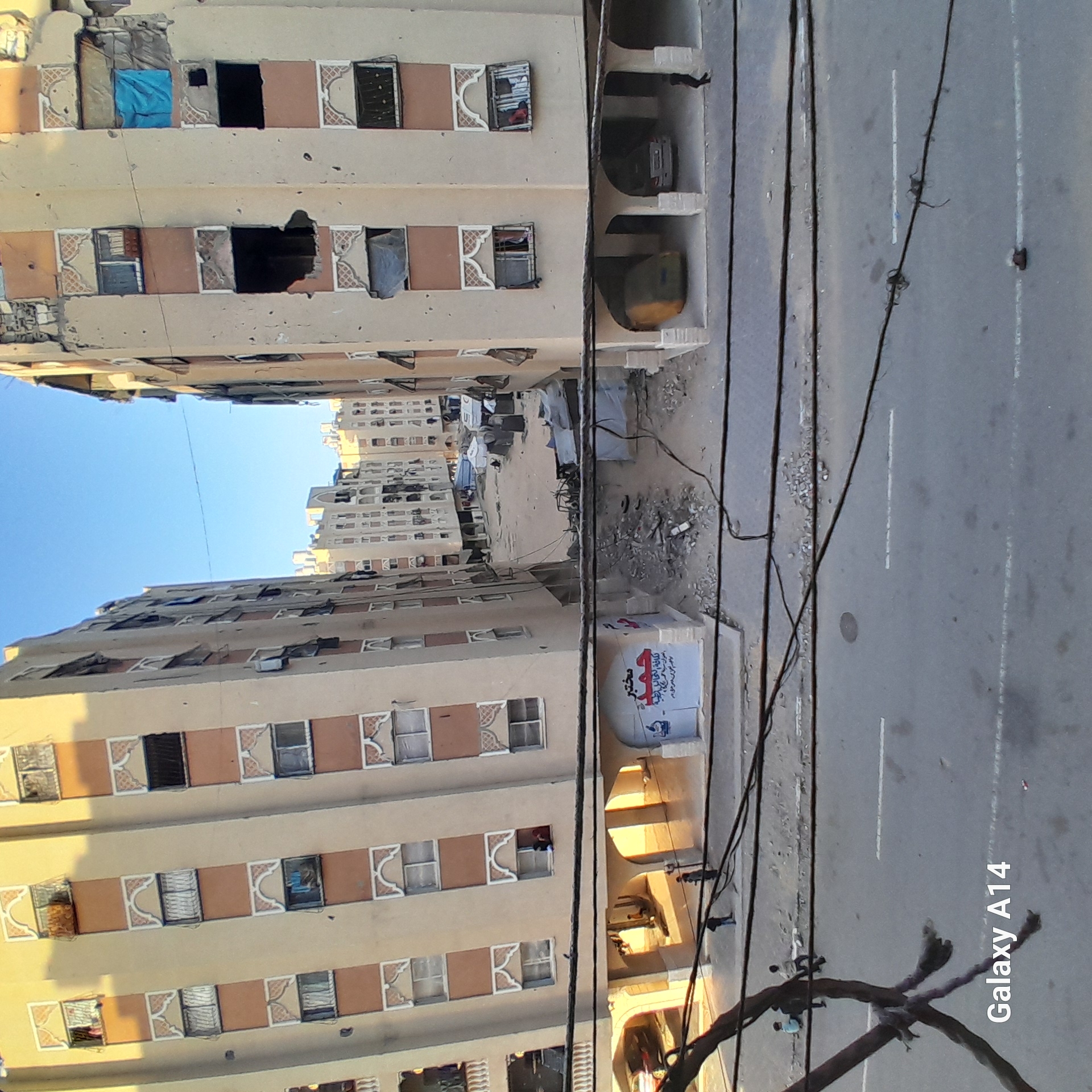
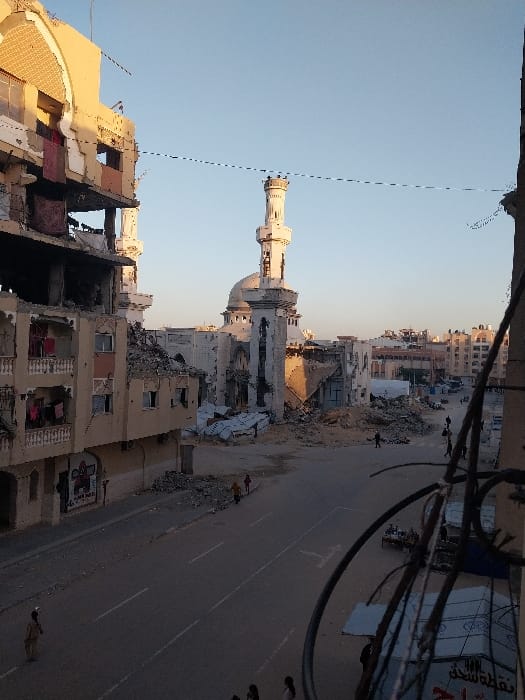
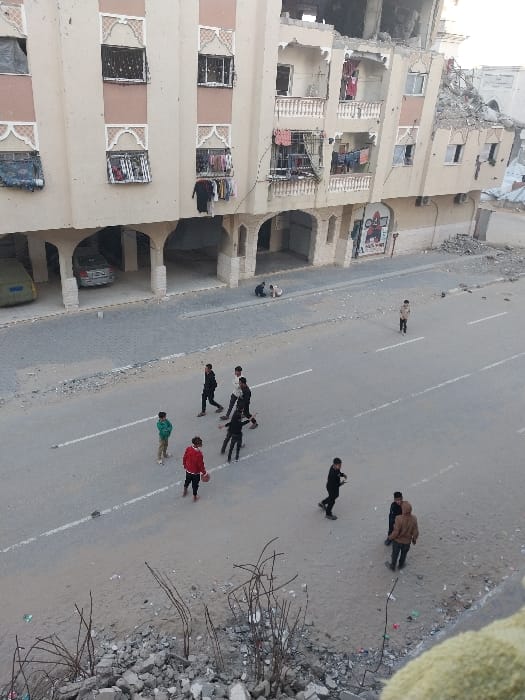
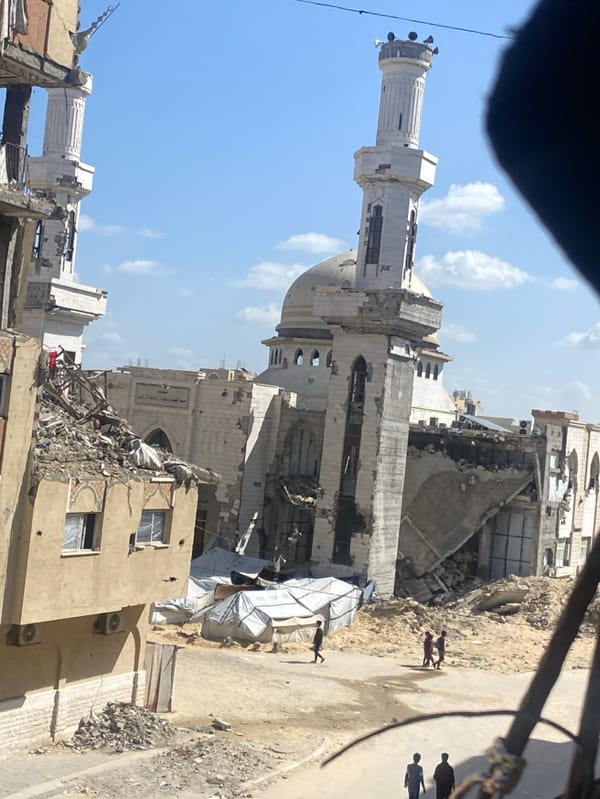
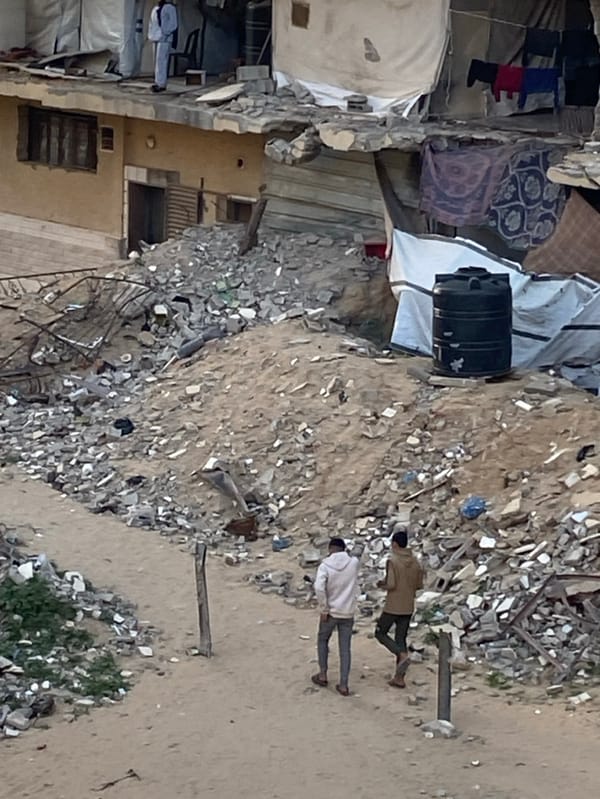
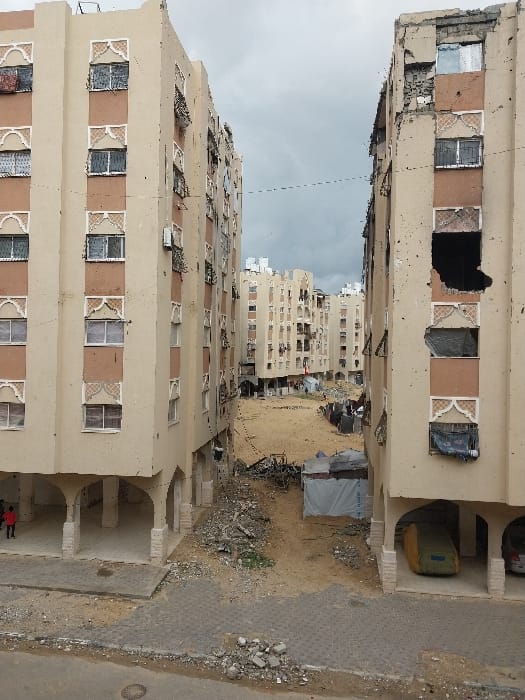
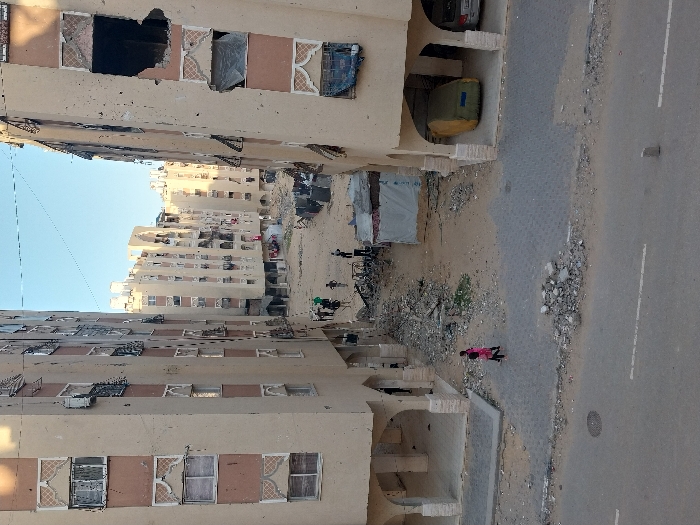
The image depicts a residential urban environment, characterized by multi-story apartment buildings flanking a central open area with a road. The perspective is from an elevated position, looking down into the space between two tall structures. The overall impression is one of disrepair and possibly hardship.

The buildings on both the left and right sides of the image are similar in construction and appearance. They are tall, light-colored (beige or pale yellow) concrete structures with multiple floors and numerous windows. Many of these windows appear damaged, with shattered panes, missing glass, or coverings that look like makeshift repairs (e.g., plastic sheeting). Some windows have decorative, possibly tiled, frames in patterns of brown and white. The walls of the buildings also show signs of wear and damage, including patches of missing plaster, dark stains, and large irregular holes, particularly visible on the upper parts of the building on the left. The architecture features some arched openings at lower levels, suggesting entrances or ground-floor spaces. Balconies are also visible on some units, many appearing cluttered or damaged.

The ground level between the buildings consists of a mix of unpaved, sandy earth and a paved road. The unpaved areas are strewn with rubble, debris, and trash, including broken concrete, rocks, and what might be discarded items. There are small patches of sparse vegetation trying to grow amidst the rubble. In the central area between the buildings, closer to the background, there are several small, makeshift structures or tents, suggesting temporary dwellings or storage. A group of several people, including children, are gathered in this area, some standing, others possibly engaged in activities that are not clearly discernible from this distance. They appear to be interacting or observing their surroundings.

A paved road runs along the right side of the image, separated from the unpaved area by a slight curb and more debris. The road surface itself shows signs of wear, with cracks and scattered small stones. A single white line is painted along the center of the visible road section, indicating a lane division. In the foreground on the paved section, a person wearing a pink or red top and dark pants is walking, heading away from the viewer. Further down the road, there's a manhole cover visible on the paved surface.

In the upper right portion of the image, adjacent to the road, there are some vehicles parked near the base of one of the buildings. One car, possibly dark-colored, is partially visible. Below it, in an arched recess of the building, there appears to be a large, bundled object covered in what looks like green or yellow tarpaulin, perhaps indicating stored goods or a makeshift shelter.

The sky is visible in the background, appearing clear and bright blue, suggesting daylight hours. The light casts soft shadows, indicating it is likely mid-morning or late afternoon. The overall scene conveys a sense of a community that has experienced significant damage or neglect, with residents living amidst the visible signs of decay and limited resources. No explicit text is visible in the image.
reham

Feb 22, 2026, 2:56 PM

Khan Yunis, Palestinian Territory

Stake attention in this memory

urban decay
damaged buildings
poverty
street scene
Middle East

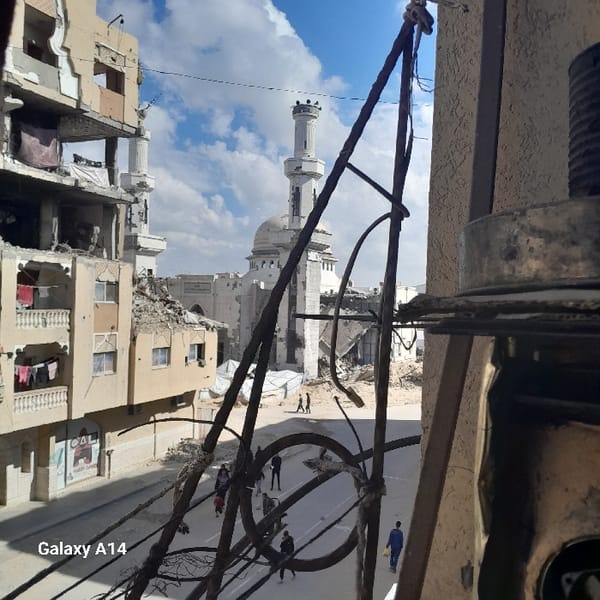
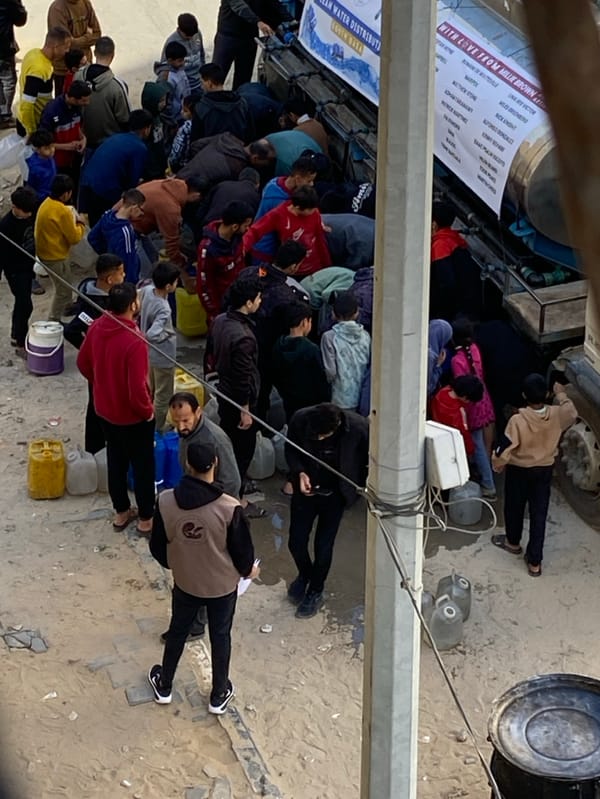
The image depicts a residential urban environment, characterized by multi-story apartment buildings flanking a central open area with a road. The perspective is from an elevated position, looking down into the space between two tall structures. The overall impression is one of disrepair and possibly hardship. The buildings on both the left and right sides of the image are similar in construction and appearance. They are tall, light-colored (beige or pale yellow) concrete structures with multiple floors and numerous windows. Many of these windows appear damaged, with shattered panes, missing glass, or coverings that look like makeshift repairs (e.g., plastic sheeting). Some windows have decorative, possibly tiled, frames in patterns of brown and white. The walls of the buildings also show signs of wear and damage, including patches of missing plaster, dark stains, and large irregular holes, particularly visible on the upper parts of the building on the left. The architecture features some arched openings at lower levels, suggesting entrances or ground-floor spaces. Balconies are also visible on some units, many appearing cluttered or damaged. The ground level between the buildings consists of a mix of unpaved, sandy earth and a paved road. The unpaved areas are strewn with rubble, debris, and trash, including broken concrete, rocks, and what might be discarded items. There are small patches of sparse vegetation trying to grow amidst the rubble. In the central area between the buildings, closer to the background, there are several small, makeshift structures or tents, suggesting temporary dwellings or storage. A group of several people, including children, are gathered in this area, some standing, others possibly engaged in activities that are not clearly discernible from this distance. They appear to be interacting or observing their surroundings. A paved road runs along the right side of the image, separated from the unpaved area by a slight curb and more debris. The road surface itself shows signs of wear, with cracks and scattered small stones. A single white line is painted along the center of the visible road section, indicating a lane division. In the foreground on the paved section, a person wearing a pink or red top and dark pants is walking, heading away from the viewer. Further down the road, there's a manhole cover visible on the paved surface. In the upper right portion of the image, adjacent to the road, there are some vehicles parked near the base of one of the buildings. One car, possibly dark-colored, is partially visible. Below it, in an arched recess of the building, there appears to be a large, bundled object covered in what looks like green or yellow tarpaulin, perhaps indicating stored goods or a makeshift shelter. The sky is visible in the background, appearing clear and bright blue, suggesting daylight hours. The light casts soft shadows, indicating it is likely mid-morning or late afternoon. The overall scene conveys a sense of a community that has experienced significant damage or neglect, with residents living amidst the visible signs of decay and limited resources. No explicit text is visible in the image.

Loading AttnAds…

transactions
revenues
stakers
Earliest
Latest
Highest stake

No transactions found

More from this user

More from Khan Yunis

reham

Feb 22, 2026, 2:56 PM

Khan Yunis, Palestinian Territory

Licensed under Creative Commons Attribution 4.0 International License. You are free to share and adapt this content with proper attribution.