
Stake attention in this memory
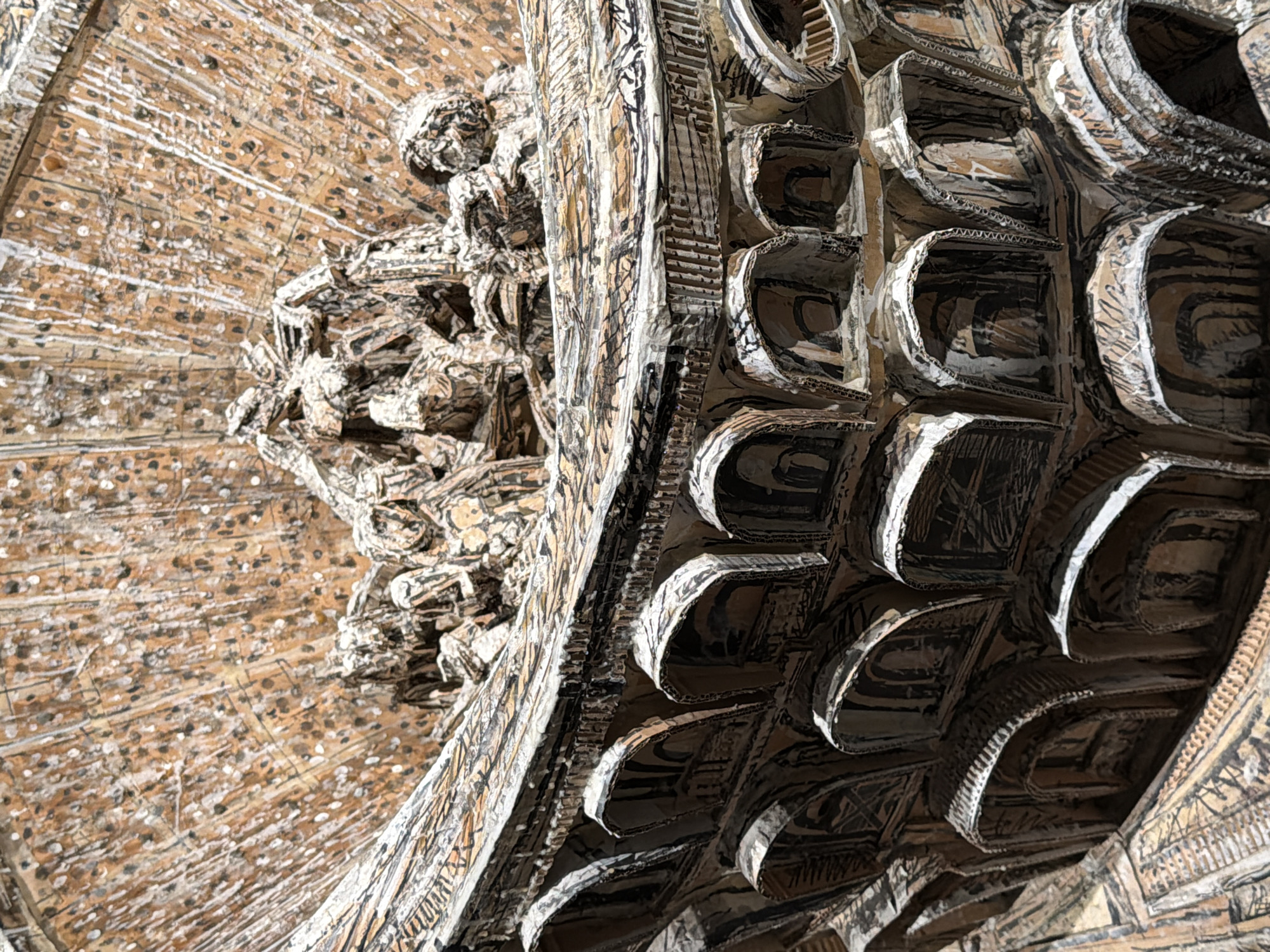
This is a close-up, low-angle shot of an abstract art installation made from repurposed cardboard. The artwork has a textured, layered appearance with a distressed, somewhat aged aesthetic. The dominant colors are earthy browns, off-whites, and black, creating a monochromatic and organic feel. The material appears to be corrugated cardboard, with its characteristic ridged texture visible throughout. The artist has manipulated the cardboard by cutting, folding, and layering it to create a complex, three-dimensional form. Some areas are painted with thin lines and washes of black and white, adding depth and definition to the shapes. The overall impression is of a chaotic yet meticulously constructed sculpture. The composition is dominated by curved and angular elements. On the right side of the frame, a series of arched, hollow forms, resembling beehives or alcoves, are arranged in rows. These are outlined with white, giving them a stark, graphic quality. The left side of the image features a more densely packed, almost crystalline structure, with sharp edges and irregular protrusions. Small white dots are scattered across some of the larger flat surfaces, resembling either intentional design elements or imperfections in the material. The lighting suggests a bright, possibly outdoor setting, casting distinct shadows that emphasize the three-dimensionality of the artwork. The close-up perspective offers no clues about the scale of the installation or its surrounding environment, beyond what can be inferred from the material itself. There is no text visible in the image. The artwork evokes a sense of organic growth or decay, like a weathered natural formation or a decaying man-made structure. The specific location being Moscow, Russia, does not provide additional context for this abstract piece.
No transactions found