
Stake attention in this memory
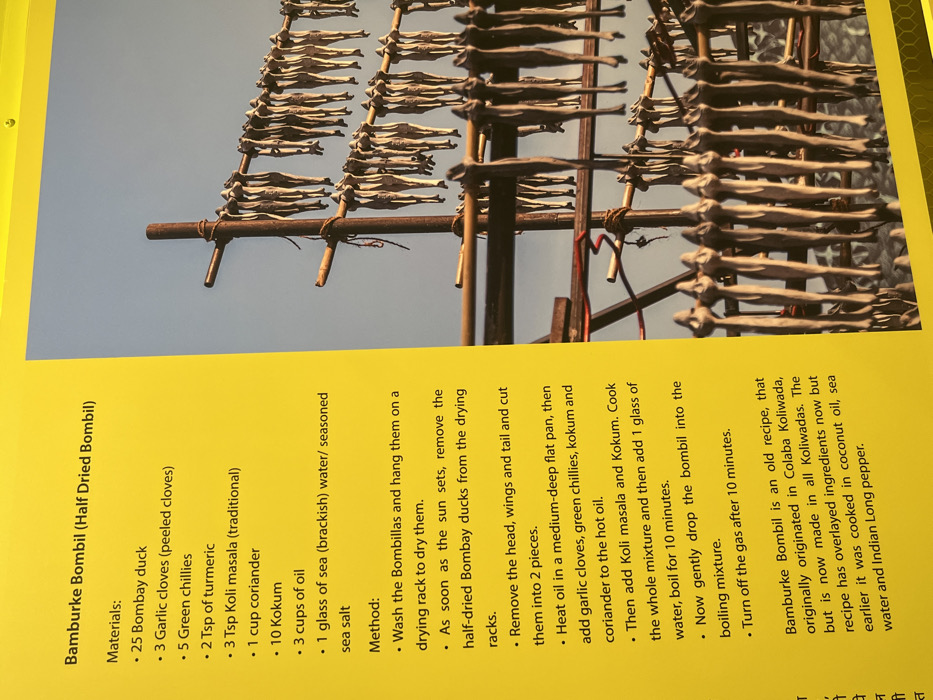
The image displays a recipe page, likely from a cookbook or a display board, featuring both a photograph and text. The photograph, occupying the upper portion of the frame, shows numerous small, dried fish, identified as Bombay ducks (Bombil), hanging on simple wooden racks against a clear, light blue sky. This suggests an outdoor setting, likely a coastal area, during daylight hours, where fish are being preserved through sun-drying. The fish are uniformly arranged on the racks, highlighting a traditional method of food preparation. No people are visible in the photograph. The lower part of the image contains printed text, rotated counter-clockwise, detailing a recipe titled "Bamburke Bombil (Half Dried Bombil)". The ingredients listed include: 25 Bombay duck, 3 Garlic cloves, 5 Green chillies, 2 Tsp of turmeric, 3 Tsp Koli masala (traditional), 1 cup coriander, 10 Kokum, 3 cups of oil, and 1 glass of sea (brackish) water/seasoned sea salt. The method outlines steps such as washing and drying the fish, then removing specific parts and cutting them. The cooking process involves heating oil, sautéing garlic, chillies, kokum, and coriander, adding Koli masala, boiling with water, and finally adding the bombil to simmer. A notable detail in the text is the historical context of the dish, stating that Bamburke Bombil is an old recipe originating in Colaba Koliwada, Mumbai, and is now prevalent in all Koliwadas. It also mentions that while modern recipes have "overlayed ingredients," it was traditionally cooked with coconut oil, sea water, and Indian Long pepper. The recipe and the name "Bombay duck" strongly suggest a connection to the fishing communities of Mumbai, India.
No transactions found