
Sign in
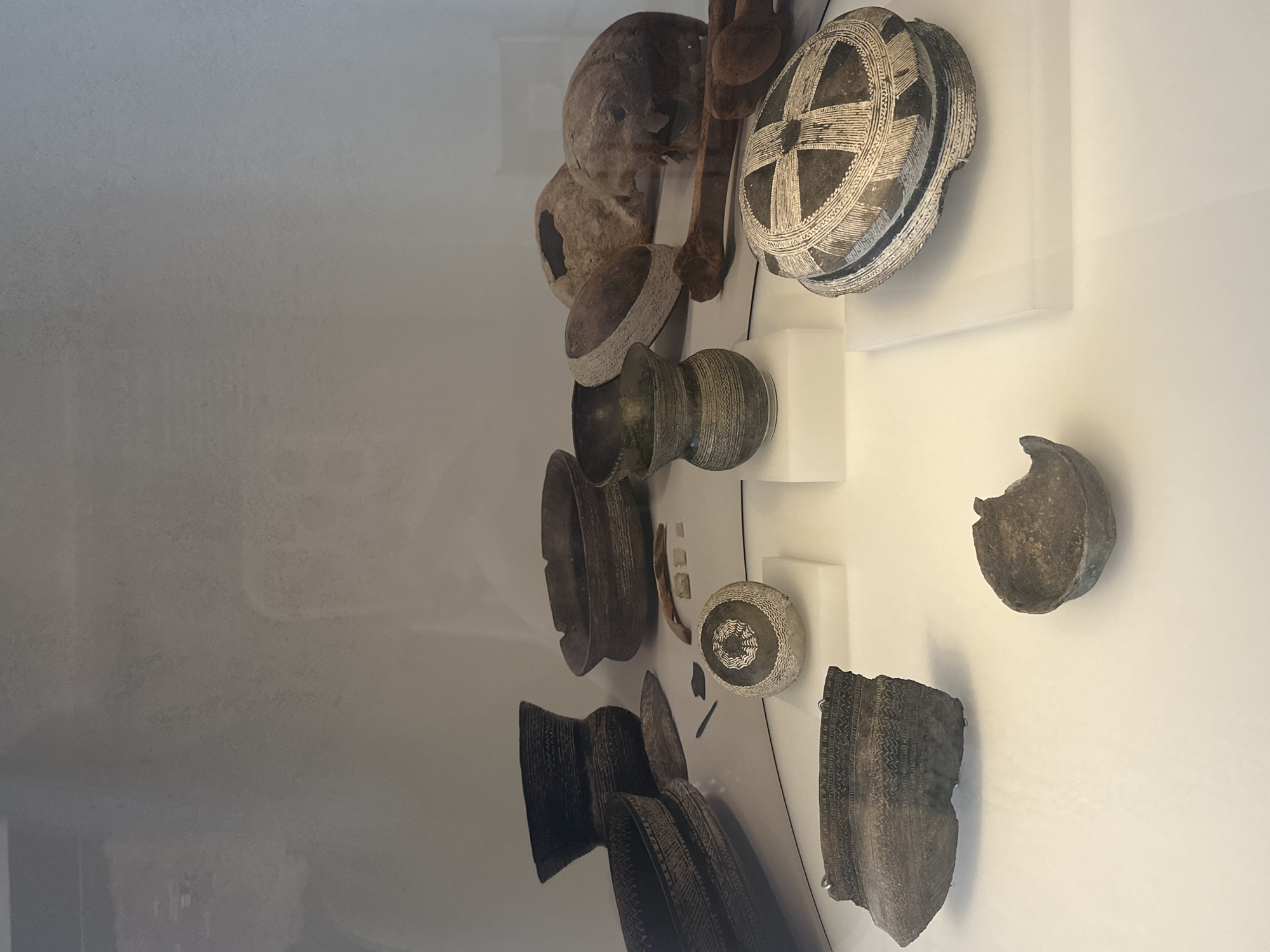
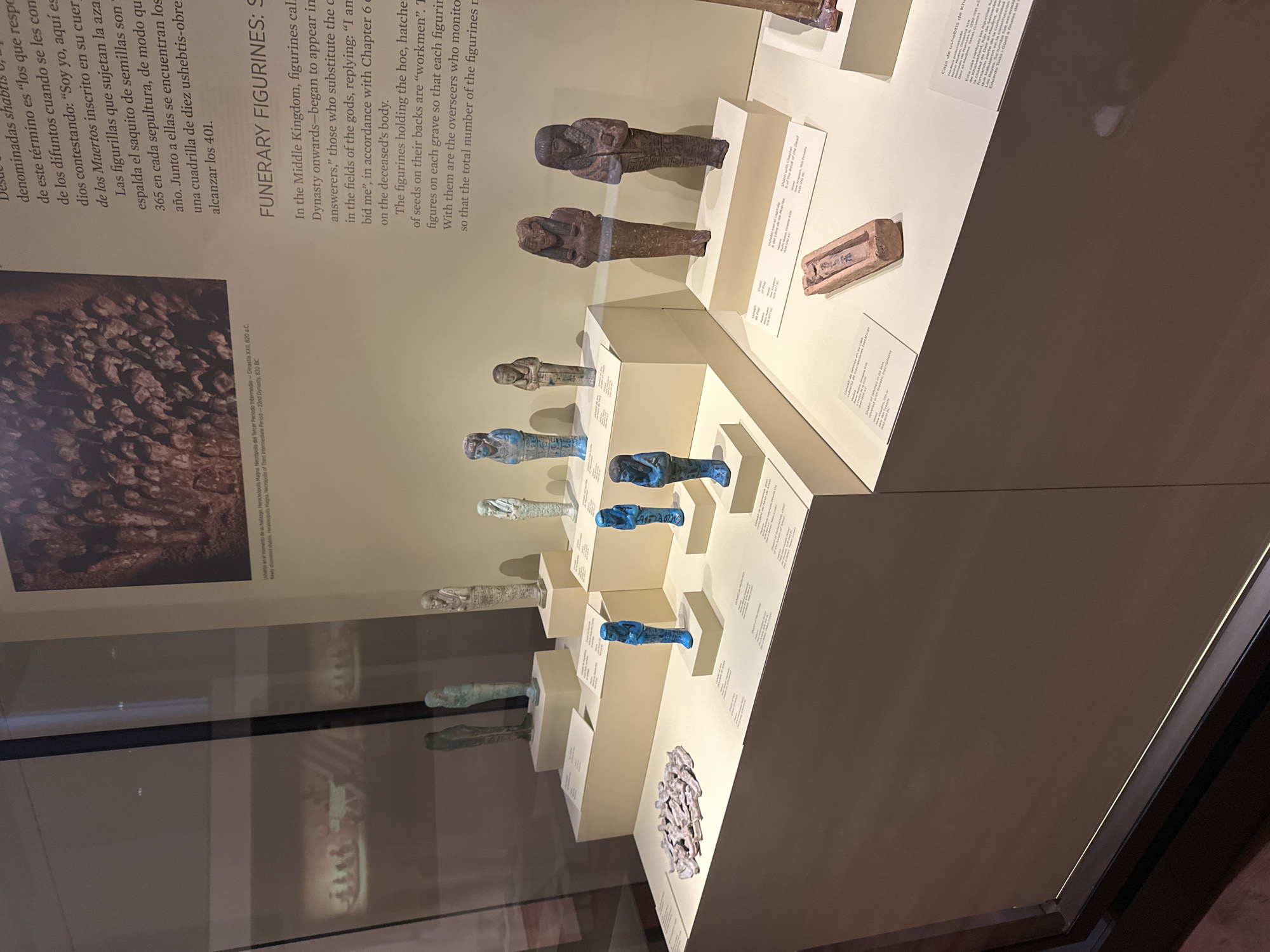
This image shows a museum display of ancient Egyptian funerary figurines, likely ushabti. The figurines are small, mummiform figures, many of which are blue or light green, suggesting they are made of faience. Some figures are depicted holding tools like hoes and baskets, indicating their role as laborers in the afterlife. They are arranged on tiered platforms within a glass display case.

Above the figurines, text panels provide context. One panel, in Spanish and English, discusses the purpose of these figurines, referring to them as "answerers" who would substitute for the deceased in performing manual labor in the afterlife. It mentions that figures were placed in graves to serve as workers and overseers. Another panel, with Spanish text, refers to a "Caja de ushebtis de Kh" (Box of Ushabtis of Kh), indicating the container these figurines may have come from. The text also mentions a location: "Heracleópolis Magna. Necrópolis del Tercer Periodo Intermedio-Dinastia XXII, 820 aC." This suggests the artifacts are from the necropolis of Heracleopolis Magna, dating to the Third Intermediate Period, Dynasty XXII, around 820 BC.

The overall scene is well-lit, highlighting the artifacts. The display case's reflective surface suggests an indoor museum setting, possibly in Madrid, Spain, as indicated by the prompt. The arrangement of the figurines and the accompanying text panels suggest an educational exhibit designed to inform visitors about ancient Egyptian burial customs and beliefs.
Tati

Jun 30, 2026

Madrid, Spain

Moment

Stake attention in this memory

somber
reflective
ancient
mysterious
reverent

This image shows a museum display of ancient Egyptian funerary figurines, likely ushabti. The figurines are small, mummiform figures, many of which are blue or light green, suggesting they are made of faience. Some figures are depicted holding tools like hoes and baskets, indicating their role as laborers in the afterlife. They are arranged on tiered platforms within a glass display case. Above the figurines, text panels provide context. One panel, in Spanish and English, discusses the purpose of these figurines, referring to them as "answerers" who would substitute for the deceased in performing manual labor in the afterlife. It mentions that figures were placed in graves to serve as workers and overseers. Another panel, with Spanish text, refers to a "Caja de ushebtis de Kh" (Box of Ushabtis of Kh), indicating the container these figurines may have come from. The text also mentions a location: "Heracleópolis Magna. Necrópolis del Tercer Periodo Intermedio-Dinastia XXII, 820 aC." This suggests the artifacts are from the necropolis of Heracleopolis Magna, dating to the Third Intermediate Period, Dynasty XXII, around 820 BC. The overall scene is well-lit, highlighting the artifacts. The display case's reflective surface suggests an indoor museum setting, possibly in Madrid, Spain, as indicated by the prompt. The arrangement of the figurines and the accompanying text panels suggest an educational exhibit designed to inform visitors about ancient Egyptian burial customs and beliefs.

Symbol

CC638

Volume

7,769

Creator

+$0.07

Revenue

+$0.13

TVL

$5.74

1D
1W
1M
All
transactions
revenues
stakers
Earliest
Latest
Highest stake

1

Nasko

Staked 14h ago

$5.67 USD

+$0.07 USD

+1%

2

Rev Bot 🤖💰

Injected revenue 14h ago

Revenue bonus for the last stake.

+$0.14 USD

More from this user

More from Madrid

Tati

Jun 30, 2026

Madrid, Spain

Licensed under Creative Commons Attribution 4.0 International License. You are free to share and adapt this content with proper attribution.