
Sign in
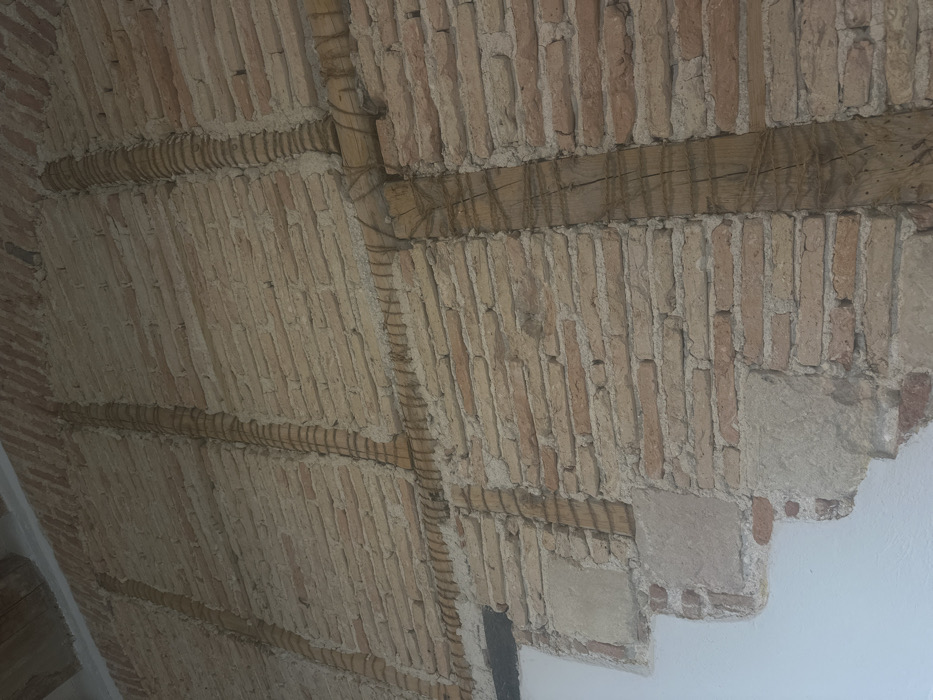
This image captures an intricate arched ceiling, characteristic of traditional or historic Spanish architecture, consistent with the location context of Segovia, Spain. The primary construction material is reddish-brown brick, laid vertically in narrow, elongated units, with thick, light-colored mortar joints forming the vaulted surface.

Several dark, aged wooden beams are integrated into the ceiling structure. One prominent beam runs horizontally across the upper middle section, while others extend diagonally, acting as structural support elements or decorative features. These beams show visible wood grain and some signs of wear.

Along the edges of some brick sections and conforming to the curves of the arches, there are distinct rope-like or coiled reinforcements, possibly wire or woven material, binding sections of the brickwork together. This detail adds to the rustic and handmade appearance of the ceiling.

In the lower right quadrant, the brickwork transitions into a plastered, white wall, indicating either a partial repair, a newer addition, or a different construction method at that juncture. Embedded within this transition area are several larger, irregular blocks of a lighter, coarser stone or concrete, suggesting layers of previous construction or robust repairs.

The overall impression is one of ancient craftsmanship and architectural resilience. There are no people, visible activities, or discernible text. The lighting suggests an indoor setting, highlighting the textures and earthy tones of the materials.
FM-WnqD53

Feb 3, 2025, 3:26 PM

Segovia, Spain

Stake attention in this memory

This image captures an intricate arched ceiling, characteristic of traditional or historic Spanish architecture, consistent with the location context of Segovia, Spain. The primary construction material is reddish-brown brick, laid vertically in narrow, elongated units, with thick, light-colored mortar joints forming the vaulted surface. Several dark, aged wooden beams are integrated into the ceiling structure. One prominent beam runs horizontally across the upper middle section, while others extend diagonally, acting as structural support elements or decorative features. These beams show visible wood grain and some signs of wear. Along the edges of some brick sections and conforming to the curves of the arches, there are distinct rope-like or coiled reinforcements, possibly wire or woven material, binding sections of the brickwork together. This detail adds to the rustic and handmade appearance of the ceiling. In the lower right quadrant, the brickwork transitions into a plastered, white wall, indicating either a partial repair, a newer addition, or a different construction method at that juncture. Embedded within this transition area are several larger, irregular blocks of a lighter, coarser stone or concrete, suggesting layers of previous construction or robust repairs. The overall impression is one of ancient craftsmanship and architectural resilience. There are no people, visible activities, or discernible text. The lighting suggests an indoor setting, highlighting the textures and earthy tones of the materials.

Loading AttnAds…

transactions
revenues
stakers
Earliest
Latest
Highest stake

No transactions found

More from this user

More from Segovia

FM-WnqD53

Feb 3, 2025, 3:26 PM

Segovia, Spain

Licensed under Creative Commons Attribution 4.0 International License. You are free to share and adapt this content with proper attribution.