Sign in
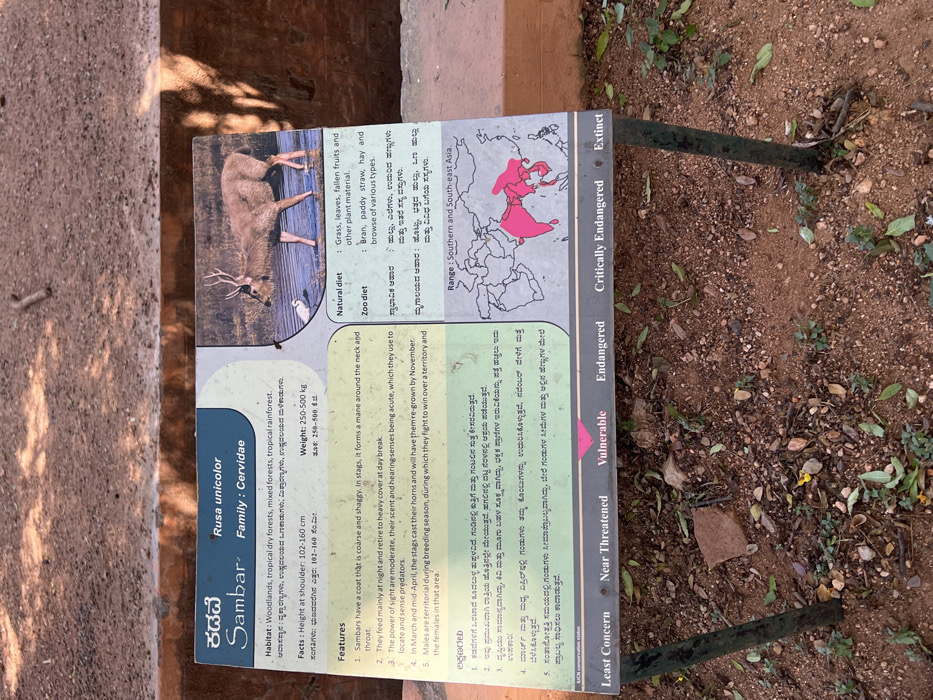
This image captures an informational display board, likely located in an outdoor setting such as a zoo or wildlife park in Mysuru, India. The board, held up by a metal stand, provides details about the Sambar deer (`Rusa unicolor`). The ground around the display is dry earth with sparse green vegetation and fallen leaves, suggesting a sunny daytime environment with shadows cast on the upper left.

The display board features a large image of a Sambar deer. Text on the board is presented in both English and Kannada. Key information includes the animal's family (`Cervidae`), habitat (woodlands, forests), and physical facts (height at shoulder: 102-160 cm; weight: 250-500 kg). Features such as their coarse coat, nocturnal feeding habits, acute senses, antler shedding cycle (March-April to November), and male territorial behavior during breeding season are listed. The board also details their natural diet (grass, leaves, fruits, plant material) and zoo diet (bran, paddy straw, hay, various browses). A map illustrates the Sambar's range across Southern and South-east Asia, with India highlighted. The IUCN Conservation Status indicates the Sambar as "Vulnerable." No specific activity or emotions are depicted.
FM-7y8Ft1

Jan 12, 2025

Mysuru, India

Stake attention in this memory

This image captures an informational display board, likely located in an outdoor setting such as a zoo or wildlife park in Mysuru, India. The board, held up by a metal stand, provides details about the Sambar deer (`Rusa unicolor`). The ground around the display is dry earth with sparse green vegetation and fallen leaves, suggesting a sunny daytime environment with shadows cast on the upper left. The display board features a large image of a Sambar deer. Text on the board is presented in both English and Kannada. Key information includes the animal's family (`Cervidae`), habitat (woodlands, forests), and physical facts (height at shoulder: 102-160 cm; weight: 250-500 kg). Features such as their coarse coat, nocturnal feeding habits, acute senses, antler shedding cycle (March-April to November), and male territorial behavior during breeding season are listed. The board also details their natural diet (grass, leaves, fruits, plant material) and zoo diet (bran, paddy straw, hay, various browses). A map illustrates the Sambar's range across Southern and South-east Asia, with India highlighted. The IUCN Conservation Status indicates the Sambar as "Vulnerable." No specific activity or emotions are depicted.

transactions
revenues
stakers
Earliest
Latest
Highest stake

No transactions found

More from this user

More from Mysuru

FM-7y8Ft1

Jan 12, 2025

Mysuru, India

Licensed under Creative Commons Attribution 4.0 International License. You are free to share and adapt this content with proper attribution.