
Sign in
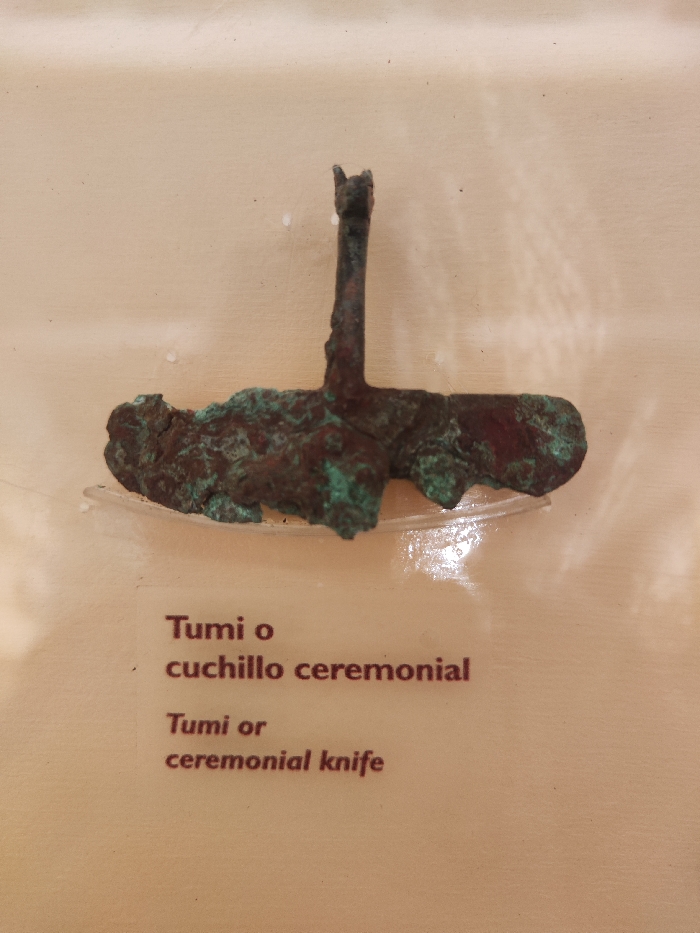
This image depicts an ancient metal artifact, identified as a Tumi or ceremonial knife, displayed in an exhibit within a cultural institution in Pisac, Peru. The object, centrally positioned, is a heavily corroded metal blade with an upright handle or finial. Its primary color is a dark reddish-brown, extensively covered by a mottled turquoise-green patina, characteristic of oxidized copper or bronze. The artifact has a distinct T-shape; the vertical element, acting as a handle, is slender and topped by a fragmented feature that resembles an animal's head, possibly a llama or alpaca, with two small, pointed projections suggestive of ears. The horizontal element forms a broad, curved blade with an uneven, corroded edge.

The Tumi rests on a clear, curved acrylic or plastic stand. The background is a uniform, light beige or off-white surface, typical of a museum display case or wall. Fine dust specks and subtle reflections are visible on the surface, indicating the object is viewed through a transparent protective barrier. Directly below the artifact, printed text in a dark red font provides identification in two languages: "Tumi o cuchillo ceremonial" in Spanish and "Tumi or ceremonial knife" in English. No people, active interactions, or specific environmental features beyond the display setting are visible.
Milu 🌸

Jul 22, 2025

Pisac, Peru

Stake attention in this memory

Ancient
Solemn
Ceremonial
Mysterious
Awe

This image depicts an ancient metal artifact, identified as a Tumi or ceremonial knife, displayed in an exhibit within a cultural institution in Pisac, Peru. The object, centrally positioned, is a heavily corroded metal blade with an upright handle or finial. Its primary color is a dark reddish-brown, extensively covered by a mottled turquoise-green patina, characteristic of oxidized copper or bronze. The artifact has a distinct T-shape; the vertical element, acting as a handle, is slender and topped by a fragmented feature that resembles an animal's head, possibly a llama or alpaca, with two small, pointed projections suggestive of ears. The horizontal element forms a broad, curved blade with an uneven, corroded edge. The Tumi rests on a clear, curved acrylic or plastic stand. The background is a uniform, light beige or off-white surface, typical of a museum display case or wall. Fine dust specks and subtle reflections are visible on the surface, indicating the object is viewed through a transparent protective barrier. Directly below the artifact, printed text in a dark red font provides identification in two languages: "Tumi o cuchillo ceremonial" in Spanish and "Tumi or ceremonial knife" in English. No people, active interactions, or specific environmental features beyond the display setting are visible.

transactions
revenues
stakers
Earliest
Latest
Highest stake

No transactions found

More from this user

More from Pisac

Milu 🌸

Jul 22, 2025

Pisac, Peru

Licensed under Creative Commons Attribution 4.0 International License. You are free to share and adapt this content with proper attribution.