Sign in
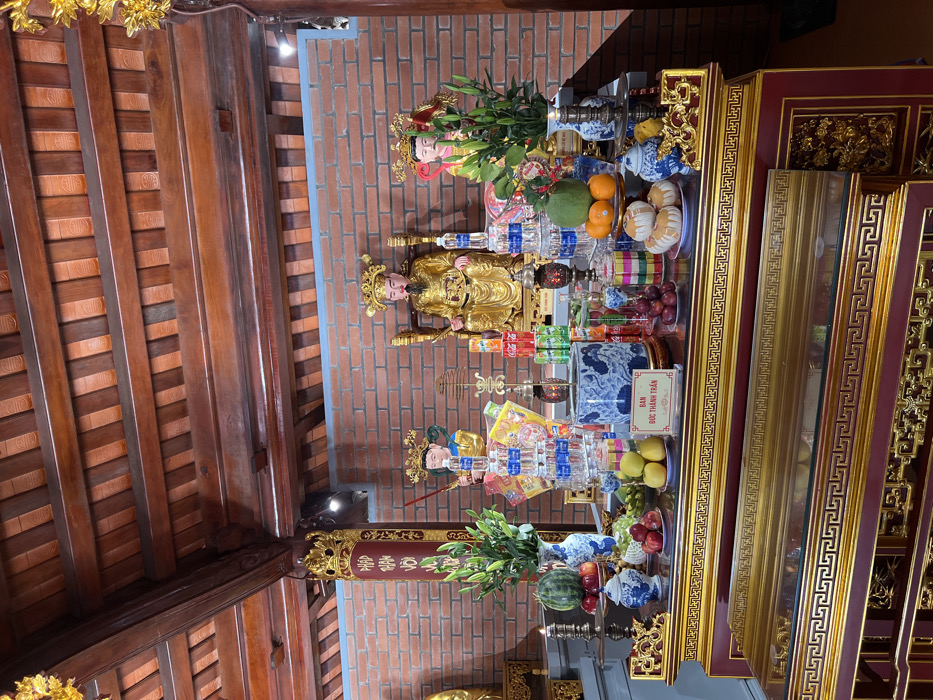
The image displays a richly adorned altar or shrine, oriented vertically (as if the image was taken in portrait mode and then rotated 90 degrees clockwise). If viewed in its intended orientation, the altar would be centrally positioned against a brick wall, with a wooden ceiling above.

The main subject is a multi-tiered altar laden with offerings and three prominent statues. The altar itself is made of dark, polished wood, featuring intricate gold and maroon decorative patterns, particularly visible on the front and side frames.

Three figures or statues are arranged on the altar:
*   At the uppermost tier (center-right in the rotated image), a figure, possibly a female deity, wears a reddish-orange robe and an ornate headdress. Green leafy plants are placed in a blue and white porcelain vase next to it.
*   In the middle tier (center of the rotated image), a larger, golden-colored figure, likely a male deity or emperor, sits or stands prominently. This figure wears an elaborate crown and traditional attire, holding what appears to be a ceremonial staff or scepter.
*   On the lowest tier (center-left in the rotated image), another figure, possibly a male deity or general, is depicted in a blue robe with an intricate headdress, holding an object resembling a sword or fan.

Numerous offerings are meticulously arranged on the various tiers of the altar:
*   **Fruits:** A large pomelo, several oranges, red apples, green grapes, and a small watermelon are visible in different bowls and plates. Some yellow fruits, possibly lemons or limes, are also present.
*   **Drinks:** Many small bottles of purified water are stacked in rows, along with several cans and bottles of soft drinks (including Coca-Cola).
*   **Sweets/Packaged Goods:** Various packaged sweets, snacks, and colorful wrapped items are placed among the offerings.
*   **Flowers:** Fresh green foliage and white lilies are arranged in elegant blue and white porcelain vases.
*   **Incense:** Coiled incense sticks are visible in a holder on the middle tier.

Other decorative elements include multiple blue and white porcelain vases, bowls, and jars, along with small gold-colored vessels.

In the background:
*   To the left of the altar (which would be the back wall in proper orientation), there's a reddish-brown brick wall with light gray mortar, providing a textural contrast to the ornate altar.
*   To the far left (which would be the ceiling in proper orientation), a traditional wooden ceiling structure is visible, featuring polished wooden beams and panels with intricate joinery. Some golden floral decorative elements are visible where the ceiling meets the wall.

Visible text on a small white sign with a brown border, placed on the lowest tier of the altar, reads: "BÀN ĐỨC THÁNH TRẦN". This translates to "Altar of Saint Trần," likely referring to Trần Hưng Đạo, a revered national hero in Vietnam.
On a vertical red banner or column to the left of the middle golden figure, two gold Chinese characters are visible: "福壽" (Fú Shòu), which translates to "Blessings and Longevity," a common auspicious wish.

The scene suggests a traditional religious or ceremonial setting, likely within a temple, pagoda, or a dedicated home altar, where offerings are made to venerated deities or ancestors, particularly Saint Trần. The lighting appears bright and uniform, possibly from artificial sources, illuminating the details of the offerings and decorations.
burn in hell

Feb 22, 2026, 6:21 AM

Vietnam

Stake attention in this memory

altar
statues
offerings
temple
religious site

The image displays a richly adorned altar or shrine, oriented vertically (as if the image was taken in portrait mode and then rotated 90 degrees clockwise). If viewed in its intended orientation, the altar would be centrally positioned against a brick wall, with a wooden ceiling above. The main subject is a multi-tiered altar laden with offerings and three prominent statues. The altar itself is made of dark, polished wood, featuring intricate gold and maroon decorative patterns, particularly visible on the front and side frames. Three figures or statues are arranged on the altar: * At the uppermost tier (center-right in the rotated image), a figure, possibly a female deity, wears a reddish-orange robe and an ornate headdress. Green leafy plants are placed in a blue and white porcelain vase next to it. * In the middle tier (center of the rotated image), a larger, golden-colored figure, likely a male deity or emperor, sits or stands prominently. This figure wears an elaborate crown and traditional attire, holding what appears to be a ceremonial staff or scepter. * On the lowest tier (center-left in the rotated image), another figure, possibly a male deity or general, is depicted in a blue robe with an intricate headdress, holding an object resembling a sword or fan. Numerous offerings are meticulously arranged on the various tiers of the altar: * **Fruits:** A large pomelo, several oranges, red apples, green grapes, and a small watermelon are visible in different bowls and plates. Some yellow fruits, possibly lemons or limes, are also present. * **Drinks:** Many small bottles of purified water are stacked in rows, along with several cans and bottles of soft drinks (including Coca-Cola). * **Sweets/Packaged Goods:** Various packaged sweets, snacks, and colorful wrapped items are placed among the offerings. * **Flowers:** Fresh green foliage and white lilies are arranged in elegant blue and white porcelain vases. * **Incense:** Coiled incense sticks are visible in a holder on the middle tier. Other decorative elements include multiple blue and white porcelain vases, bowls, and jars, along with small gold-colored vessels. In the background: * To the left of the altar (which would be the back wall in proper orientation), there's a reddish-brown brick wall with light gray mortar, providing a textural contrast to the ornate altar. * To the far left (which would be the ceiling in proper orientation), a traditional wooden ceiling structure is visible, featuring polished wooden beams and panels with intricate joinery. Some golden floral decorative elements are visible where the ceiling meets the wall. Visible text on a small white sign with a brown border, placed on the lowest tier of the altar, reads: "BÀN ĐỨC THÁNH TRẦN". This translates to "Altar of Saint Trần," likely referring to Trần Hưng Đạo, a revered national hero in Vietnam. On a vertical red banner or column to the left of the middle golden figure, two gold Chinese characters are visible: "福壽" (Fú Shòu), which translates to "Blessings and Longevity," a common auspicious wish. The scene suggests a traditional religious or ceremonial setting, likely within a temple, pagoda, or a dedicated home altar, where offerings are made to venerated deities or ancestors, particularly Saint Trần. The lighting appears bright and uniform, possibly from artificial sources, illuminating the details of the offerings and decorations.

Loading AttnAds…

transactions
revenues
stakers
Earliest
Latest
Highest stake

No transactions found

More from this user
burn in hell

Feb 22, 2026, 6:21 AM

Vietnam

Licensed under Creative Commons Attribution 4.0 International License. You are free to share and adapt this content with proper attribution.