
Sign in
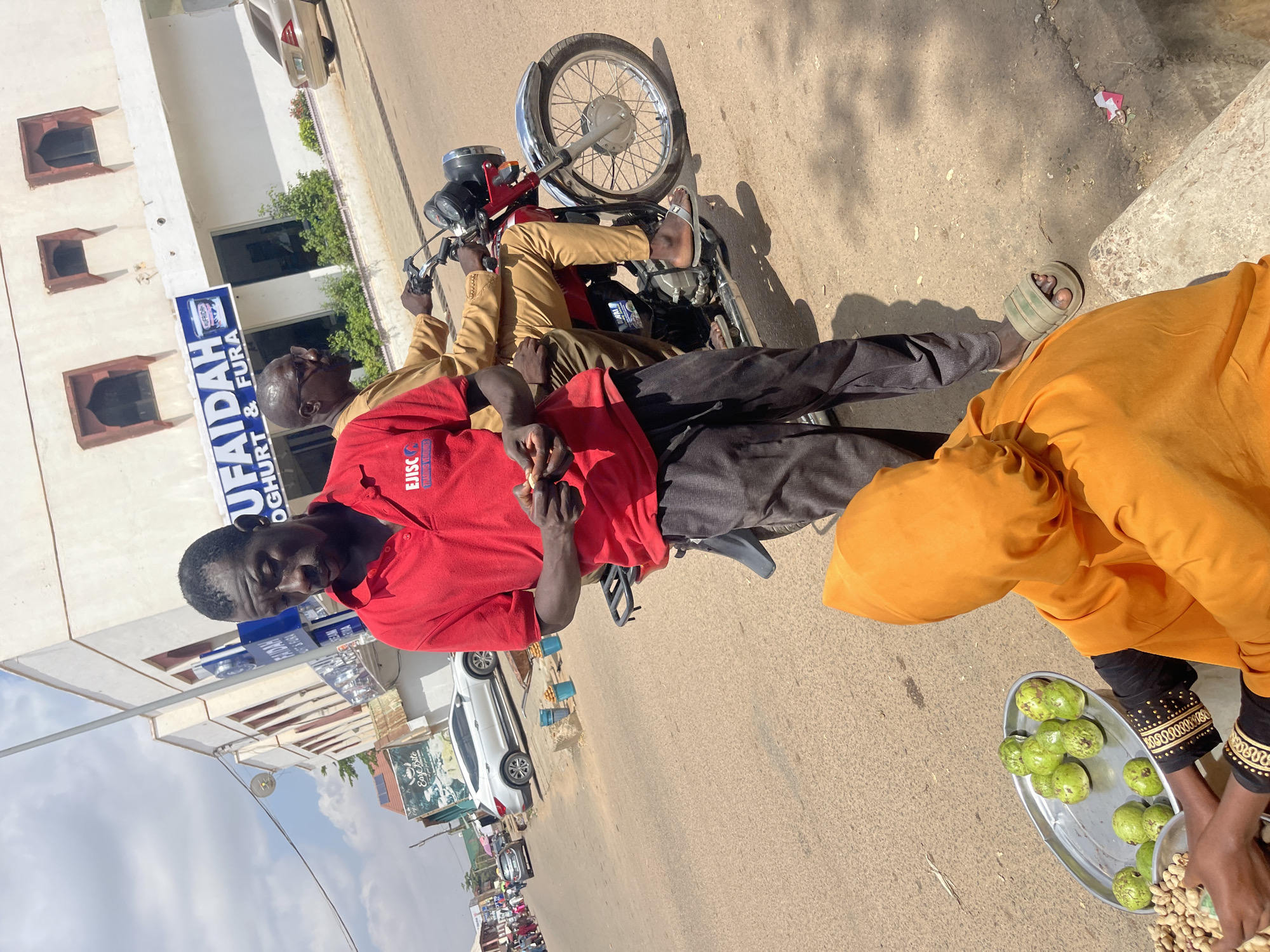
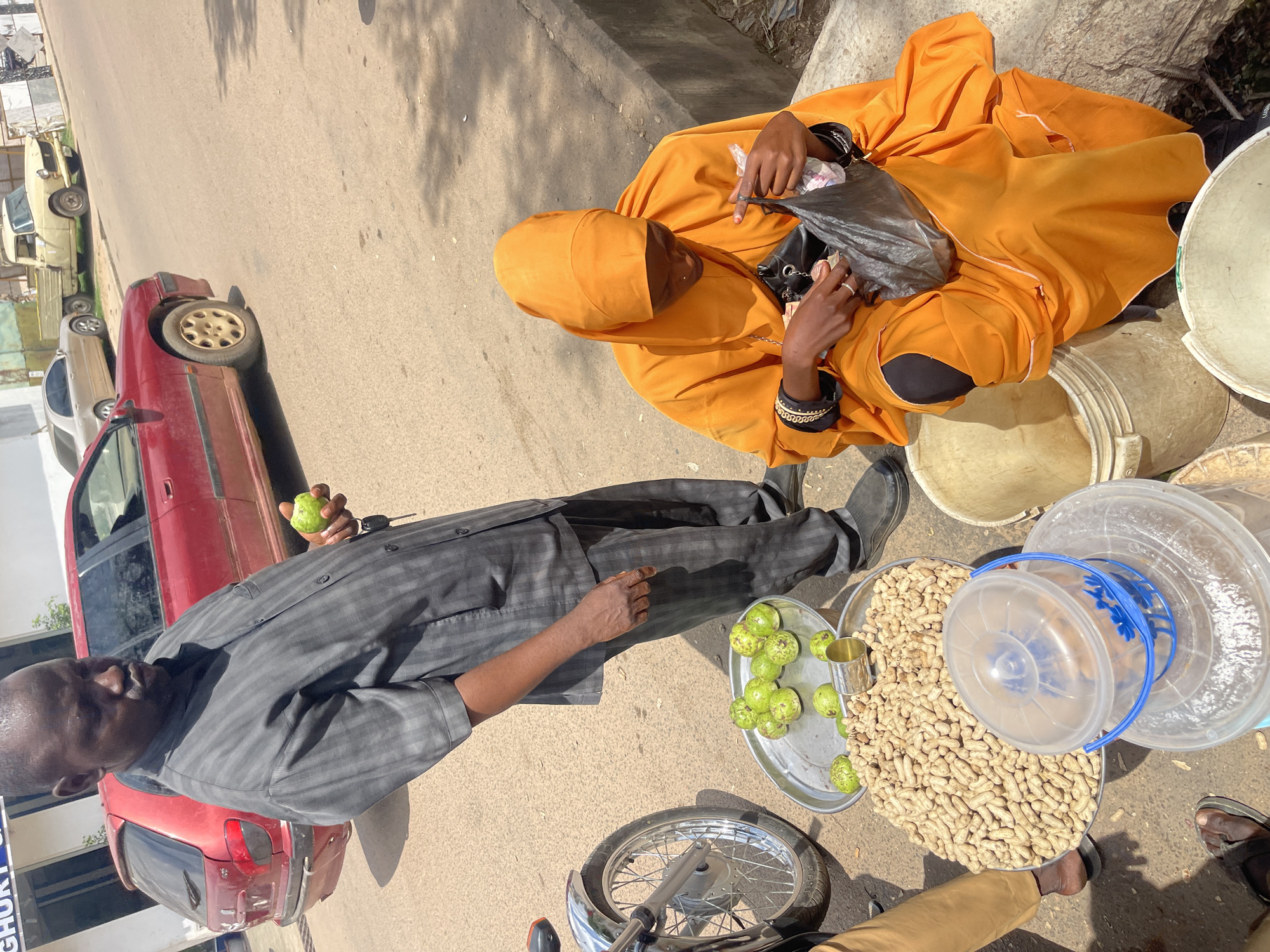
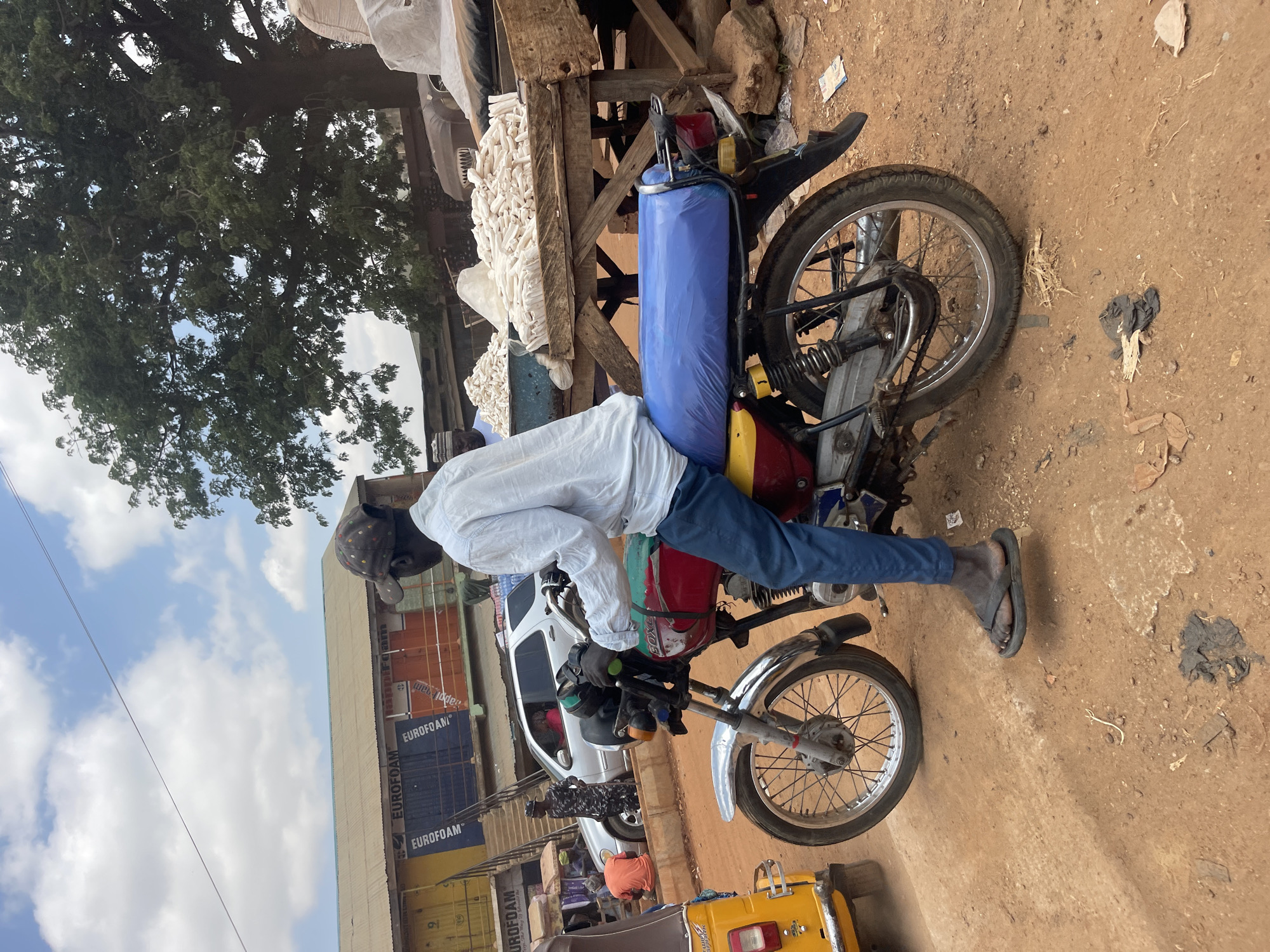
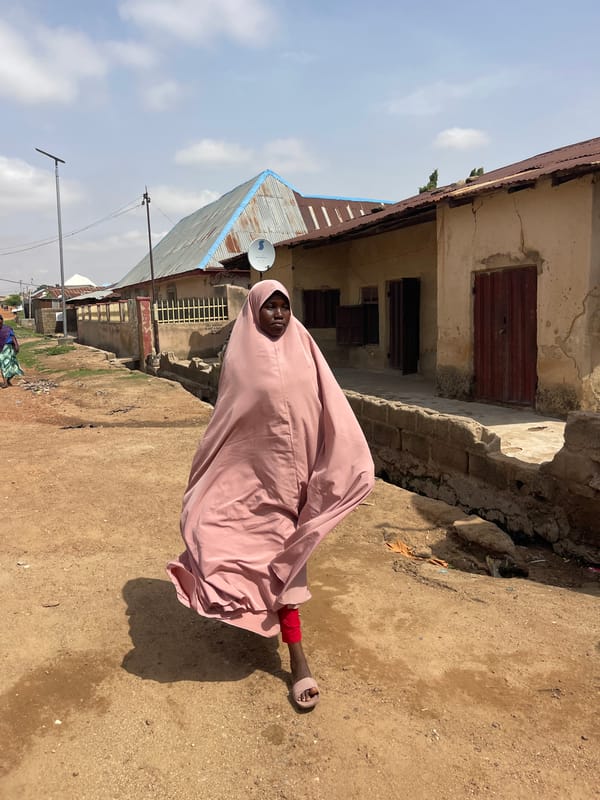
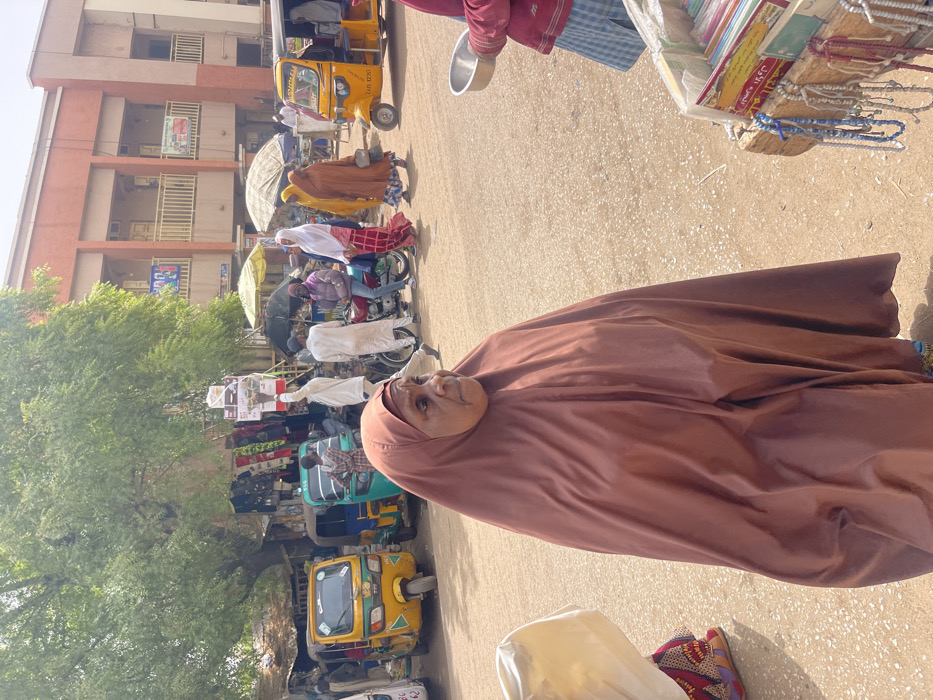
An outdoor scene in a bustling market street in Zaria, Nigeria, is depicted under bright daylight. In the immediate foreground, an elderly woman with visible facial wrinkles is positioned slightly left of center, her gaze directed rightward. She is enveloped in a long, loose-fitting, reddish-brown head covering and garment (hijab/khimar). To her immediate left, the partial view of a cream-colored garment is visible. To her right, a lower portion of a person, likely a child, wearing a red long-sleeved shirt and blue-and-white checkered shorts, holds a small silver bowl. A wooden cart displaying books and strings of prayer beads (tasbih) is partially visible at the bottom right.

The midground features a dusty, light-colored street with various individuals and vehicles. On the left, two yellow motorized rickshaws (keke napep) are parked, one with "TVS" visible on its front. A green rickshaw is parked behind them. Several male figures in white traditional attire (kaftans) are present; one carries a white rectangular sign above his head. A man sits on a red motorcycle. Further to the right, a group of women, some wearing white or brown hijabs/niqabs, walk towards the right. Another yellow motorized rickshaw, bearing "ZAR 1230" (indicating Zaria registration), moves or is parked on the right side of the street.

The background includes a large green-leafed tree on the left, beneath which market stalls with hanging merchandise are visible. To the right, a two-story building with reddish-brown walls and lighter orange accents features multiple arched windows and balconies with railings. Several market umbrellas (yellow/green) are visible in front of this building, indicating more vendor stalls. The overall environment is active, suggesting a typical market day.
Mi propia

Feb 17, 2026, 11:36 AM

Zaria, Nigeria

Stake attention in this memory

Dignity
Resilience
Warmth
Curiosity
Tradition

An outdoor scene in a bustling market street in Zaria, Nigeria, is depicted under bright daylight. In the immediate foreground, an elderly woman with visible facial wrinkles is positioned slightly left of center, her gaze directed rightward. She is enveloped in a long, loose-fitting, reddish-brown head covering and garment (hijab/khimar). To her immediate left, the partial view of a cream-colored garment is visible. To her right, a lower portion of a person, likely a child, wearing a red long-sleeved shirt and blue-and-white checkered shorts, holds a small silver bowl. A wooden cart displaying books and strings of prayer beads (tasbih) is partially visible at the bottom right. The midground features a dusty, light-colored street with various individuals and vehicles. On the left, two yellow motorized rickshaws (keke napep) are parked, one with "TVS" visible on its front. A green rickshaw is parked behind them. Several male figures in white traditional attire (kaftans) are present; one carries a white rectangular sign above his head. A man sits on a red motorcycle. Further to the right, a group of women, some wearing white or brown hijabs/niqabs, walk towards the right. Another yellow motorized rickshaw, bearing "ZAR 1230" (indicating Zaria registration), moves or is parked on the right side of the street. The background includes a large green-leafed tree on the left, beneath which market stalls with hanging merchandise are visible. To the right, a two-story building with reddish-brown walls and lighter orange accents features multiple arched windows and balconies with railings. Several market umbrellas (yellow/green) are visible in front of this building, indicating more vendor stalls. The overall environment is active, suggesting a typical market day.

Loading AttnAds…

transactions
revenues
stakers
Earliest
Latest
Highest stake

No transactions found

More from this user

More from Zaria

Mi propia

Feb 17, 2026, 11:36 AM

Zaria, Nigeria

Licensed under Creative Commons Attribution 4.0 International License. You are free to share and adapt this content with proper attribution.