
Sign in
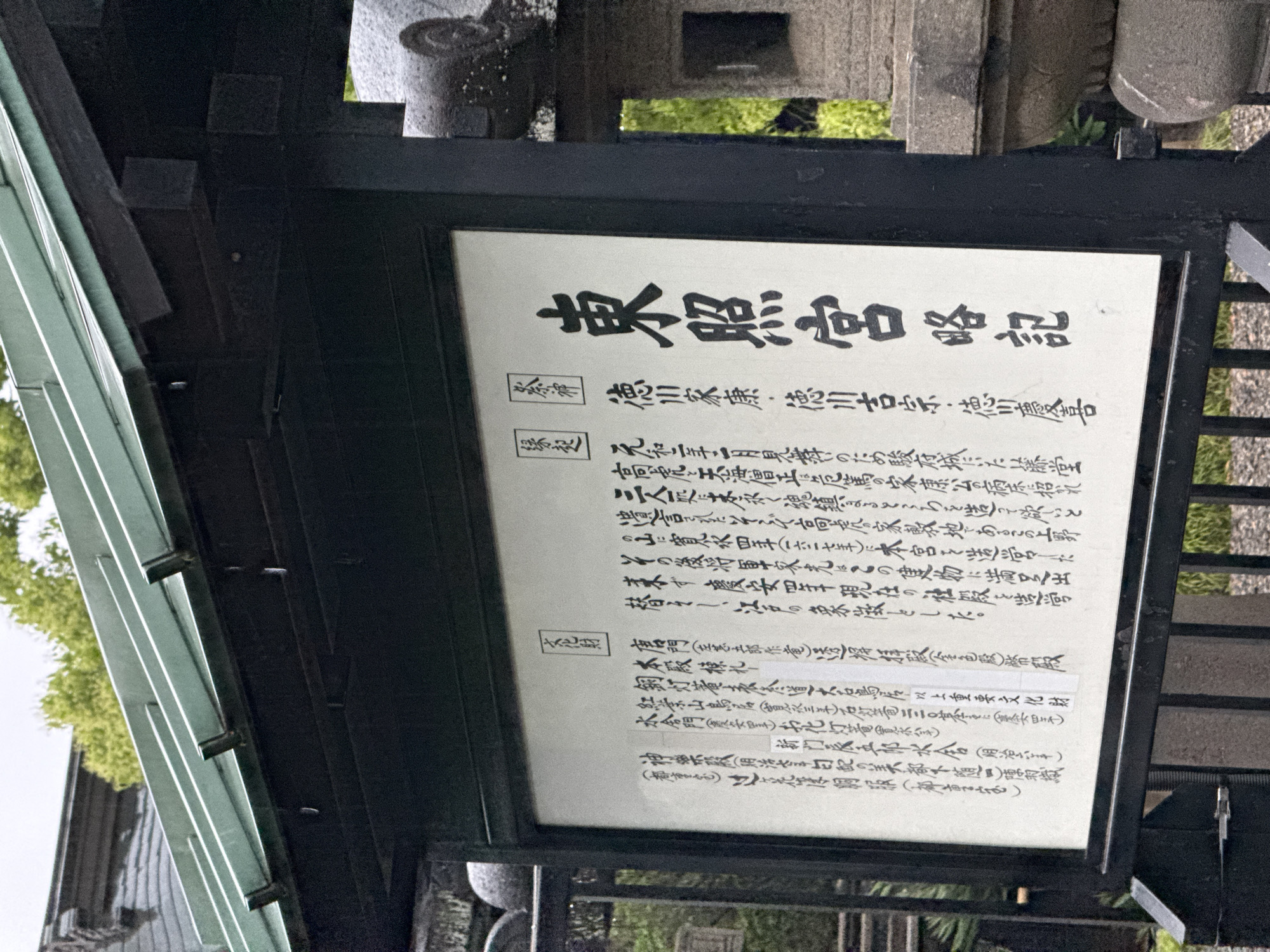
The image features a black-framed signboard with Japanese text, set against a background of traditional Japanese architectural elements and greenery. The signboard's main title reads "東照宮略記" (Toshogu Ryakuki - Brief History of Toshogu Shrine).

The text on the signboard details the history and significant features of the shrine. It lists the enshrined deities (祭神) as Tokugawa Ieyasu, Tokugawa Yoshimune, and Tokugawa Yoshinobu. The "縁起" (Engi - Origin/History) section explains that the shrine was established in Kan'ei 4 (1627) on Ueno Hill at the request of Tokugawa Ieyasu's dying wish in Genna 2 (1616) to have his soul enshrined permanently. It also mentions the later construction of the current shrine buildings during the Keian era, making it a symbol of Edo.

Further sections list important "文化財" (Cultural Properties) within the shrine, including:
- 唐門 (Karamon gate), described as a work by Hidari Jingoro,
- 透塀 (Sukibei fence),
- 拝殿 (Haiden hall) with a golden ceiling,
- 幣殿 (Heiden hall),
- 本殿 (Honden hall),
- 銅灯篭 (Doutourou - copper lanterns),
- 石鳥居 (Ishi Torii - stone torii gate) dating to Kan'ei 3 (1626),
- 鐘楼 (Shoro - bell tower),
- 石灯籠 (Ishi Tourou - stone lanterns),
- 手水舎 (Chozusha - water purification pavilion) from the Keian era,
- お化灯篭 (Obake Tourou - monster lantern) from the Kan'ei era,
- 勅額門 (Chokugakumon - Imperial Edict Gate),
- 神楽殿 (Kaguraden - Kagura hall).

To the left, a green, multi-layered architectural structure (possibly a roof or awning) is visible. In the background and upper right, parts of stone structures, resembling lanterns or monuments, can be seen, along with green foliage. The scene appears to be outdoors during the daytime, under soft lighting. The location context indicates this shrine is in Taito, Japan.
m.damyanov

Apr 23, 2026

Taito, Japan

Stake attention in this memory

historical
informative
cultural
educational
respectful

The image features a black-framed signboard with Japanese text, set against a background of traditional Japanese architectural elements and greenery. The signboard's main title reads "東照宮略記" (Toshogu Ryakuki - Brief History of Toshogu Shrine). The text on the signboard details the history and significant features of the shrine. It lists the enshrined deities (祭神) as Tokugawa Ieyasu, Tokugawa Yoshimune, and Tokugawa Yoshinobu. The "縁起" (Engi - Origin/History) section explains that the shrine was established in Kan'ei 4 (1627) on Ueno Hill at the request of Tokugawa Ieyasu's dying wish in Genna 2 (1616) to have his soul enshrined permanently. It also mentions the later construction of the current shrine buildings during the Keian era, making it a symbol of Edo. Further sections list important "文化財" (Cultural Properties) within the shrine, including: - 唐門 (Karamon gate), described as a work by Hidari Jingoro, - 透塀 (Sukibei fence), - 拝殿 (Haiden hall) with a golden ceiling, - 幣殿 (Heiden hall), - 本殿 (Honden hall), - 銅灯篭 (Doutourou - copper lanterns), - 石鳥居 (Ishi Torii - stone torii gate) dating to Kan'ei 3 (1626), - 鐘楼 (Shoro - bell tower), - 石灯籠 (Ishi Tourou - stone lanterns), - 手水舎 (Chozusha - water purification pavilion) from the Keian era, - お化灯篭 (Obake Tourou - monster lantern) from the Kan'ei era, - 勅額門 (Chokugakumon - Imperial Edict Gate), - 神楽殿 (Kaguraden - Kagura hall). To the left, a green, multi-layered architectural structure (possibly a roof or awning) is visible. In the background and upper right, parts of stone structures, resembling lanterns or monuments, can be seen, along with green foliage. The scene appears to be outdoors during the daytime, under soft lighting. The location context indicates this shrine is in Taito, Japan.

transactions
revenues
stakers
Earliest
Latest
Highest stake

No transactions found

More from this user

More from Taito

m.damyanov

Apr 23, 2026

Taito, Japan

Licensed under Creative Commons Attribution 4.0 International License. You are free to share and adapt this content with proper attribution.