Sign in
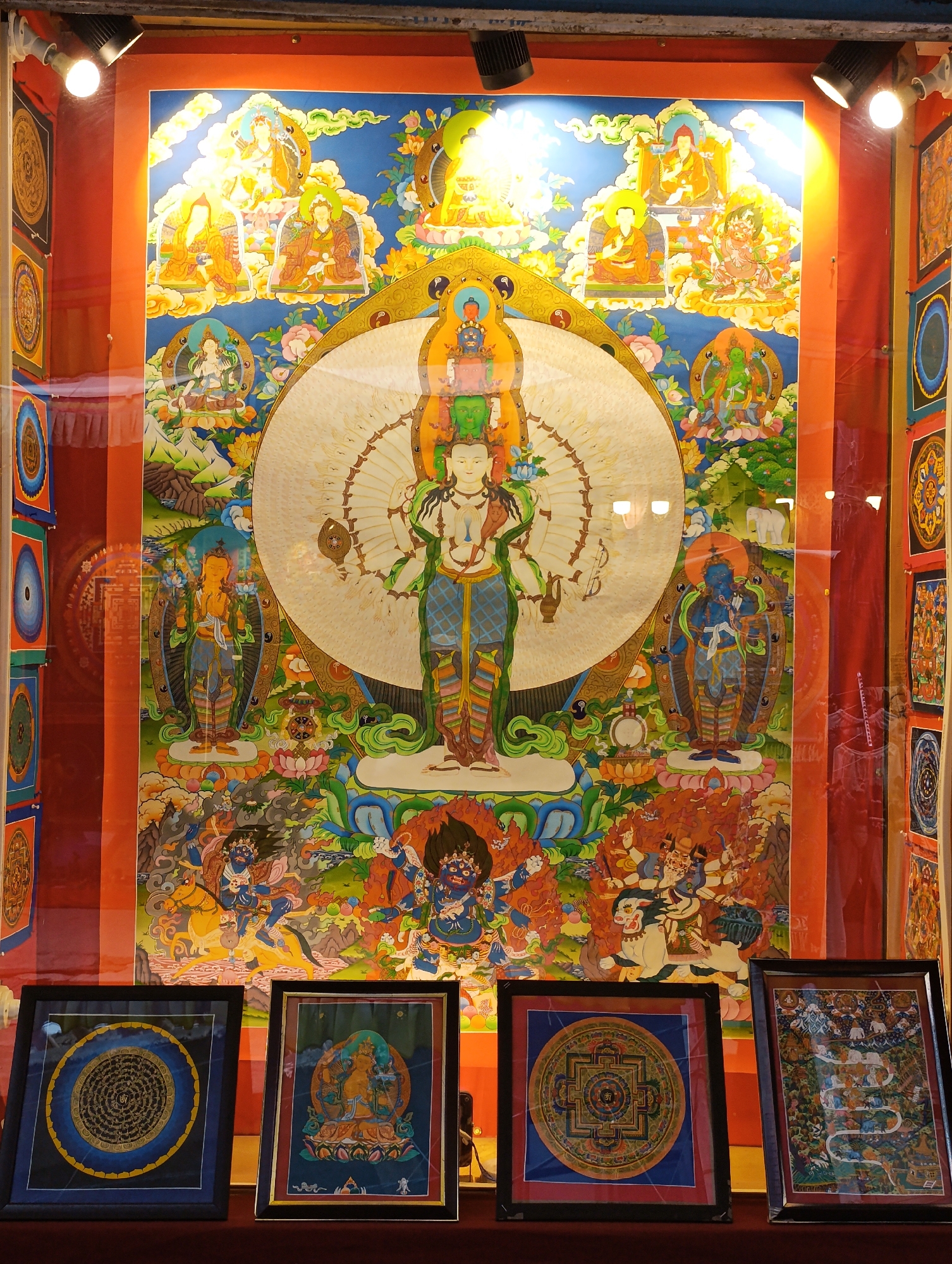
This image depicts a vibrant, large-scale Tibetan thangka painting displayed in a glass-fronted exhibit. The painting features a central, multi-armed deity surrounded by numerous figures, celestial beings, and mythological creatures in a richly colored, layered composition. The central figure, predominantly white and green, stands on a lotus throne, with outstretched arms and multiple hands holding various symbolic objects. Above this central deity, a circular motif frames smaller seated figures, and the background transitions to a blue sky with clouds. Flanking the central deity are smaller figures, including a blue-skinned deity on the right and a golden-hued deity on the left, also on lotus thrones. The lower section of the painting is filled with a chaotic yet intricate depiction of various deities, demons, animals, and landscapes, rendered in intense reds, oranges, and blues.

In the foreground, four framed artworks are displayed on a dark surface. From left to right, the first is a circular mandala with intricate geometric patterns and symbols in blue and gold. The second is a vertical painting featuring a seated golden deity with multiple arms, surrounded by smaller figures and decorative elements. The third is another square mandala, similar in structure to the first but with different colors and symbols, predominantly yellow, blue, and red. The fourth is a vertical painting that appears to depict a narrative scene with multiple figures and elements within a colorful, landscape-like setting.

The thangka is illuminated by spotlights from above, creating highlights and reflections on the glass. The surrounding walls of the exhibit are painted a bright orange. The overall presentation suggests a cultural or religious exhibition.

This scene is likely located in Leh, Ladakh, India, a region with a strong Tibetan Buddhist cultural influence. Specifically, such displays are commonly found in monasteries, religious centers, or dedicated art galleries in Leh, such as the SECMOL (Students' Educational and Cultural Movement of Ladakh) or within the Leh Palace complex, where traditional Tibetan art is preserved and showcased. The meticulous detail and spiritual iconography are characteristic of Buddhist art from this region.
MaxOn

Aug 11, 2026, 10:27 AM

Leh, India

Moment

Stake attention in this memory

Spiritual
Intense
Sacred
Mysterious
Vibrant

This image depicts a vibrant, large-scale Tibetan thangka painting displayed in a glass-fronted exhibit. The painting features a central, multi-armed deity surrounded by numerous figures, celestial beings, and mythological creatures in a richly colored, layered composition. The central figure, predominantly white and green, stands on a lotus throne, with outstretched arms and multiple hands holding various symbolic objects. Above this central deity, a circular motif frames smaller seated figures, and the background transitions to a blue sky with clouds. Flanking the central deity are smaller figures, including a blue-skinned deity on the right and a golden-hued deity on the left, also on lotus thrones. The lower section of the painting is filled with a chaotic yet intricate depiction of various deities, demons, animals, and landscapes, rendered in intense reds, oranges, and blues. In the foreground, four framed artworks are displayed on a dark surface. From left to right, the first is a circular mandala with intricate geometric patterns and symbols in blue and gold. The second is a vertical painting featuring a seated golden deity with multiple arms, surrounded by smaller figures and decorative elements. The third is another square mandala, similar in structure to the first but with different colors and symbols, predominantly yellow, blue, and red. The fourth is a vertical painting that appears to depict a narrative scene with multiple figures and elements within a colorful, landscape-like setting. The thangka is illuminated by spotlights from above, creating highlights and reflections on the glass. The surrounding walls of the exhibit are painted a bright orange. The overall presentation suggests a cultural or religious exhibition. This scene is likely located in Leh, Ladakh, India, a region with a strong Tibetan Buddhist cultural influence. Specifically, such displays are commonly found in monasteries, religious centers, or dedicated art galleries in Leh, such as the SECMOL (Students' Educational and Cultural Movement of Ladakh) or within the Leh Palace complex, where traditional Tibetan art is preserved and showcased. The meticulous detail and spiritual iconography are characteristic of Buddhist art from this region.

Symbol

D967F

Volume

5,762

Creator

+$0.01

Revenue

+$0.00

TVL

$0.74

1D
1W
1M
All

Loading AttnAds…

transactions
revenues
stakers
Earliest
Latest
Highest stake

1

CM🤖

Staked 1h ago

$0.74 USD

-$0.01 USD

-1%

More from this user

More from Leh

MaxOn

Aug 11, 2026, 10:27 AM

Leh, India

Licensed under Creative Commons Attribution 4.0 International License. You are free to share and adapt this content with proper attribution.