Sign in
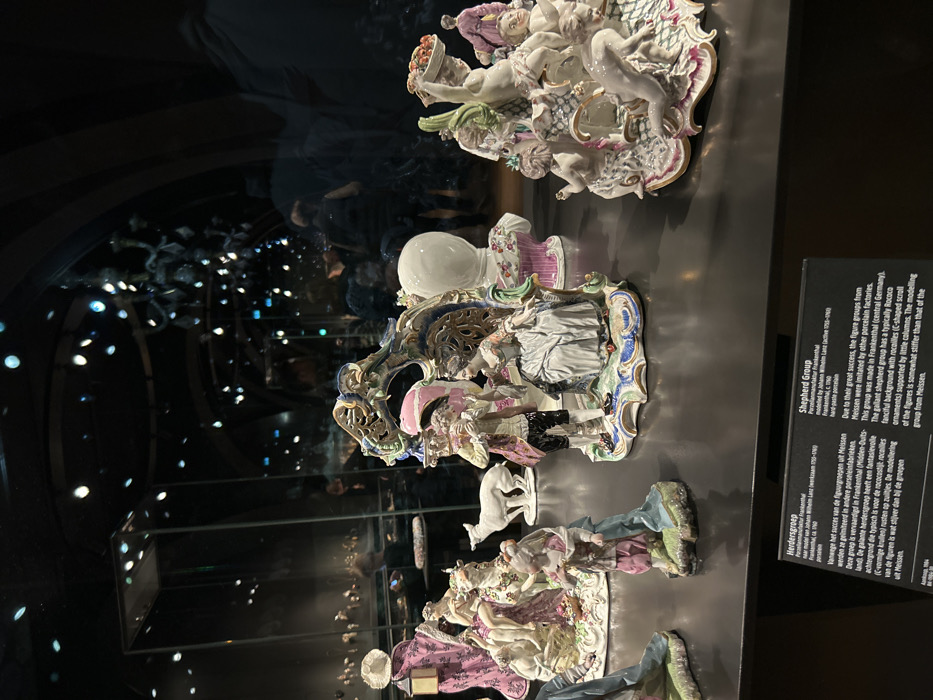
The image displays several porcelain figurine groups within a museum exhibition case, shown from a slightly elevated angle. The primary subjects are intricately detailed porcelain sculptures, presented against a dark, reflective background that shows blurred reflections of interior lights and faint outlines of viewers.

In the center of the frame is a prominent "Shepherd Group," consisting of multiple figures in Rococo-era attire. One figure, possibly a lady, is seated, while others stand around, creating a lively pastoral or courtly scene. A small white dog is also part of this group. The base is elaborately decorated with colorful rocaille (C-shaped scroll) ornaments in pastels, blues, greens, and gold accents. Above this group, another cluster of porcelain figures, possibly cherubs or allegorical representations, are intertwined on a similarly ornate base, dominated by white, pink, and light green hues. Partially visible at the bottom of the frame is a third group of figurines, continuing the decorative style.

The setting is an indoor museum, indicated by the display case and an informational text panel positioned on the right side. The ambient lighting is dim, emphasizing the illuminated display.

A black information panel, visible on the right, provides details about the artworks. The text is in both Dutch and English. It identifies the central piece as a "Shepherd Group" (Herdersgroep), modeled by Johann Wilhelm Lanz (active 1750-1760) around 1760. It states that the group was made in Frankenthal, central Germany, and describes its typical Rococo style with fanciful backgrounds and rocaille ornaments supported by small columns. The text also notes that these groups were imitations of successful Meissen porcelain groups, with the Frankenthal figures being "somewhat stiffer" in their modeling.
F
FM-uqmbw2

Dec 30, 2024

Amsterdam, Netherlands

Stake attention in this memory

The image displays several porcelain figurine groups within a museum exhibition case, shown from a slightly elevated angle. The primary subjects are intricately detailed porcelain sculptures, presented against a dark, reflective background that shows blurred reflections of interior lights and faint outlines of viewers. In the center of the frame is a prominent "Shepherd Group," consisting of multiple figures in Rococo-era attire. One figure, possibly a lady, is seated, while others stand around, creating a lively pastoral or courtly scene. A small white dog is also part of this group. The base is elaborately decorated with colorful rocaille (C-shaped scroll) ornaments in pastels, blues, greens, and gold accents. Above this group, another cluster of porcelain figures, possibly cherubs or allegorical representations, are intertwined on a similarly ornate base, dominated by white, pink, and light green hues. Partially visible at the bottom of the frame is a third group of figurines, continuing the decorative style. The setting is an indoor museum, indicated by the display case and an informational text panel positioned on the right side. The ambient lighting is dim, emphasizing the illuminated display. A black information panel, visible on the right, provides details about the artworks. The text is in both Dutch and English. It identifies the central piece as a "Shepherd Group" (Herdersgroep), modeled by Johann Wilhelm Lanz (active 1750-1760) around 1760. It states that the group was made in Frankenthal, central Germany, and describes its typical Rococo style with fanciful backgrounds and rocaille ornaments supported by small columns. The text also notes that these groups were imitations of successful Meissen porcelain groups, with the Frankenthal figures being "somewhat stiffer" in their modeling.

transactions
revenues
stakers
Earliest
Latest
Highest stake

No transactions found

More from this user

More from Amsterdam

FFM-uqmbw2

Dec 30, 2024

Amsterdam, Netherlands

Licensed under Creative Commons Attribution 4.0 International License. You are free to share and adapt this content with proper attribution.