Sign in
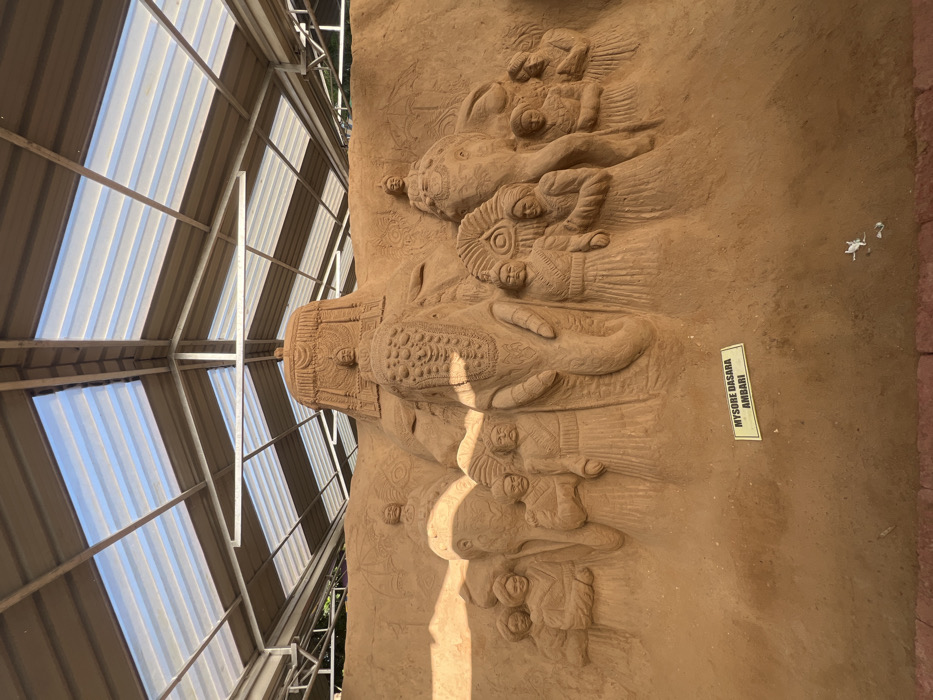
The image displays a large, intricate sand sculpture depicting a procession, likely the famous Mysore Dasara Ambari. The sculpture, rendered in the natural sandy brown color, features a grand elephant adorned with elaborate decorations, carrying an ornate howdah (Ambari) on its back. Within the howdah, a figure can be seen, presumably representing the deity or royalty traditionally carried during the procession.

Surrounding the central elephant, numerous smaller human figures are sculpted, some appearing to be mahouts, attendants, or participants in the procession. These figures are also intricately detailed, wearing traditional attire and headwear. The relief sculpting creates depth and texture, with shadows highlighting the contours of the figures and the elephant.

The sculpture is housed under a translucent corrugated plastic or fiberglass roof structure, supported by metal beams. This provides shelter, and bright sunlight filters through the roof panels, casting distinct shadows on the sculpture and the sandy ground. The ground immediately surrounding the sculpture appears to be made of sand, which serves as the medium for the artwork.

A small, rectangular, yellow-cream sign is visible on the sand to the right of the sculpture, bearing the text "MYSORE DASARA AMBARI" in black, capital letters. This text confirms the subject matter and location context of the sand art, linking it to the renowned Dasara festival in Mysuru, India. The overall scene suggests a well-maintained exhibit, possibly at a sand art museum or a public display area dedicated to local culture and festivals. The time of day appears to be during daylight hours, given the bright, direct sunlight visible through the roof.
FM-7y8Ft1

Jan 12, 2025

Mysuru, India

Stake attention in this memory

The image displays a large, intricate sand sculpture depicting a procession, likely the famous Mysore Dasara Ambari. The sculpture, rendered in the natural sandy brown color, features a grand elephant adorned with elaborate decorations, carrying an ornate howdah (Ambari) on its back. Within the howdah, a figure can be seen, presumably representing the deity or royalty traditionally carried during the procession. Surrounding the central elephant, numerous smaller human figures are sculpted, some appearing to be mahouts, attendants, or participants in the procession. These figures are also intricately detailed, wearing traditional attire and headwear. The relief sculpting creates depth and texture, with shadows highlighting the contours of the figures and the elephant. The sculpture is housed under a translucent corrugated plastic or fiberglass roof structure, supported by metal beams. This provides shelter, and bright sunlight filters through the roof panels, casting distinct shadows on the sculpture and the sandy ground. The ground immediately surrounding the sculpture appears to be made of sand, which serves as the medium for the artwork. A small, rectangular, yellow-cream sign is visible on the sand to the right of the sculpture, bearing the text "MYSORE DASARA AMBARI" in black, capital letters. This text confirms the subject matter and location context of the sand art, linking it to the renowned Dasara festival in Mysuru, India. The overall scene suggests a well-maintained exhibit, possibly at a sand art museum or a public display area dedicated to local culture and festivals. The time of day appears to be during daylight hours, given the bright, direct sunlight visible through the roof.

transactions
revenues
stakers
Earliest
Latest
Highest stake

No transactions found

More from this user

More from Mysuru

FM-7y8Ft1

Jan 12, 2025

Mysuru, India

Licensed under Creative Commons Attribution 4.0 International License. You are free to share and adapt this content with proper attribution.