
Stake attention in this memory
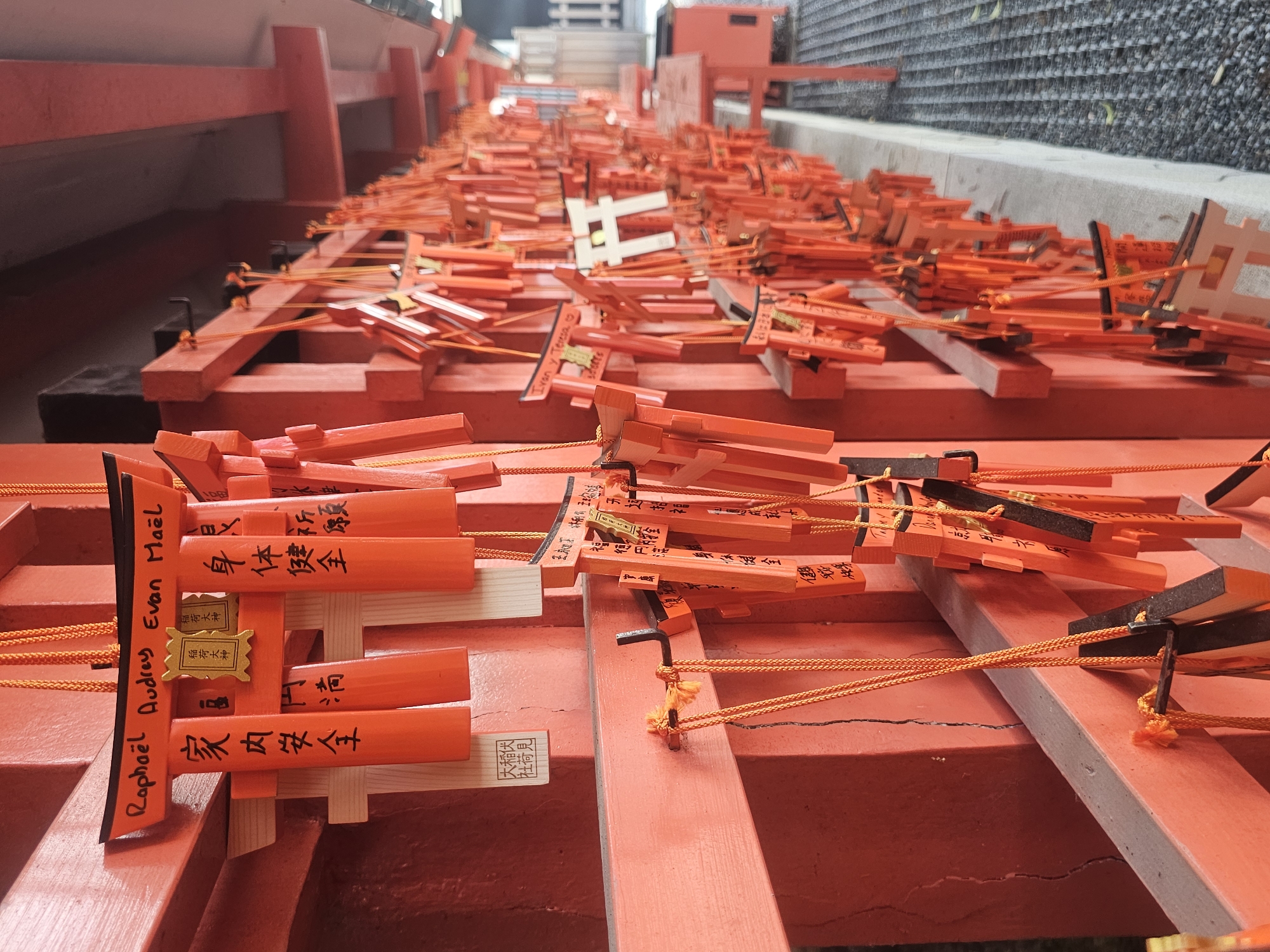
The image captures a vibrant and detailed display of numerous small, orange wooden objects resembling *torii* gates, commonly known as *ema* (votive tablets), set within a Shinto shrine in Kyoto, Japan. These *ema* are arranged closely together on multiple rows of red wooden beams or shelves, extending into the background, creating a sense of depth and abundance. Each *ema* is a miniature representation of a *torii*, typically orange with a black or white top bar, and many are adorned with orange cords or strings used for hanging. The overall setting is dominated by shades of red and orange, with some dark elements from the back of the *ema* and the shadows underneath the structures. In the background, a grey textured wall and concrete structures are visible, suggesting a covered or semi-enclosed area, likely protecting the offerings from the elements. The activity depicted is the traditional practice of offering *ema* at a Shinto shrine, where individuals write their wishes, prayers, or expressions of gratitude before hanging them for the kami (deities) to receive. The scene reflects a spiritual practice and a collective expression of hope and devotion. Visible text on various *ema* includes personal names written by visitors, such as "Raphaël Audrey Evan Maël", "Ivan y Teresa", and "王瑜婷". Japanese characters convey wishes and dedications, including "稲荷大神" (Inari Ōkami – Great God Inari), "身体健全" (shintai kenzen – good health), "家内安全" (kanai anzen – family safety), and "円満" (enman – harmony/fulfillment). Other discernible Japanese text includes "大福稲荷社" (Daifuku Inari Shrine) and "犬見", likely referring to specific shrine details. The accumulation of these *ema* signifies the popularity and spiritual significance of the location, characteristic of many Japanese shrines, particularly those dedicated to Inari.
No transactions found