
Stake attention in this memory
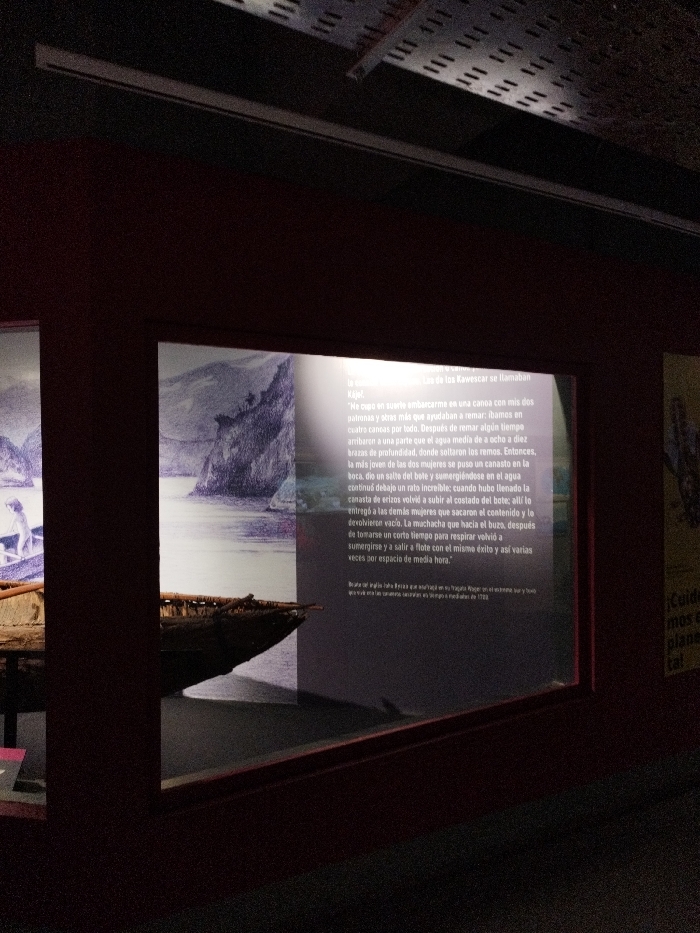
The image shows a dimly lit museum exhibit, likely in Santiago, Chile, featuring display panels that illuminate the scene. The central focus is a large informational panel showcasing an illustration of a rugged, mountainous coastline with water in the foreground and a traditional, dark-colored canoe. Below this illustration, a physical model of a weathered wooden canoe is displayed within the case. To the right of the illustration, white text on a dark background provides a narrative. The visible title, "Las de los Kawescar se llamaban Kajel," refers to the indigenous Kawescar people. The main text, attributed to English Captain John Byron from his observations in 1789, describes a vivid scene: a young woman, part of a group in canoes, repeatedly diving into deep water with a basket in her mouth to collect sea urchins ("erizos"). She resurfaces, empties her catch, and dives again for approximately half an hour, demonstrating a traditional foraging technique. A partial display panel on the far left shows an illustration of people in a canoe, while a yellow panel on the far right displays text reading "¡Cuide mos el plane tal," suggesting an environmental message. Above the exhibits, the ceiling features industrial-style metal grilles and lighting tracks, contributing to the museum's modern aesthetic. The scene offers a historical and cultural glimpse into the life and practices of the Kawescar people through both visual and written accounts.
No transactions found