
Sign in
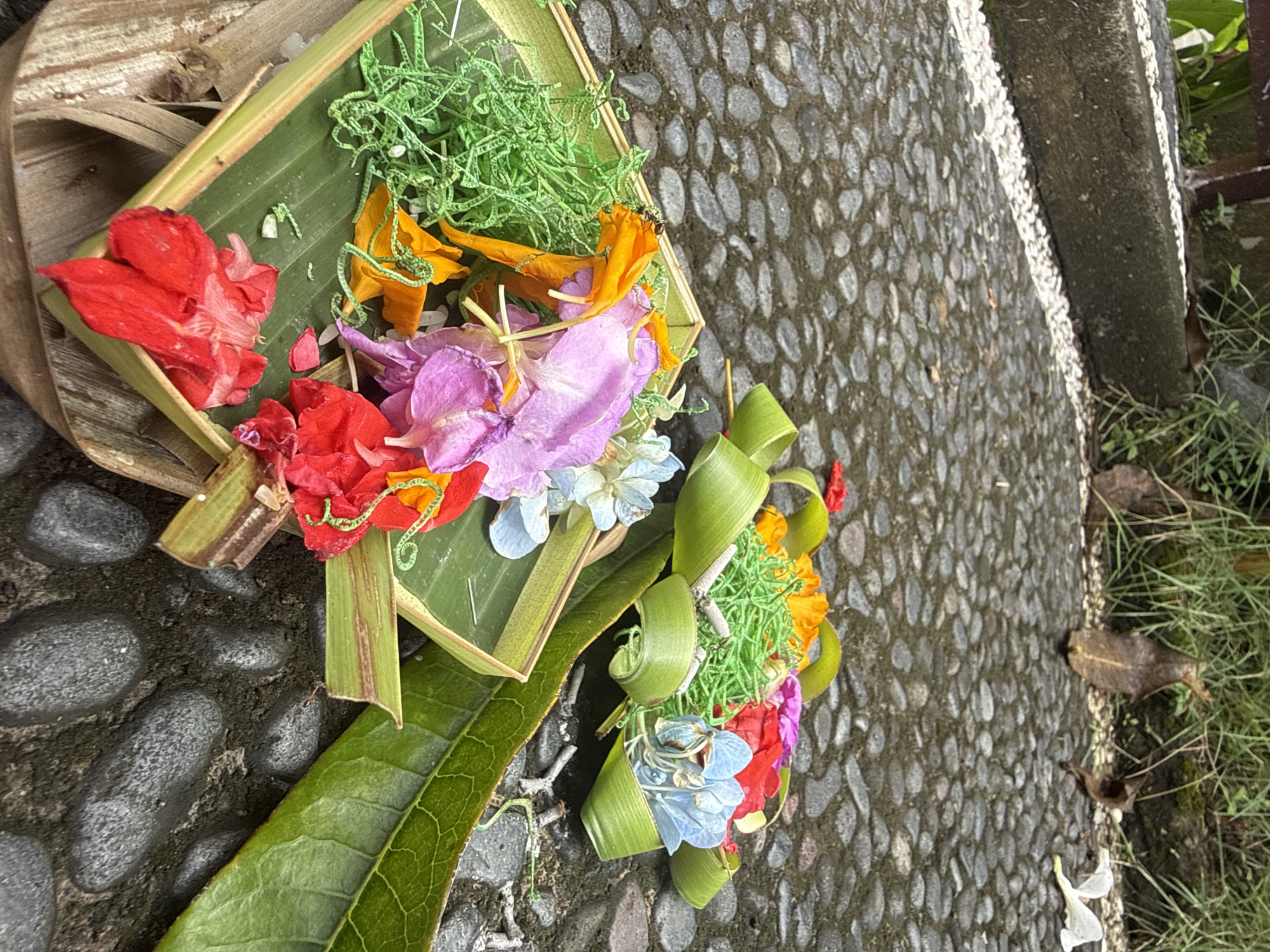
The image captures a close-up, slightly tilted view of two Balinese Hindu offerings, known as "Canang Sari," placed on a damp, grey cobblestone or pebble-dashed ground. The scene is set outdoors in Tampaksiring, Indonesia, under bright, natural daylight.

The primary subjects are the two offerings, each meticulously crafted from woven palm leaves, forming a small, square-shaped basket. The offerings are overflowing with an array of vibrant flowers and other natural elements. The larger offering, positioned prominently in the upper left, features vivid red, purple, and orange flower petals, interspersed with bright green shredded material, possibly young palm leaves or grass. Small white grains, likely rice, are also visible. A few small ants are seen crawling on the petals of this offering.

A second, smaller offering is visible towards the right, mirroring the composition of the first with colorful flowers (including red, orange, and light blue/purple hues) and green shredded material, contained within a smaller palm leaf vessel that appears to be partially rolled or folded.

The ground beneath the offerings is composed of smooth, dark grey, oval-shaped stones set in a darker mortar, giving it a cobblestone-like appearance. Its dampness suggests recent rain or dew. A large, dark green leaf with visible veins extends into the lower left corner, lying on the ground. Towards the right edge of the frame, beyond the offerings, patches of green grass and a few dried brown leaves are visible, indicating the presence of natural foliage nearby.

The activity depicted is the aftermath of placing these daily offerings, a significant ritual of gratitude and prayer in Balinese Hinduism. The image conveys a sense of peaceful tradition and the natural beauty of the offerings. No visible text is present in the image.
ria

Apr 28, 2026, 2:45 AM

Tampaksiring, Indonesia

Stake attention in this memory

spiritual
tranquil
natural
devotional
vibrant

The image captures a close-up, slightly tilted view of two Balinese Hindu offerings, known as "Canang Sari," placed on a damp, grey cobblestone or pebble-dashed ground. The scene is set outdoors in Tampaksiring, Indonesia, under bright, natural daylight. The primary subjects are the two offerings, each meticulously crafted from woven palm leaves, forming a small, square-shaped basket. The offerings are overflowing with an array of vibrant flowers and other natural elements. The larger offering, positioned prominently in the upper left, features vivid red, purple, and orange flower petals, interspersed with bright green shredded material, possibly young palm leaves or grass. Small white grains, likely rice, are also visible. A few small ants are seen crawling on the petals of this offering. A second, smaller offering is visible towards the right, mirroring the composition of the first with colorful flowers (including red, orange, and light blue/purple hues) and green shredded material, contained within a smaller palm leaf vessel that appears to be partially rolled or folded. The ground beneath the offerings is composed of smooth, dark grey, oval-shaped stones set in a darker mortar, giving it a cobblestone-like appearance. Its dampness suggests recent rain or dew. A large, dark green leaf with visible veins extends into the lower left corner, lying on the ground. Towards the right edge of the frame, beyond the offerings, patches of green grass and a few dried brown leaves are visible, indicating the presence of natural foliage nearby. The activity depicted is the aftermath of placing these daily offerings, a significant ritual of gratitude and prayer in Balinese Hinduism. The image conveys a sense of peaceful tradition and the natural beauty of the offerings. No visible text is present in the image.

transactions
revenues
stakers
Earliest
Latest
Highest stake

No transactions found

More from this user

More from Tampaksiring

ria

Apr 28, 2026, 2:45 AM

Tampaksiring, Indonesia

Licensed under Creative Commons Attribution 4.0 International License. You are free to share and adapt this content with proper attribution.