Sign in
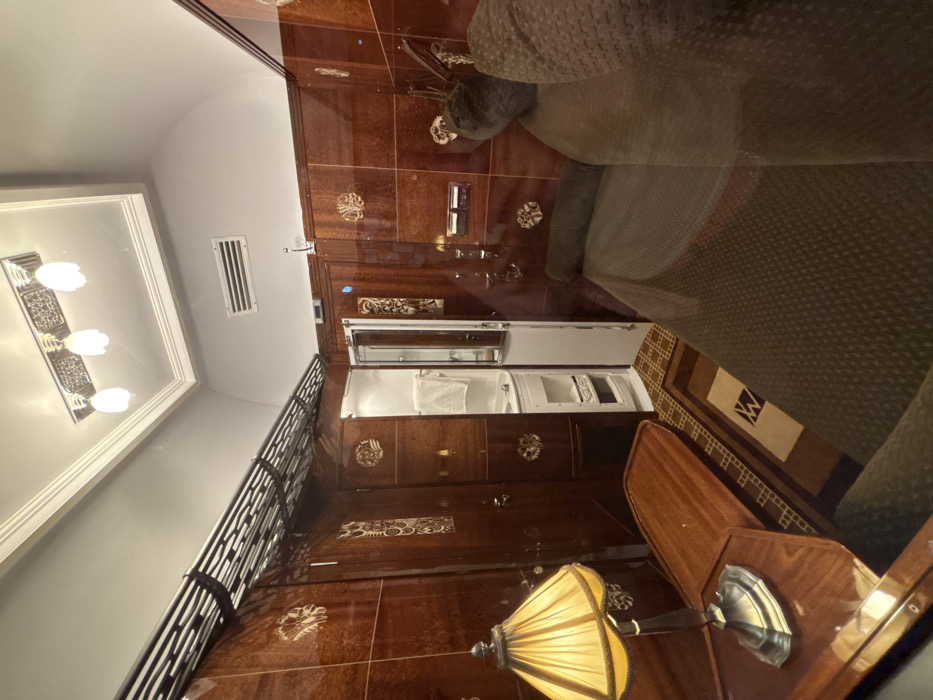
The image depicts the interior of a luxurious, vintage train compartment, specifically a private cabin, consistent with the opulent design found on the historic Orient Express, historically linked to departures from Paris, France.

The scene presents a compact, highly appointed space characterized by extensive use of dark reddish-brown, highly polished wood paneling with a glossy, reflective finish. These panels adorn the walls and integrated cabinetry, featuring intricate, gilded or brass decorative inlays with floral and organic motifs arranged in a patterned grid.

The ceiling is light grey or off-white with a central rectangular recessed section framed by white molding. An ornate, rectangular ceiling light fixture with three opaque, bell-shaped bulbs provides illumination. A white rectangular air vent is visible on the upper wall.

In the left foreground, a small, polished wooden table with a curved, kidney-shaped top and a metallic base holds a decorative table lamp. The lamp features a pleated, amber-colored fabric shade and a metallic, possibly silver-plated, ornate base. Above the table, a slatted, dark metal luggage rack is mounted along the upper wall.

In the center-left, an open door reveals a compact, white-paneled washroom. Inside, a small white sink with a faucet is visible, along with a mirror on the inside of the door and shelving below the sink. A white towel hangs on a rail within the washroom.

To the right, a plush, dark brown upholstered armchair or sofa, covered in a textured fabric, occupies a significant portion of the foreground. Its rounded back and armrest are visible.

The floor is covered with a patterned rug or carpet in shades of brown and beige, featuring geometric designs and a potential monogram (appearing as a stylized "W"). The reflective surfaces of the wood and a subtle reflection over the armchair suggest either a protective glass barrier (common in museum exhibits) or a camera lens reflection. No people, actions, or direct interactions are present in the scene. The overall aesthetic points to an Art Deco or early 20th-century luxury travel design.
lacartebleu

Mar 8, 2026, 5:40 PM

Paris, France

Stake attention in this memory

Luxury
Opulence
Claustrophobia
Vintage
Comfort

The image depicts the interior of a luxurious, vintage train compartment, specifically a private cabin, consistent with the opulent design found on the historic Orient Express, historically linked to departures from Paris, France. The scene presents a compact, highly appointed space characterized by extensive use of dark reddish-brown, highly polished wood paneling with a glossy, reflective finish. These panels adorn the walls and integrated cabinetry, featuring intricate, gilded or brass decorative inlays with floral and organic motifs arranged in a patterned grid. The ceiling is light grey or off-white with a central rectangular recessed section framed by white molding. An ornate, rectangular ceiling light fixture with three opaque, bell-shaped bulbs provides illumination. A white rectangular air vent is visible on the upper wall. In the left foreground, a small, polished wooden table with a curved, kidney-shaped top and a metallic base holds a decorative table lamp. The lamp features a pleated, amber-colored fabric shade and a metallic, possibly silver-plated, ornate base. Above the table, a slatted, dark metal luggage rack is mounted along the upper wall. In the center-left, an open door reveals a compact, white-paneled washroom. Inside, a small white sink with a faucet is visible, along with a mirror on the inside of the door and shelving below the sink. A white towel hangs on a rail within the washroom. To the right, a plush, dark brown upholstered armchair or sofa, covered in a textured fabric, occupies a significant portion of the foreground. Its rounded back and armrest are visible. The floor is covered with a patterned rug or carpet in shades of brown and beige, featuring geometric designs and a potential monogram (appearing as a stylized "W"). The reflective surfaces of the wood and a subtle reflection over the armchair suggest either a protective glass barrier (common in museum exhibits) or a camera lens reflection. No people, actions, or direct interactions are present in the scene. The overall aesthetic points to an Art Deco or early 20th-century luxury travel design.

Loading AttnAds…

transactions
revenues
stakers
Earliest
Latest
Highest stake

No transactions found

More from this user

More from Paris

lacartebleu

Mar 8, 2026, 5:40 PM

Paris, France

Licensed under Creative Commons Attribution 4.0 International License. You are free to share and adapt this content with proper attribution.