
Stake attention in this memory
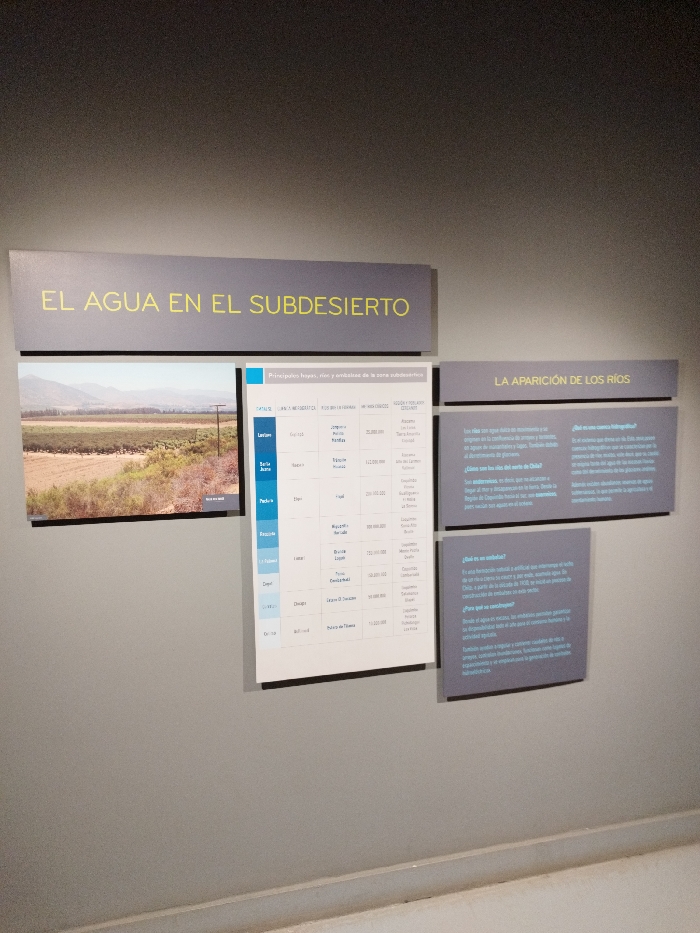
An indoor photograph captures an informational wall display, likely within a museum or educational exhibition, focusing on water resources in a sub-desert environment. No people are visible. The display features multiple panels against a plain, light grey wall. A large, horizontal title panel at the top left reads "EL AGUA EN EL SUBDESIERTO" (WATER IN THE SUB-DESERT) in yellow capital letters. Below this title, to the left, is a rectangular photograph depicting a rural landscape with cultivated fields, sparse vegetation, and mountains in the background under a pale sky. Small text at the bottom right of the photo indicates "Vista cerca del río Hurtado" (View near the Hurtado river). Adjacent to the photograph, occupying the central space, is a large white panel featuring a table titled "Principales hoyas, ríos y embalses de la zona subdesértica" (Main basins, rivers and reservoirs of the sub-desert zone). The table has columns for "DETALLE" (Detail), "M3 / ARTIFICALES" (M3 / Artificial), "SUPERFICIE CULTIVADA" (Cultivated Surface), and "RÍO" (River). Visible entries include names like "Limarí," "Grande," "Paloma," "Punilla," "Hurtado," "Choapa," "Illapel," "Cuncumén," and "Quilimarí," listing associated details and values. To the right, a smaller horizontal panel is titled "LA APARICIÓN DE LOS RÍOS" (THE APPEARANCE OF RIVERS). Below it, two square-shaped text panels provide more information. The upper one discusses rivers in northern Chile, mentioning glaciers and snow in the Andes, and refers to the Región de Coquimbo. It includes the question "¿Qué son los ríos del norte de Chile?" (What are the rivers of northern Chile?) and also asks "¿Qué es una cuenca hidrográfica?" (What is a hydrological basin?). The lower panel asks "¿Qué es un embalse?" (What is a reservoir?) and "¿Para qué se construyen?" (Why are they built?), defining reservoirs as artificial formations for water storage, primarily for agricultural activity.
No transactions found