
Sign in
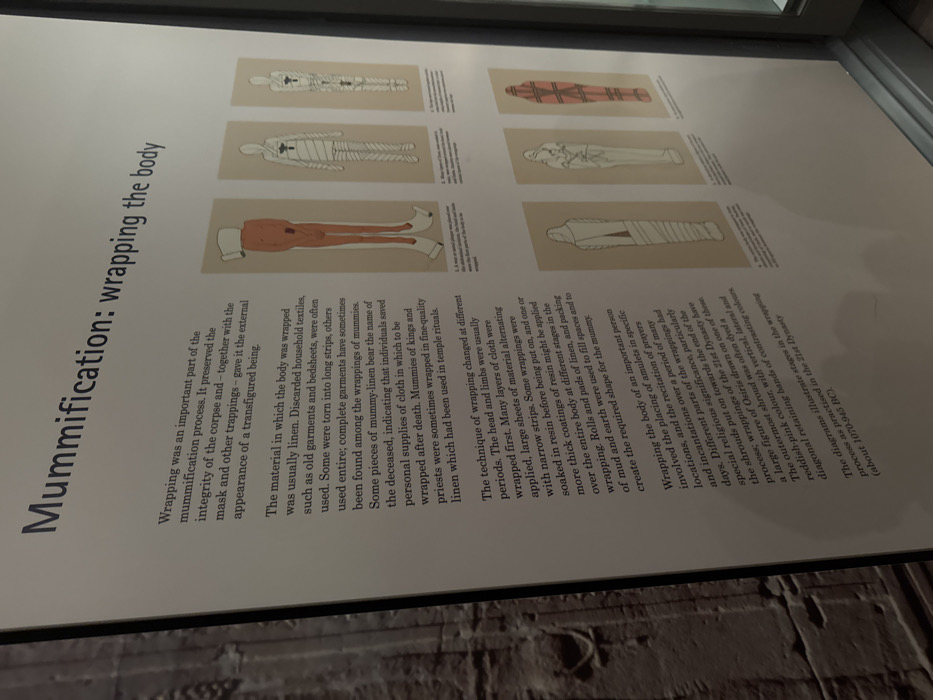
This image captures an informational exhibit panel in a museum, likely located in London, United Kingdom. The panel, titled "Mummification: wrapping the body," details the ancient Egyptian practice of body wrapping.

The main subject is the exhibit's content, which includes multiple paragraphs of text and a series of six illustrative diagrams. These diagrams depict the progressive stages of mummification wrapping, showing a human figure gradually covered in linen bandages and shrouds until fully encased. The illustrations are stylized, presenting a body on a white background with lines indicating the wraps.

The text explains that wrapping was crucial for preserving the corpse's integrity and providing the appearance of a "transfigured being." It discusses the materials used, primarily linen, which ranged from discarded household textiles to fine-quality linen for royalty and priests. The techniques varied across different periods, involving multiple layers, alternating sheets and narrow strips, resin applications, and the use of rolls, pads, mud, and earth to shape the mummy. For important individuals, wrapping included placing amulets and reciting prayers. The text highlights the religious significance of different wrapping parts, mentioning specific examples from the 21st Dynasty (c. 1070-945 BC), such as shrouds depicting Osiris and distinctive coloured bands.

The overall scene suggests an indoor, educational setting with soft, deliberate lighting on the exhibit panel, while the surrounding area appears to be less illuminated, consistent with a museum environment. The visible text is clear and legible, conveying historical and procedural information about mummification.
punit03

Dec 13, 2024, 4:49 PM

London, UK

Stake attention in this memory

This image captures an informational exhibit panel in a museum, likely located in London, United Kingdom. The panel, titled "Mummification: wrapping the body," details the ancient Egyptian practice of body wrapping. The main subject is the exhibit's content, which includes multiple paragraphs of text and a series of six illustrative diagrams. These diagrams depict the progressive stages of mummification wrapping, showing a human figure gradually covered in linen bandages and shrouds until fully encased. The illustrations are stylized, presenting a body on a white background with lines indicating the wraps. The text explains that wrapping was crucial for preserving the corpse's integrity and providing the appearance of a "transfigured being." It discusses the materials used, primarily linen, which ranged from discarded household textiles to fine-quality linen for royalty and priests. The techniques varied across different periods, involving multiple layers, alternating sheets and narrow strips, resin applications, and the use of rolls, pads, mud, and earth to shape the mummy. For important individuals, wrapping included placing amulets and reciting prayers. The text highlights the religious significance of different wrapping parts, mentioning specific examples from the 21st Dynasty (c. 1070-945 BC), such as shrouds depicting Osiris and distinctive coloured bands. The overall scene suggests an indoor, educational setting with soft, deliberate lighting on the exhibit panel, while the surrounding area appears to be less illuminated, consistent with a museum environment. The visible text is clear and legible, conveying historical and procedural information about mummification.

Loading AttnAds…

transactions
revenues
stakers
Earliest
Latest
Highest stake

No transactions found

More from this user

More from London

punit03

Dec 13, 2024, 4:49 PM

London, UK

Licensed under Creative Commons Attribution 4.0 International License. You are free to share and adapt this content with proper attribution.