
Sign in
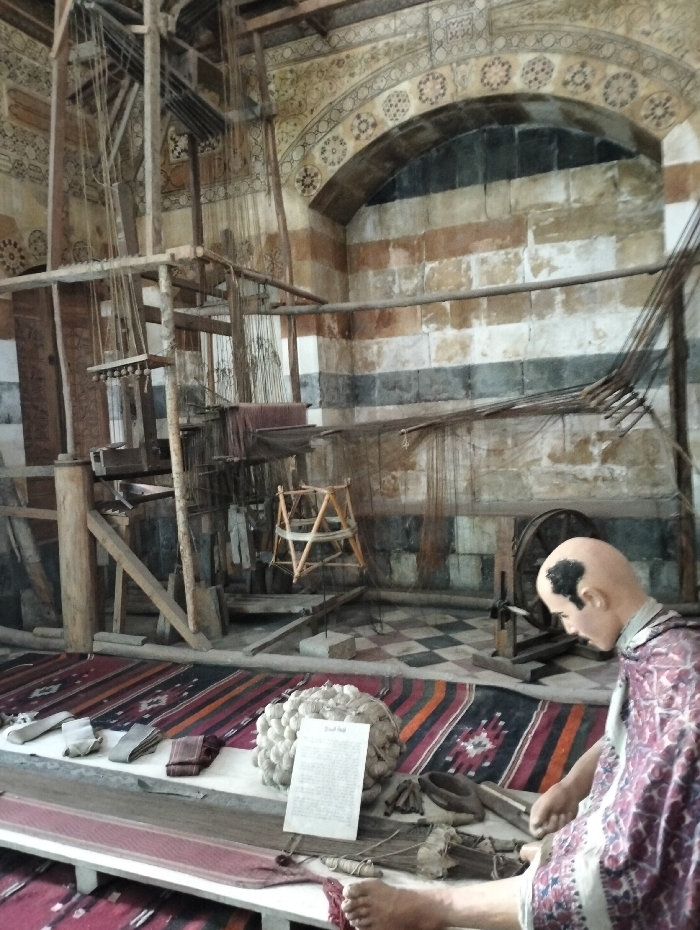
This image depicts an indoor museum exhibit showcasing traditional textile production, located within the Azem Palace in Damascus, Syria.

The scene features a prominent, large wooden loom on the left and in the central background, constructed from rough-hewn beams and poles, with numerous threads and unfinished fabric segments integrated. To the right, a male mannequin is positioned, appearing to sit on a low platform. The mannequin has a bald head with a dark patch of hair on the left side, and wears a patterned garment predominantly in maroon, purple, and white. Its bare right foot and lower leg are visible. Its right hand holds a wooden tool, interacting with a section of fabric.

In the foreground, a display on a white platform includes several folded textile samples (grey, maroon, patterned), a large, light-colored bundle of fibrous material (likely wool or cotton), and an upright piece of paper with Arabic text, serving as a label. Various small wooden weaving tools, bobbins, and yarn bundles are scattered around the mannequin's hands. The floor in the foreground is covered by a patterned rug in red, black, and white with geometric designs.

In the mid-ground, a wooden spinning wheel with a large wheel is visible behind the mannequin, and a wooden frame for yarn or spools is to its left. The background wall features horizontal stripes of natural stone masonry in dark grey, light beige, and reddish-brown. Above this, an archway with alternating dark and light stones is present, topped by intricate painted or stenciled floral and geometric patterns in muted colors. The visible floor beyond the display platform is tiled in a checkerboard pattern of light and dark squares. The environment simulates a historical workshop setting.
obaida alabrash

Feb 14, 2026

Damascus, Syria

Stake attention in this memory

Historical
Intricate
Traditional
Detailed
Artisanal

This image depicts an indoor museum exhibit showcasing traditional textile production, located within the Azem Palace in Damascus, Syria. The scene features a prominent, large wooden loom on the left and in the central background, constructed from rough-hewn beams and poles, with numerous threads and unfinished fabric segments integrated. To the right, a male mannequin is positioned, appearing to sit on a low platform. The mannequin has a bald head with a dark patch of hair on the left side, and wears a patterned garment predominantly in maroon, purple, and white. Its bare right foot and lower leg are visible. Its right hand holds a wooden tool, interacting with a section of fabric. In the foreground, a display on a white platform includes several folded textile samples (grey, maroon, patterned), a large, light-colored bundle of fibrous material (likely wool or cotton), and an upright piece of paper with Arabic text, serving as a label. Various small wooden weaving tools, bobbins, and yarn bundles are scattered around the mannequin's hands. The floor in the foreground is covered by a patterned rug in red, black, and white with geometric designs. In the mid-ground, a wooden spinning wheel with a large wheel is visible behind the mannequin, and a wooden frame for yarn or spools is to its left. The background wall features horizontal stripes of natural stone masonry in dark grey, light beige, and reddish-brown. Above this, an archway with alternating dark and light stones is present, topped by intricate painted or stenciled floral and geometric patterns in muted colors. The visible floor beyond the display platform is tiled in a checkerboard pattern of light and dark squares. The environment simulates a historical workshop setting.

transactions
revenues
stakers
Earliest
Latest
Highest stake

No transactions found

More from this user

More from Damascus

obaida alabrash

Feb 14, 2026

Damascus, Syria

Licensed under Creative Commons Attribution 4.0 International License. You are free to share and adapt this content with proper attribution.