
Sign in
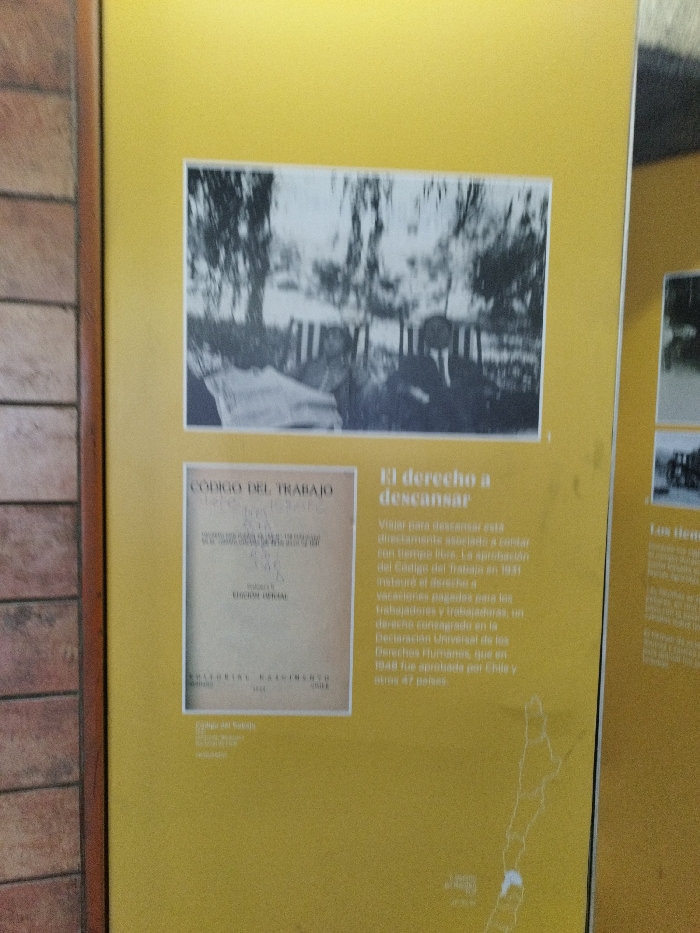
This image displays a yellow information panel, likely part of a museum exhibit, focusing on labor rights in Chile. On the left, a brick wall is visible.

At the top of the yellow panel is an old, blurry black and white photograph depicting several people seated outdoors under trees, possibly enjoying leisure time or a picnic. Below this photo, on the left side of the panel, is an image of the cover of a document titled "CÓDIGO DEL TRABAJO" (Labor Code), with "EDICIÓN OFICIAL" (Official Edition) and "EDITORIAL RAIMUNDO" visible.

To the right of the document cover, a large block of text is present, titled "El derecho a descansar" (The right to rest). The text explains that the approval of the Labor Code in 1931 established the right to paid vacations for workers, a right later enshrined in the Universal Declaration of Human Rights, which Chile and 47 other countries approved in 1948. A faint outline of a map, possibly of Chile, is visible at the bottom right of the panel. Another yellow display panel is partially visible on the far right. The overall scene suggests an educational display about historical labor laws and human rights in Chile, with a focus on the importance of rest and leisure.
Mrv

Jan 8, 2025, 7:21 PM

Santiago, Chile

Stake attention in this memory

This image displays a yellow information panel, likely part of a museum exhibit, focusing on labor rights in Chile. On the left, a brick wall is visible. At the top of the yellow panel is an old, blurry black and white photograph depicting several people seated outdoors under trees, possibly enjoying leisure time or a picnic. Below this photo, on the left side of the panel, is an image of the cover of a document titled "CÓDIGO DEL TRABAJO" (Labor Code), with "EDICIÓN OFICIAL" (Official Edition) and "EDITORIAL RAIMUNDO" visible. To the right of the document cover, a large block of text is present, titled "El derecho a descansar" (The right to rest). The text explains that the approval of the Labor Code in 1931 established the right to paid vacations for workers, a right later enshrined in the Universal Declaration of Human Rights, which Chile and 47 other countries approved in 1948. A faint outline of a map, possibly of Chile, is visible at the bottom right of the panel. Another yellow display panel is partially visible on the far right. The overall scene suggests an educational display about historical labor laws and human rights in Chile, with a focus on the importance of rest and leisure.

transactions
revenues
stakers
Earliest
Latest
Highest stake

No transactions found

More from this user

More from Santiago

Mrv

Jan 8, 2025, 7:21 PM

Santiago, Chile

Licensed under Creative Commons Attribution 4.0 International License. You are free to share and adapt this content with proper attribution.