
Stake attention in this memory
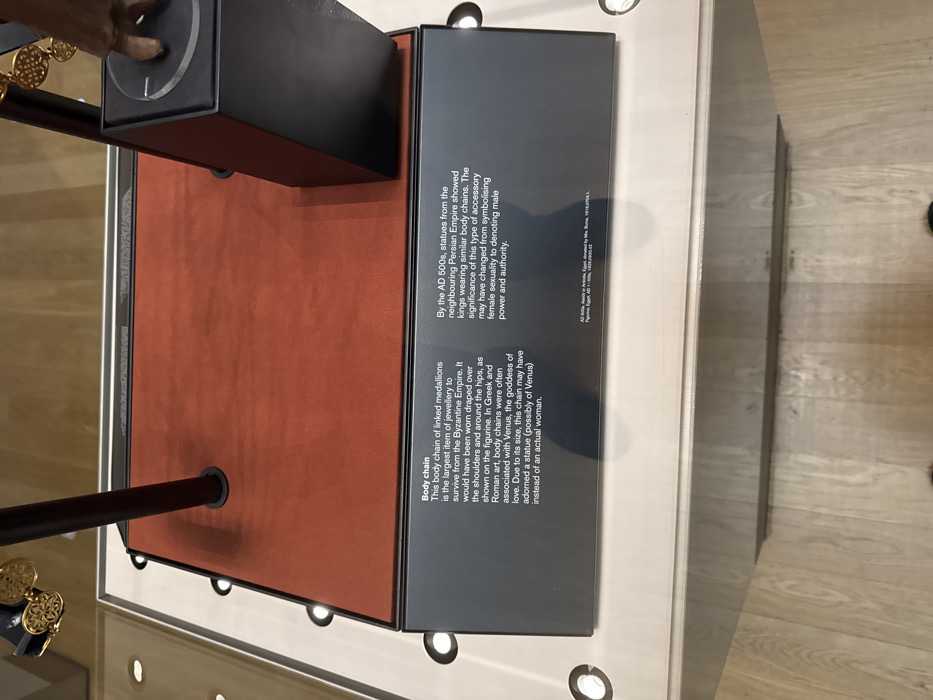
The image shows an indoor museum exhibit, likely located in London, United Kingdom. A person's hand is visible in the upper left, seemingly interacting with or adjusting a component of the display. The central part of the exhibit features a rectangular display case with a reddish-brown, possibly velvet, interior. Extending into this area from the left is a dark rod with golden, circular, medallion-like ornaments, likely part of the "body chain" mentioned in the accompanying text. To the right of the display case is a dark informational panel with white text, providing details about the exhibit. The text, titled "Body chain," describes it as the largest piece of jewelry surviving from the Byzantine Empire. It explains that such chains were worn draped over the shoulders and hips, and in Greek and Roman art, were associated with Venus, the goddess of love. The text suggests that due to its size, the exhibited chain might have adorned a statue of Venus rather than a person. It also notes that by the AD 500s, similar body chains appeared on statues of kings in the Persian Empire, indicating a shift in meaning from symbolizing female sexuality to denoting male power and authority. The display setup rests on a light-colored, reflective surface, possibly glass, which has several circular, inset lights. The floor beneath is made of light-toned wooden planks. The overall lighting is artificial and bright, typical of a museum setting.
Loading AttnAds…
No transactions found