
Sign in
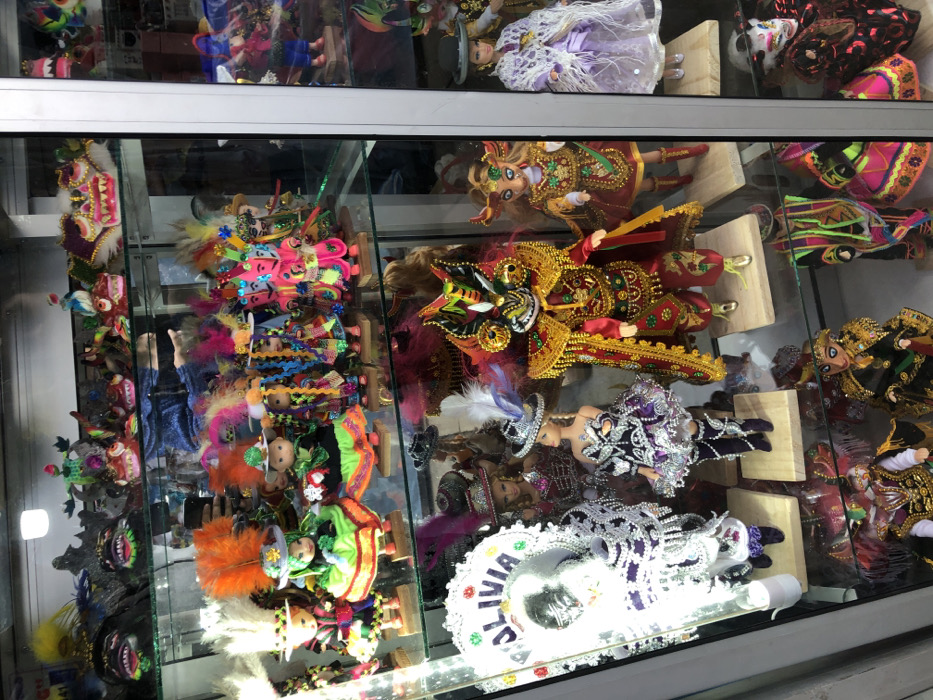
This media file presents a vibrant display of traditional Bolivian dolls within a glass-enclosed showcase, likely situated in a souvenir shop or market in La Paz, Bolivia. The dolls, varying in size and style, are intricately dressed in authentic costumes representing various regional folk dances and cultural figures.

In the upper and central sections, several larger dolls are featured. One doll is adorned in a purple "cholita" dress with a white lace shawl, embodying a traditional indigenous woman. Below it, a doll in a striking red and gold costume, featuring a detailed mask and feathered headpiece, resembles a "Diablada" dancer. Nearby, another doll wears an elaborate black and silver sequined gown with a feathered hat, possibly depicting a "Morenada" dancer.

To the left, a vertical arrangement of smaller, folk-art style dolls showcases a multitude of bright colors, feathers, and patterned fabrics, each with unique facial features and tiny hats. Many of these appear to represent "Tinku" or other regional dancers.

The dolls are positioned on small wooden or clear plastic stands within the glass cases, which reflect overhead lights and the surrounding environment, including indistinct shapes of people or other store elements. On a prominent white, oval-shaped decorative piece in the bottom right foreground, the name "OLIVIA" is clearly visible in large black letters, with other partial letters like "TCA" possibly indicating a surname or a longer phrase. The scene vividly captures a selection of traditional Bolivian artistry and cultural symbolism.
MNela

Jan 24, 2025, 8:17 PM

La Paz, Bolivia

Stake attention in this memory

This media file presents a vibrant display of traditional Bolivian dolls within a glass-enclosed showcase, likely situated in a souvenir shop or market in La Paz, Bolivia. The dolls, varying in size and style, are intricately dressed in authentic costumes representing various regional folk dances and cultural figures. In the upper and central sections, several larger dolls are featured. One doll is adorned in a purple "cholita" dress with a white lace shawl, embodying a traditional indigenous woman. Below it, a doll in a striking red and gold costume, featuring a detailed mask and feathered headpiece, resembles a "Diablada" dancer. Nearby, another doll wears an elaborate black and silver sequined gown with a feathered hat, possibly depicting a "Morenada" dancer. To the left, a vertical arrangement of smaller, folk-art style dolls showcases a multitude of bright colors, feathers, and patterned fabrics, each with unique facial features and tiny hats. Many of these appear to represent "Tinku" or other regional dancers. The dolls are positioned on small wooden or clear plastic stands within the glass cases, which reflect overhead lights and the surrounding environment, including indistinct shapes of people or other store elements. On a prominent white, oval-shaped decorative piece in the bottom right foreground, the name "OLIVIA" is clearly visible in large black letters, with other partial letters like "TCA" possibly indicating a surname or a longer phrase. The scene vividly captures a selection of traditional Bolivian artistry and cultural symbolism.

Loading AttnAds…

transactions
revenues
stakers
Earliest
Latest
Highest stake

No transactions found

More from this user

More from La Paz

MNela

Jan 24, 2025, 8:17 PM

La Paz, Bolivia

Licensed under Creative Commons Attribution 4.0 International License. You are free to share and adapt this content with proper attribution.