Sign in
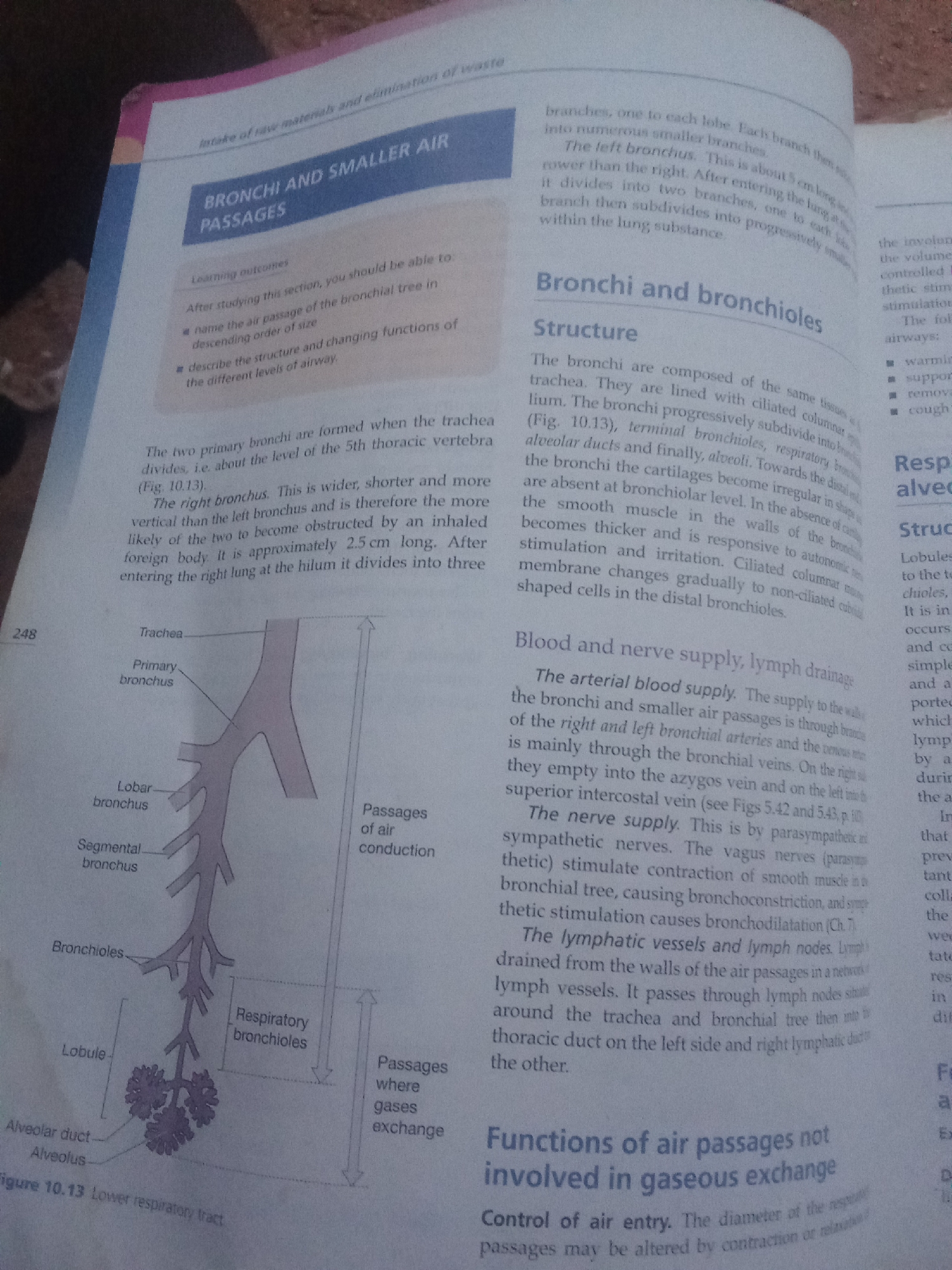
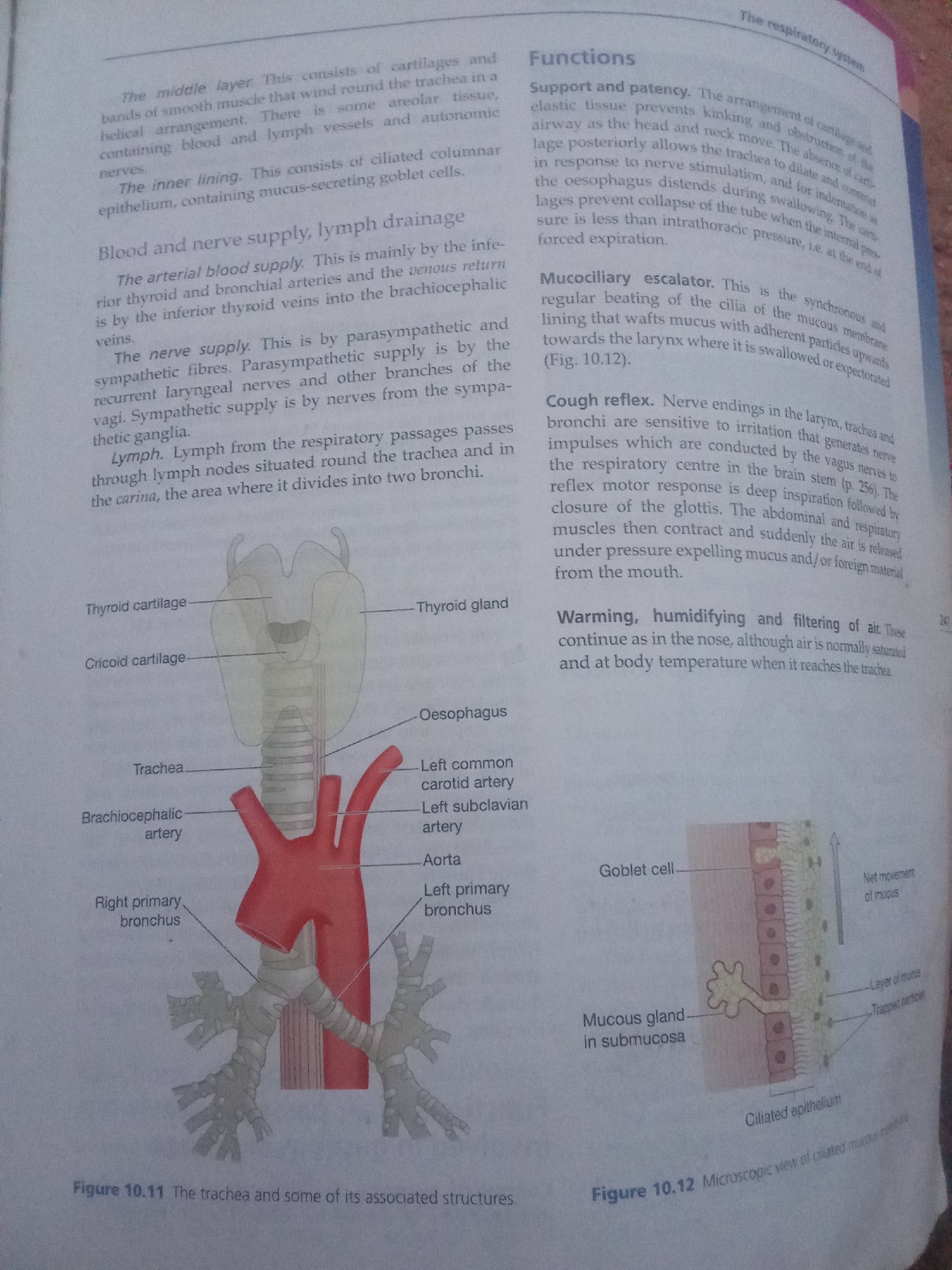
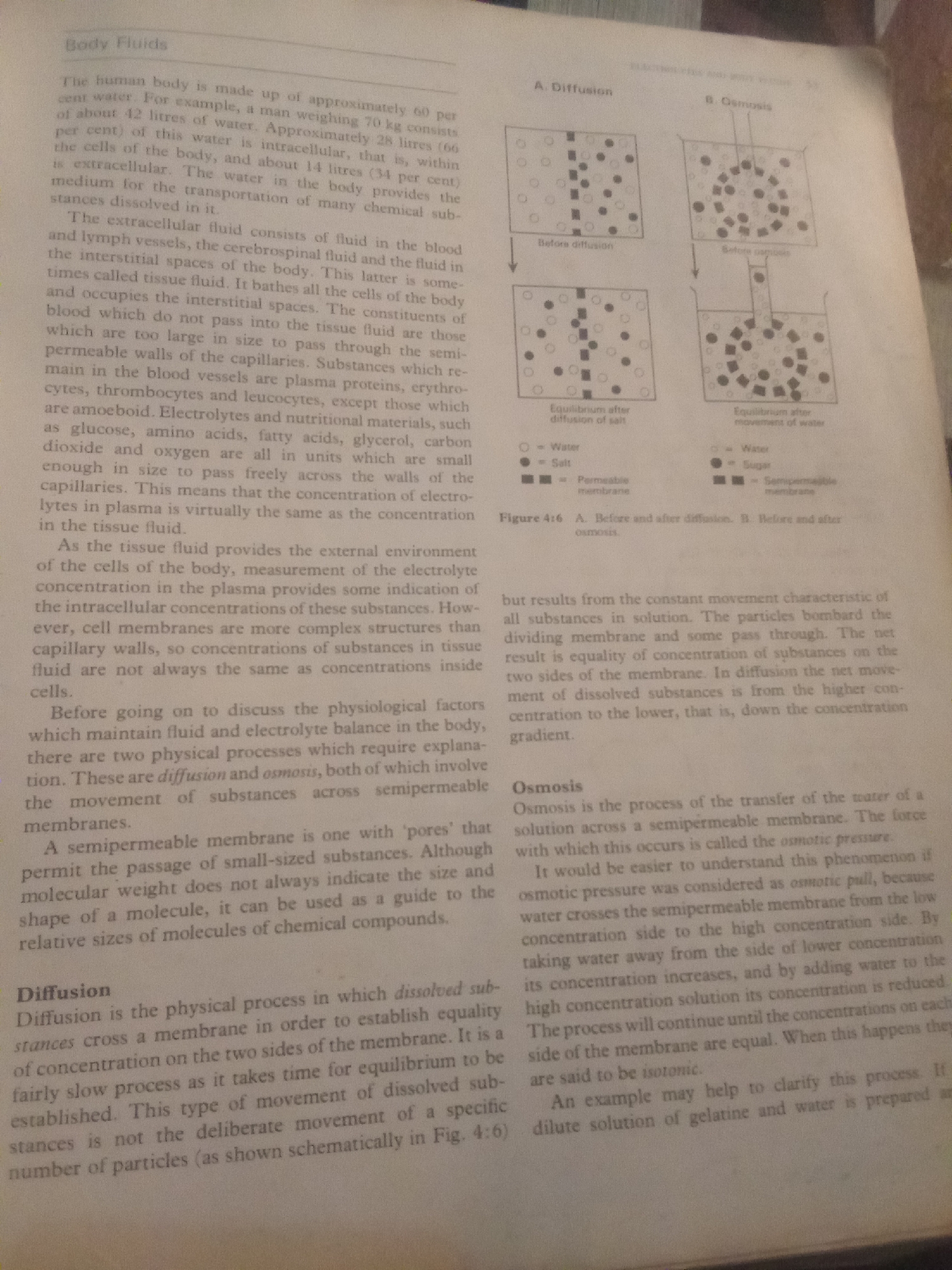
This media file contains a scanned image of a textbook page discussing body fluids, diffusion, and osmosis. The page is primarily text-based, with two diagrams illustrating the concepts of diffusion and osmosis.

The text describes the composition of the human body in terms of water content, distinguishing between intracellular and extracellular fluids. It explains the role of extracellular fluid, including blood plasma, lymph, cerebrospinal fluid, and tissue fluid, in transporting substances. The text then introduces diffusion and osmosis as physical processes governing the movement of substances across semipermeable membranes.

Diagram A illustrates diffusion, showing the movement of salt particles from an area of high concentration to an area of low concentration across a permeable membrane, leading to equilibrium. Diagram B depicts osmosis, illustrating the movement of water molecules from an area of low solute concentration to an area of high solute concentration across a semipermeable membrane.

Visible text includes headings such as "Body Fluids," "A. Diffusion," "B. Osmosis," and "Diffusion," and "Osmosis." The diagrams are labeled with "Before diffusion," "Equilibrium after diffusion of salt," "Before osmosis," and "Equilibrium after movement of water." A legend explains the symbols used for water, salt, sugar, permeable membrane, and semipermeable membrane. A caption under the diagrams reads "Figure 4:6 A. Before and after diffusion. B. Before and after osmosis."

There are no people or discernible emotions in the image. The setting appears to be a laboratory or educational environment where such textbooks are used. The time of day and weather are not indicated. No specific location cues are present beyond the context of a scientific textbook.
FM-KpyEx1

Jun 30, 2026, 11:54 AM

Jalingo, Nigeria

Stake attention in this memory

educational
informative
scientific
neutral
text-based

This media file contains a scanned image of a textbook page discussing body fluids, diffusion, and osmosis. The page is primarily text-based, with two diagrams illustrating the concepts of diffusion and osmosis. The text describes the composition of the human body in terms of water content, distinguishing between intracellular and extracellular fluids. It explains the role of extracellular fluid, including blood plasma, lymph, cerebrospinal fluid, and tissue fluid, in transporting substances. The text then introduces diffusion and osmosis as physical processes governing the movement of substances across semipermeable membranes. Diagram A illustrates diffusion, showing the movement of salt particles from an area of high concentration to an area of low concentration across a permeable membrane, leading to equilibrium. Diagram B depicts osmosis, illustrating the movement of water molecules from an area of low solute concentration to an area of high solute concentration across a semipermeable membrane. Visible text includes headings such as "Body Fluids," "A. Diffusion," "B. Osmosis," and "Diffusion," and "Osmosis." The diagrams are labeled with "Before diffusion," "Equilibrium after diffusion of salt," "Before osmosis," and "Equilibrium after movement of water." A legend explains the symbols used for water, salt, sugar, permeable membrane, and semipermeable membrane. A caption under the diagrams reads "Figure 4:6 A. Before and after diffusion. B. Before and after osmosis." There are no people or discernible emotions in the image. The setting appears to be a laboratory or educational environment where such textbooks are used. The time of day and weather are not indicated. No specific location cues are present beyond the context of a scientific textbook.

Loading AttnAds…

transactions
revenues
stakers
Earliest
Latest
Highest stake

No transactions found

More from this user

More from Jalingo

FM-KpyEx1

Jun 30, 2026, 11:54 AM

Jalingo, Nigeria

Licensed under Creative Commons Attribution 4.0 International License. You are free to share and adapt this content with proper attribution.