
Sign in
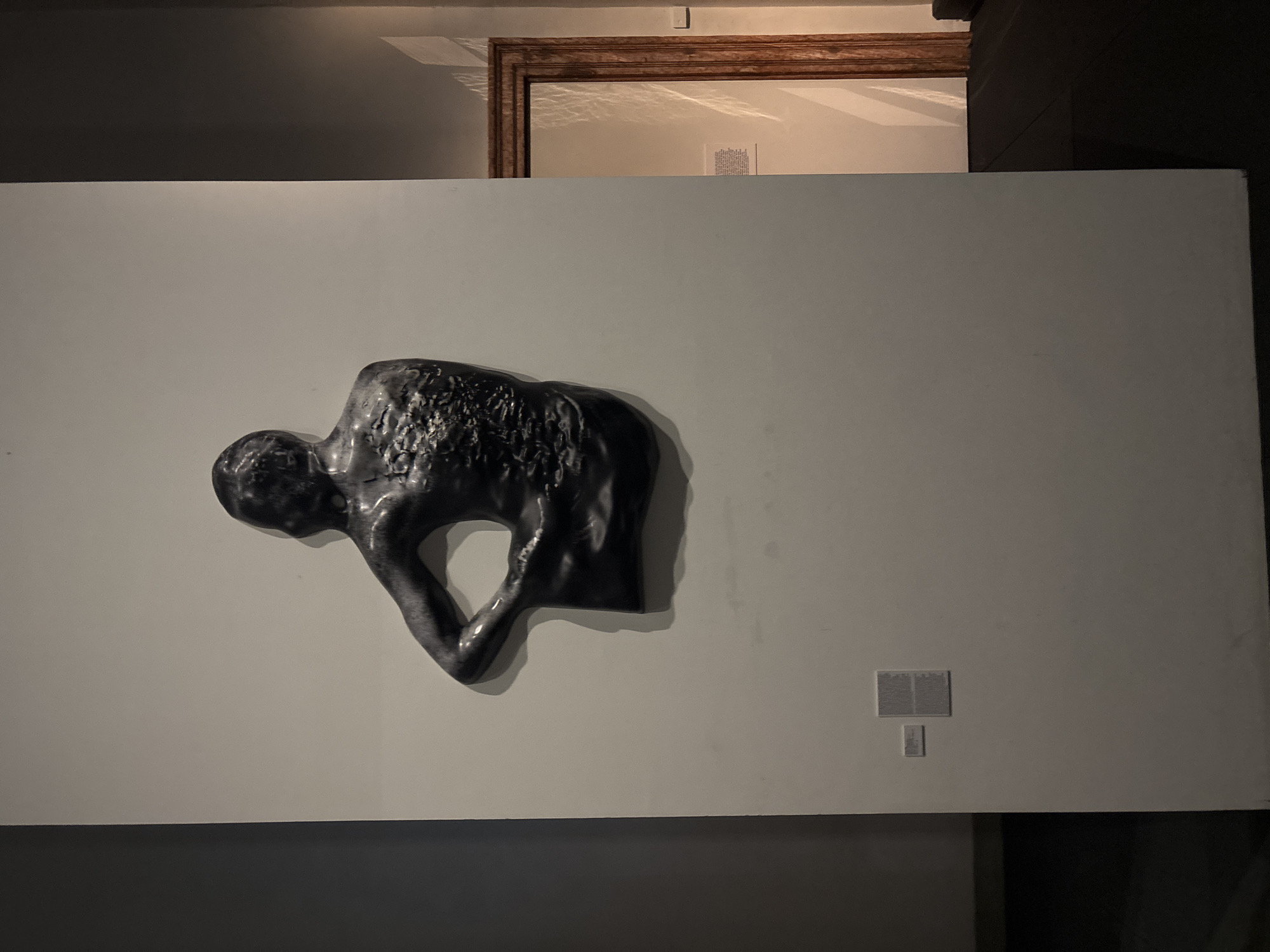
The image displays a dimly lit interior scene, characteristic of an art gallery or museum. The central subject is a dark, metallic sculpture depicting the upper torso of a human figure, viewed from the back. The sculpture, likely bronze, exhibits a distinctively textured, almost scarred or molten surface on the back, particularly on the figure's right side. The figure's right arm is bent at the elbow, with the hand resting on the hip, while the left arm is partially visible. The sculpture is mounted on a tall, off-white wall, casting a soft shadow. Below the artwork, two small rectangular panels containing text, likely informational labels, are affixed to the wall. To the left, a darker grey partition or wall section is visible. To the right, an ornate, dark brown wooden doorframe or archway opens into an adjacent space. Through this opening, another light-colored wall is discernible, illuminated by a warm light source that creates highlights on the wooden frame. The floor in the adjacent room appears dark, possibly black or dark grey, and somewhat reflective.

The sculpture's style, particularly its textured surface and fragmented presentation, is highly characteristic of Auguste Rodin, specifically resembling his "L'Homme au Bras Cassé" (Man with the Broken Arm). Based on the request for a location in Venice, Italy, and the nature of the artwork, this scene is consistent with an exhibition of Rodin's works. A prominent exhibition titled "Rodin, The Age of Bronze. The Origins of Modern Sculpture" was held at the **Palazzo Ducale (Doge's Palace)** in Venice from October 2016 to January 2017. The grandeur of the setting suggested by the wooden frame and the overall presentation aligns with such a prestigious venue in the city of Venice.
FM-r2byf2

Jun 6, 2026

Venice, Italy

Stake attention in this memory

contemplative
disturbing
vulnerable
haunting
introspective

The image displays a dimly lit interior scene, characteristic of an art gallery or museum. The central subject is a dark, metallic sculpture depicting the upper torso of a human figure, viewed from the back. The sculpture, likely bronze, exhibits a distinctively textured, almost scarred or molten surface on the back, particularly on the figure's right side. The figure's right arm is bent at the elbow, with the hand resting on the hip, while the left arm is partially visible. The sculpture is mounted on a tall, off-white wall, casting a soft shadow. Below the artwork, two small rectangular panels containing text, likely informational labels, are affixed to the wall. To the left, a darker grey partition or wall section is visible. To the right, an ornate, dark brown wooden doorframe or archway opens into an adjacent space. Through this opening, another light-colored wall is discernible, illuminated by a warm light source that creates highlights on the wooden frame. The floor in the adjacent room appears dark, possibly black or dark grey, and somewhat reflective. The sculpture's style, particularly its textured surface and fragmented presentation, is highly characteristic of Auguste Rodin, specifically resembling his "L'Homme au Bras Cassé" (Man with the Broken Arm). Based on the request for a location in Venice, Italy, and the nature of the artwork, this scene is consistent with an exhibition of Rodin's works. A prominent exhibition titled "Rodin, The Age of Bronze. The Origins of Modern Sculpture" was held at the **Palazzo Ducale (Doge's Palace)** in Venice from October 2016 to January 2017. The grandeur of the setting suggested by the wooden frame and the overall presentation aligns with such a prestigious venue in the city of Venice.

transactions
revenues
stakers
Earliest
Latest
Highest stake

No transactions found

More from this user

More from Venice

FM-r2byf2

Jun 6, 2026

Venice, Italy

Licensed under Creative Commons Attribution 4.0 International License. You are free to share and adapt this content with proper attribution.