
Sign in
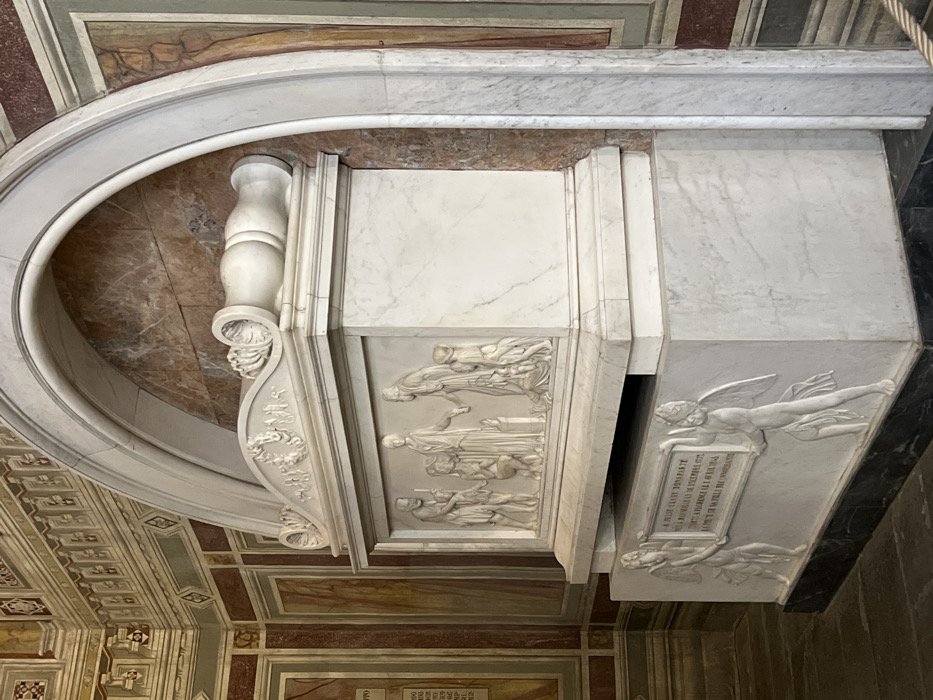
The image displays a highly detailed marble monument, likely a sarcophagus or commemorative tomb, situated within an ornately decorated interior space. The central subject is a substantial structure crafted from light-colored marble, featuring a rectangular base and upper sections.

The front of the monument includes a sculpted relief panel depicting several standing figures in a classical style. One figure appears to be playing a wind instrument, possibly a flute or recorder. On the side of the monument, another relief panel showcases two winged putti or cherubs. The upper putto is depicted flying, while the lower one supports a rectangular plaque containing visible Latin text.

The inscription on the plaque is an epitaph or dedication. Partially legible phrases include "A JULIA PLACIDY CONJUGI" (To Julia Placidia, wife), "FLORENTIAE VETERIS" (of old Florence), "ROMULUS DE LORENA" (Romulus de Lorena), and a birth date "NATUS DIE XIV DECEMBRIS D. MDLXXX" (Born on the 14th day of December, 1580). The text also mentions "... IN NAPOLI PRO IMPERATORI" (in Naples for the Emperor/General), indicating the monument is dedicated to a historically significant individual.

The monument is framed by an elegant arched architectural element, adorned with intricate carved scrollwork, foliage, and a small human head detail, alongside a decorative baluster. The surrounding walls and ceiling are richly ornamented with multi-colored marble panels, geometric patterns, and subtle frescoes, suggesting a grand historical setting such as a church, chapel, or palace hall in Florence, Italy. The scene evokes a sense of solemnity and historical grandeur, characteristic of Renaissance or Baroque artistry.
FM-nv0sw2

Feb 5, 2025, 12:49 PM

Firenze, Italy

Stake attention in this memory

The image displays a highly detailed marble monument, likely a sarcophagus or commemorative tomb, situated within an ornately decorated interior space. The central subject is a substantial structure crafted from light-colored marble, featuring a rectangular base and upper sections. The front of the monument includes a sculpted relief panel depicting several standing figures in a classical style. One figure appears to be playing a wind instrument, possibly a flute or recorder. On the side of the monument, another relief panel showcases two winged putti or cherubs. The upper putto is depicted flying, while the lower one supports a rectangular plaque containing visible Latin text. The inscription on the plaque is an epitaph or dedication. Partially legible phrases include "A JULIA PLACIDY CONJUGI" (To Julia Placidia, wife), "FLORENTIAE VETERIS" (of old Florence), "ROMULUS DE LORENA" (Romulus de Lorena), and a birth date "NATUS DIE XIV DECEMBRIS D. MDLXXX" (Born on the 14th day of December, 1580). The text also mentions "... IN NAPOLI PRO IMPERATORI" (in Naples for the Emperor/General), indicating the monument is dedicated to a historically significant individual. The monument is framed by an elegant arched architectural element, adorned with intricate carved scrollwork, foliage, and a small human head detail, alongside a decorative baluster. The surrounding walls and ceiling are richly ornamented with multi-colored marble panels, geometric patterns, and subtle frescoes, suggesting a grand historical setting such as a church, chapel, or palace hall in Florence, Italy. The scene evokes a sense of solemnity and historical grandeur, characteristic of Renaissance or Baroque artistry.

transactions
revenues
stakers
Earliest
Latest
Highest stake

No transactions found

More from this user

More from Firenze

FM-nv0sw2

Feb 5, 2025, 12:49 PM

Firenze, Italy

Licensed under Creative Commons Attribution 4.0 International License. You are free to share and adapt this content with proper attribution.