
Sign in
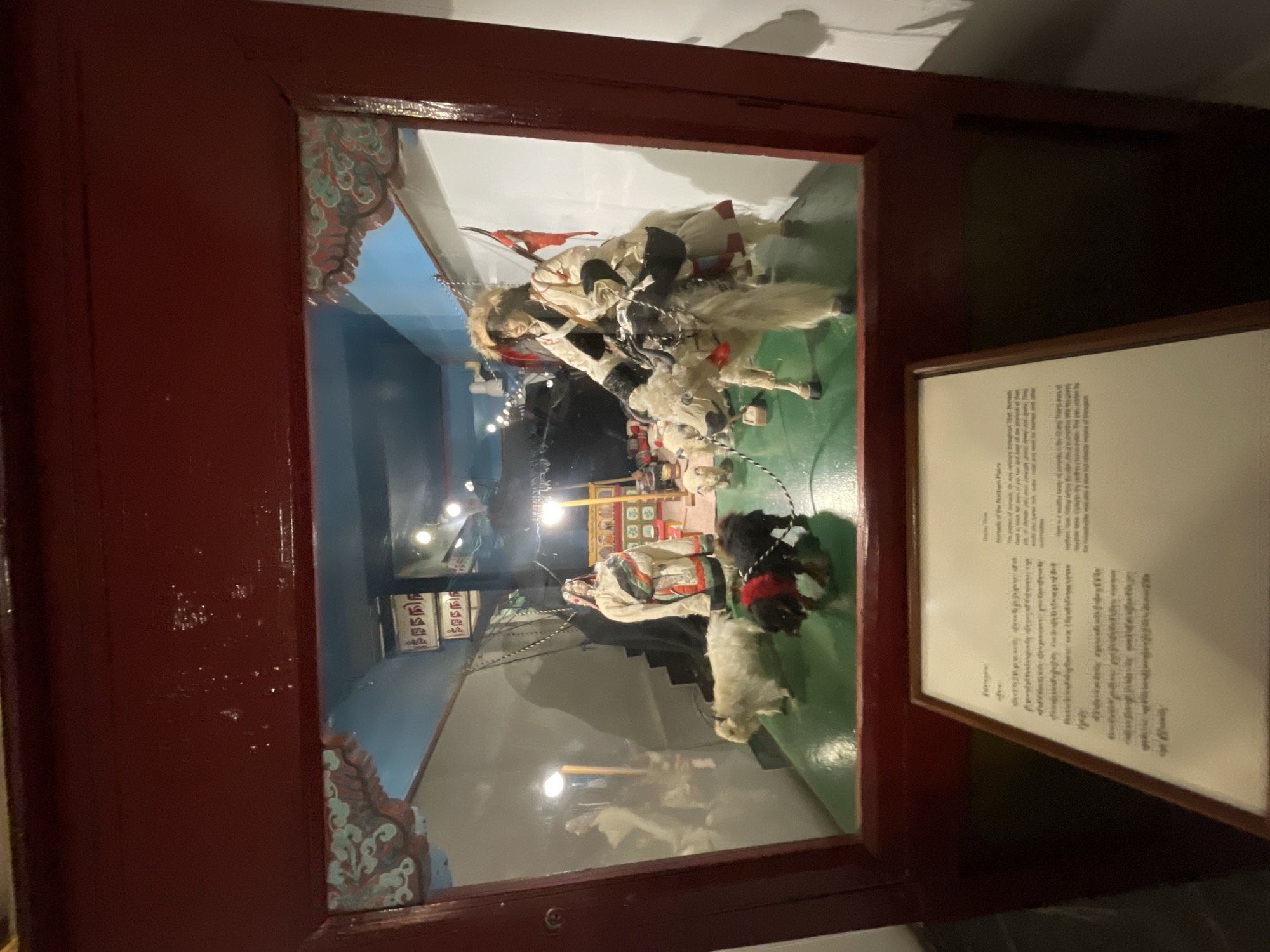
The image displays a diorama housed within a red wooden frame, depicting a scene of nomadic life. In the foreground, a figure on a furry, yak-like animal is the central focus. The rider is dressed in traditional clothing, including a fur-lined hat and a cream-colored robe with black and red accents. The animal appears to be a dzo or similar domesticated bovine, with a shaggy white coat. To the left of the rider, another figure, also in traditional attire, stands beside a white goat. A black dog with a red collar is positioned in front of the standing figure. The diorama is set on a green, reflective surface, suggesting a floor or ground. In the background, a staircase leads up to a raised platform with decorative elements and what appears to be a tent-like structure. The backdrop is a painted wall depicting a sky-blue ceiling with ornate carvings in shades of blue and red. The diorama is illuminated by artificial lighting.

Below the diorama, a framed informational plaque is visible. The text on the plaque is partially obscured and appears to be in two languages, one of which is likely Tibetan script. The English text on the plaque reads "Nomads of the Northern Plains." It further describes the settlement patterns of these nomads, mentioning their migration with livestock and their reliance on yak products for sustenance and trade. It also touches upon their social structure and economic activities, including their bartering of butter, cheese, and wool for other necessities.

The image does not provide any specific details about the city of Fatehpur, India, or its relevance to the diorama. The scene is representative of nomadic cultures, likely from a region in Central Asia rather than India.
Ashwin

Jun 13, 2026

Fatehpur, India

Stake attention in this memory

nostalgic
traditional
curious
educational
historical

The image displays a diorama housed within a red wooden frame, depicting a scene of nomadic life. In the foreground, a figure on a furry, yak-like animal is the central focus. The rider is dressed in traditional clothing, including a fur-lined hat and a cream-colored robe with black and red accents. The animal appears to be a dzo or similar domesticated bovine, with a shaggy white coat. To the left of the rider, another figure, also in traditional attire, stands beside a white goat. A black dog with a red collar is positioned in front of the standing figure. The diorama is set on a green, reflective surface, suggesting a floor or ground. In the background, a staircase leads up to a raised platform with decorative elements and what appears to be a tent-like structure. The backdrop is a painted wall depicting a sky-blue ceiling with ornate carvings in shades of blue and red. The diorama is illuminated by artificial lighting. Below the diorama, a framed informational plaque is visible. The text on the plaque is partially obscured and appears to be in two languages, one of which is likely Tibetan script. The English text on the plaque reads "Nomads of the Northern Plains." It further describes the settlement patterns of these nomads, mentioning their migration with livestock and their reliance on yak products for sustenance and trade. It also touches upon their social structure and economic activities, including their bartering of butter, cheese, and wool for other necessities. The image does not provide any specific details about the city of Fatehpur, India, or its relevance to the diorama. The scene is representative of nomadic cultures, likely from a region in Central Asia rather than India.

transactions
revenues
stakers
Earliest
Latest
Highest stake

No transactions found

More from this user

More from Fatehpur

Ashwin

Jun 13, 2026

Fatehpur, India

Licensed under Creative Commons Attribution 4.0 International License. You are free to share and adapt this content with proper attribution.