Stake attention in this memory
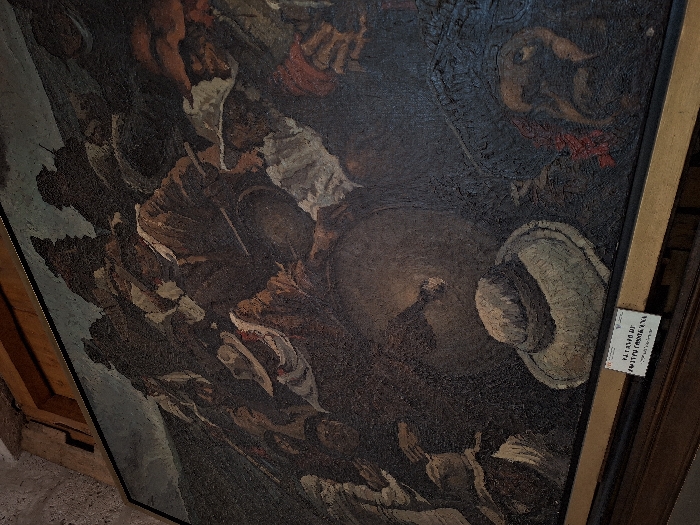
A large, old painting, likely oil on canvas, is captured at an oblique angle, leaning within a rustic interior setting. The artwork is enclosed in a dark wooden frame. **Subjects:** The painting portrays a dense, complex scene featuring numerous human figures. These individuals, some partially obscured, appear to be in active poses, suggesting a dynamic event. Many figures are adorned with elaborate period attire, including what looks like armor, patterned fabrics, and distinctive headwear such as helmets or hats. The overall composition is crowded with multiple faces and bodies, hinting at a large gathering or confrontation. **Objects:** The central object is the historical painting itself, exhibiting the textured surface of an aged canvas. A small, rectangular white label is affixed to the right side of the frame. The background outside the painting reveals architectural elements typical of older buildings, such as exposed wooden beams and rough-hewn stone or plaster walls. **Scene/Setting:** The scene within the painting is characterized by a dramatic and tumultuous atmosphere, consistent with historical or religious narrative art, possibly depicting a battle or a significant crowd event. The colors are predominantly dark, with rich browns, deep reds, and somber grays, punctuated by lighter highlights on clothing and skin. The setting surrounding the painting suggests it is in storage, undergoing conservation, or displayed in a non-gallery historical space. **Notable details:** The painting's style appears to be Baroque or a similar period, marked by strong chiaroscuro and a grand narrative scope. The visible texture of the paint and canvas indicates its antiquity. The visible environment outside the frame, with its robust wooden and stone elements, aligns with the architectural heritage of Arequipa, Peru. **Visible text:** A white label attached to the frame contains partially visible text: - "...VALERIANO DE C..." - "...CORREGIDOR DE..." - "AREQUIPA" - "1777" This text suggests the painting might be associated with a "Corregidor Valeriano" from Arequipa and dates to the year 1777.
No transactions found