
Stake attention in this memory
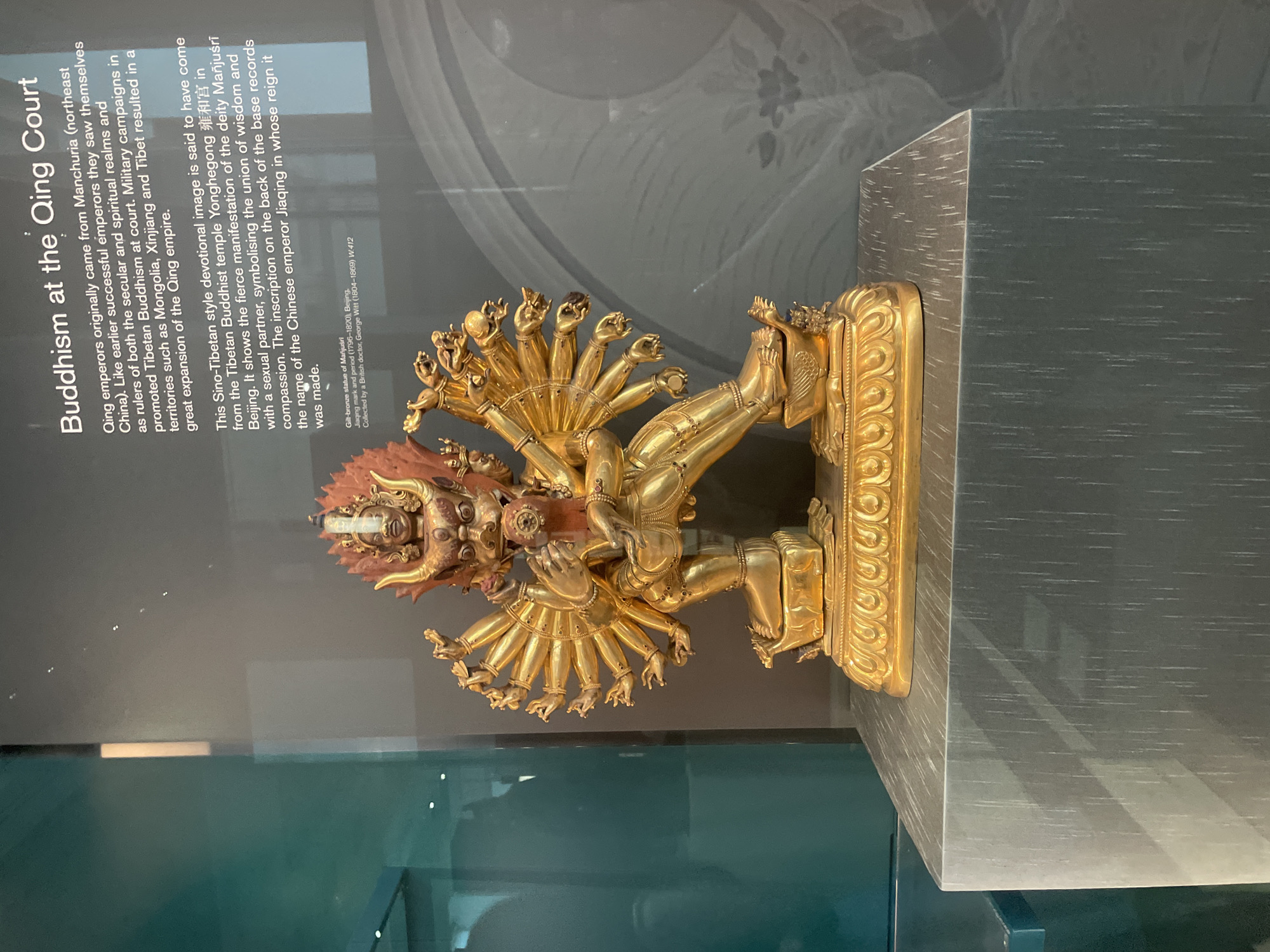
This media file is a photograph of a gilt-bronze statue displayed in a museum setting, likely in London, United Kingdom. The statue depicts a multi-armed Buddhist deity, identified in the accompanying text as Mañjuśrī, in a fierce manifestation with a sexual partner, symbolizing the union of wisdom and compassion. The sculpture is ornate, with intricate detailing on the deity's body, arms, and faces. It rests on a golden, decorative base. The backdrop of the display is a dark gray wall with a subtle, swirling pattern. The statue is encased behind glass, reflecting some of the museum's lighting and the surrounding environment. A label in front of the statue provides historical and descriptive information. The visible text on the label explains that Qing emperors, originally from Manchuria, promoted Tibetan Buddhism. This particular statue is described as Sino-Tibetan in style and is believed to have originated from the Yonghegong temple in Beijing. It dates to the Jiaqing period (1796-1820) and is inscribed with the emperor's name, indicating it was made during his reign. The statue was collected by a British doctor named George Witt. The scene appears to be indoors, within a museum exhibit, with controlled lighting. No specific time of day or weather conditions are discernible.
Loading AttnAds…
No transactions found