
Stake attention in this memory
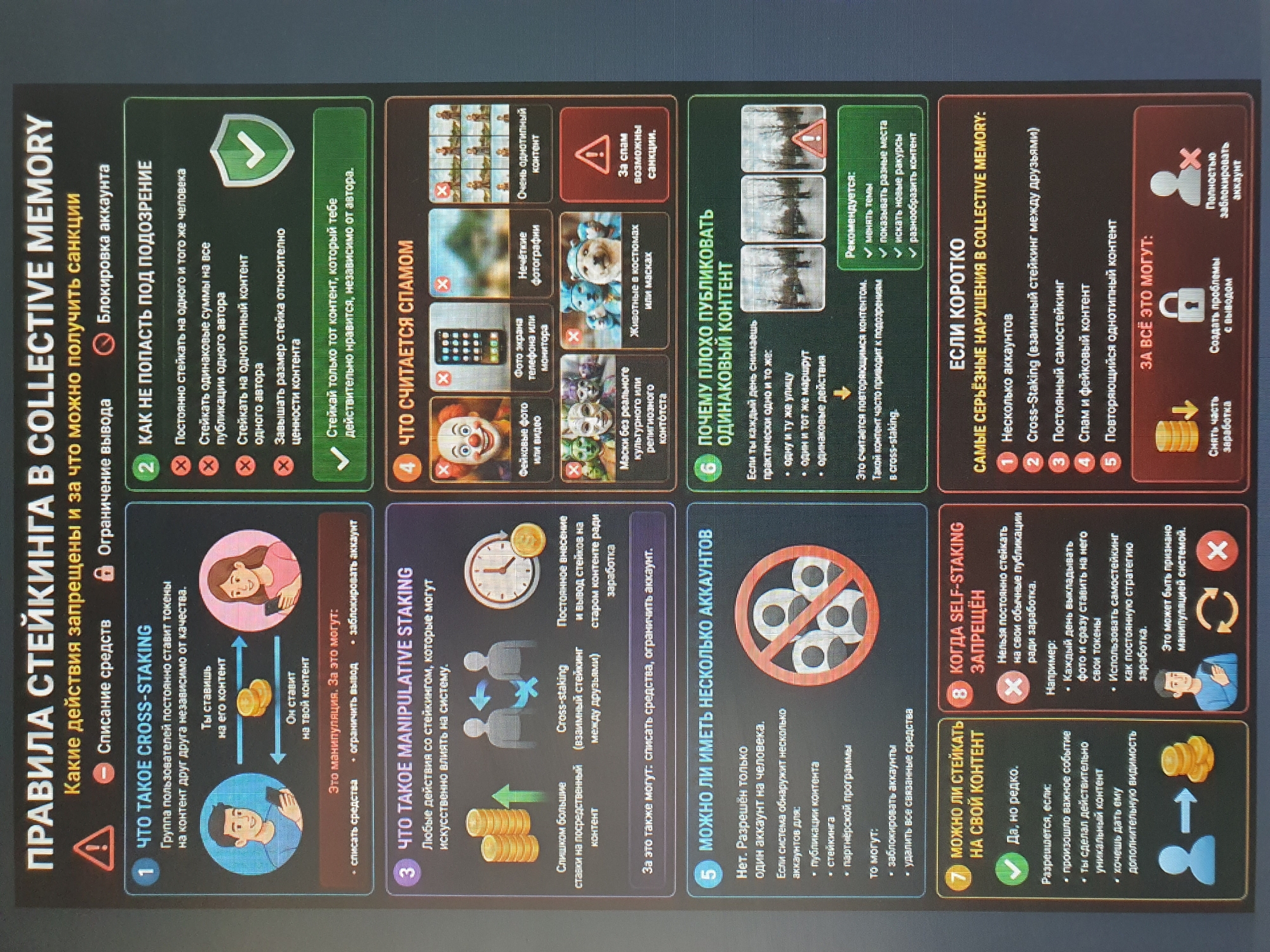
The image is a poster in Russian with the title "RULES OF STAKING IN COLLECTIVE MEMORY". It outlines prohibited actions, those that raise suspicion, and consequences for violations. The poster is divided into numbered sections: 1. **What is Cross-Staking**: Describes a group of users constantly staking tokens on each other's content regardless of quality. It states that this is manipulation and can lead to fund deductions, withdrawal restrictions, or account blocking. 2. **How Not to Be Suspicious**: Lists actions that can lead to suspicion, such as constantly staking on the same person, staking identical amounts on all publications of one author, staking on repetitive content from one author, and increasing stake size relative to content value. It recommends only staking content you genuinely like, regardless of the author. 3. **What is Manipulative Staking**: Defines manipulative staking as any actions artificially influencing the system. Examples include excessively large stakes on content, cross-staking (mutual staking between friends), and constantly staking/unstaking on old content for profit. This can also lead to fund deductions or account restrictions. 4. **What is Considered Spam**: Lists several types of content considered spam, including clown photos/videos, phone screen photos, blurry photographs, highly repetitive content, images of people in masks that are not culturally or religiously significant, and animals in costumes or masks. It states that spam can lead to sanctions. 5. **Can You Have Multiple Accounts**: States that only one account per person is allowed. The system may detect multiple accounts for content publication, staking, or affiliate programs. This can result in account blocking and deletion of all associated funds. 6. **Why It's Bad to Publish Identical Content**: Explains that filming the same street daily, or consistently showing the same route and using identical actions, is considered repetitive content and can lead to suspicion and cross-staking issues. It recommends changing themes, showing different locations, and varying perspectives. 7. **Can You Stake on Your Own Content**: Answers "Yes, but rarely." It's permitted if an important event occurred, unique content was created, or to give it additional visibility. 8. **When Self-Staking is Prohibited**: States that consistently staking on your own publications for profit is prohibited. Examples include posting photos and staking on them daily, or using self-staking as a constant profit strategy. This can be considered manipulation. A summary section titled "IF SHORTLY" lists the most serious violations: multiple accounts, cross-staking, constant self-staking, spam/fake content, and repetitive identical content. The
Symbol
FEBEB
Volume
1,385
Creator
+$0.00
Revenue
+$0.00
TVL
$0.08
Loading AttnAds…