Makadara/Mji Wa Kale ward, Kenya
30 memories from Makadara/Mji Wa Kale ward, Kenya
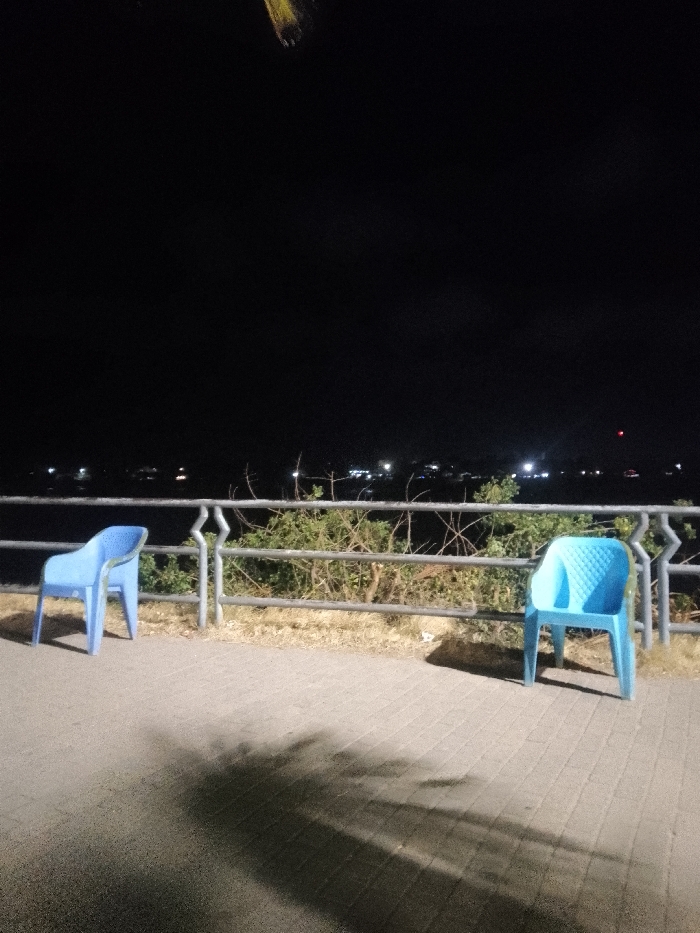
Two light blue plastic chairs sit on a paved promenade at night. A metal railing runs along the edge, with sparse greenery growing behind it. Across a dark expanse of water, a faint line of lights indicates a distant shore. The sky is a vast black void. Shadows from unseen objects stretch across the pavement towards the viewer, adding a layer of mystery to the scene.
Makadara/Mji Wa Kale ward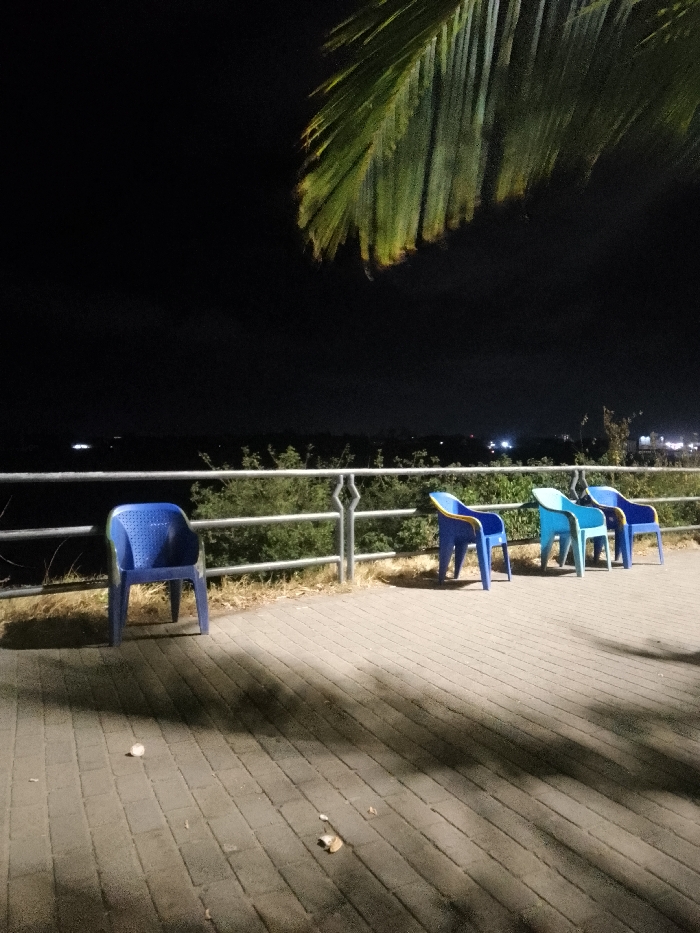
Four plastic chairs stand on a paved terrace overlooking dark greenery and distant lights at night. A metal railing borders the terrace. The sky is a deep black, partially obscured by the fronds of a large plant. The foreground of the terrace has several pieces of litter scattered across its surface, illuminated by an unseen light source.
Makadara/Mji Wa Kale ward
A dark-skinned adult male is depicted in a close-up, chest-up shot, situated within a vehicle. He has a close-cropped haircut and short facial hair around his chin and mouth. He wears a light-colored, collared shirt. His eyes are directed forward, with a neutral expression and slightly pursed lips. Above and behind him, an open sunroof reveals green tree foliage and bright sunlight, indicating an outdoor, daytime setting. Visible interior components of the vehicle include a cream-colored ceiling panel, a light-colored grab handle, and a partially visible yellow warning label with black text (likely an airbag safety sticker). Bright light illuminates the subject from above. The image contains no discernible landmarks or signs to independently verify its location as Makadara/Mji Wa Kale ward, Kenya.
Makadara/Mji Wa Kale ward
The image displays an adult male captured in a low-angle selfie from inside a vehicle. The individual, characterized by dark skin and short facial hair, is wearing a white collared shirt. He looks directly at the camera with a slight smirk. His right hand is prominently featured in the foreground, forming a 'pinching' or 'claw' gesture with partially curled fingers. The vehicle's interior ceiling is visible above and behind the subject, consisting of a light-colored headliner and dark trim. A beige overhead grab handle and a section of a sun visor, displaying an inverted red and yellow airbag warning label, are visible on the upper right. Through an apparent overhead opening, likely a sunroof, green tree foliage and branches are visible against a bright sky. The specific location within Makadara/Mji Wa Kale ward, Kenya, cannot be determined from the visual information present in the image.
Makadara/Mji Wa Kale ward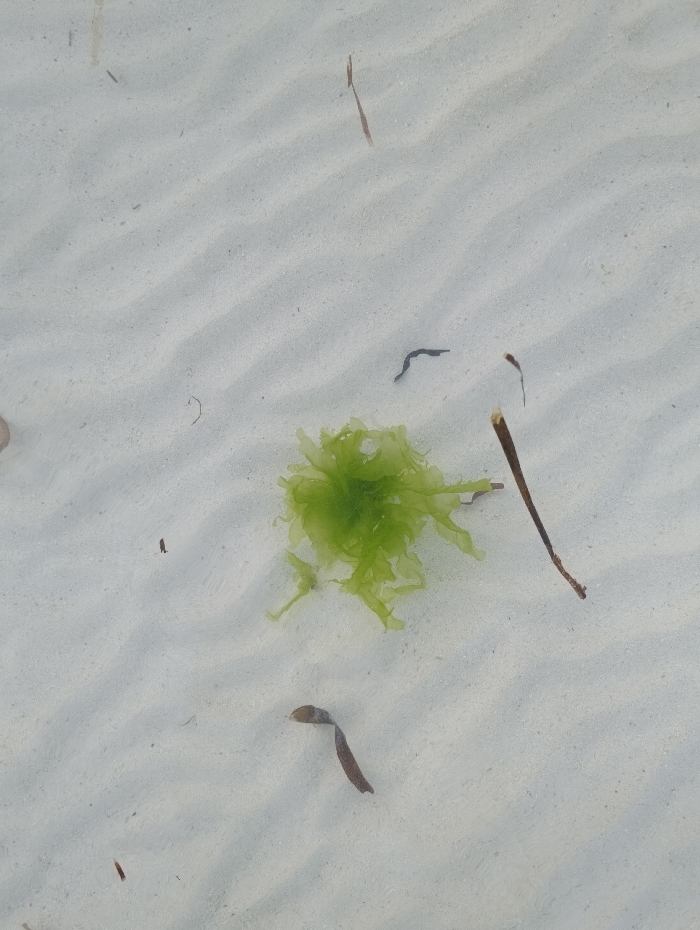
The image displays a submerged sandy environment within the Makadara/Mji Wa Kale ward, Kenya. The substrate consists of light-colored sand exhibiting subtle ripple patterns. A central cluster of bright green, ruffled marine algae is prominent. Scattered across the sand are several pieces of dark brown detritus, varying from elongated, stick-like fragments to flatter, irregular organic material. The water appears clear, providing an unobstructed view of the seabed. No animate subjects, human-made objects, or specific actions are visible.
Makadara/Mji Wa Kale ward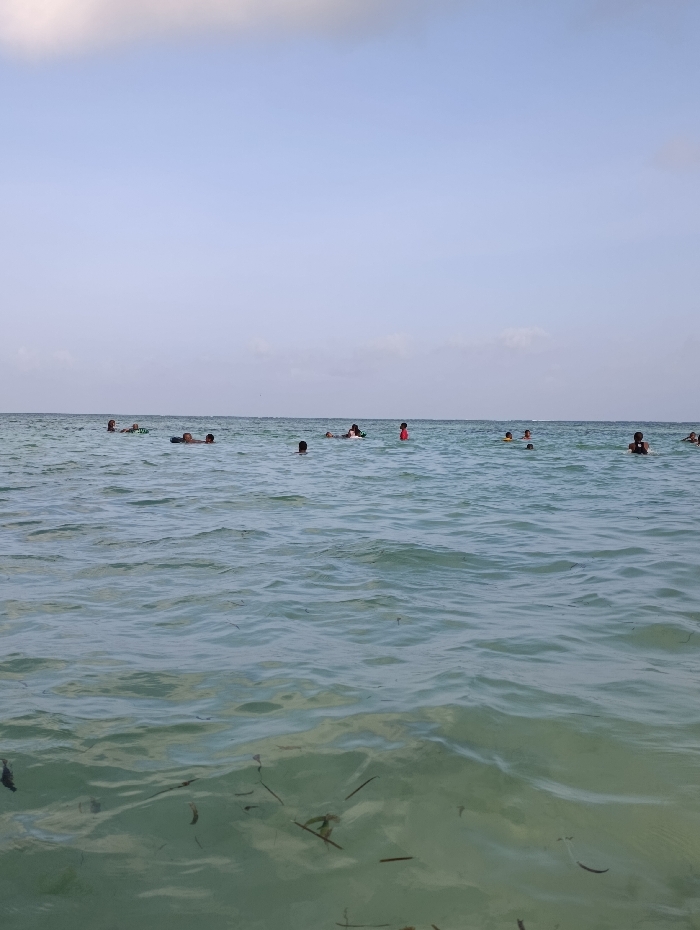
The image depicts a coastal scene in the Makadara/Mji Wa Kale ward, Kenya. Approximately 15 to 20 individuals are observed in a greenish-blue body of water under a light blue sky with minimal cloud cover. The water surface exhibits ripples and small waves, with dark strands of seaweed or sea grass floating in the foreground. The individuals, primarily visible from the shoulders up, are dispersed across the midground, engaged in swimming or wading activities. Most wear dark-colored swimwear; one person on the far right wears a red top. One individual on the left side appears to be utilizing a light-colored flotation object. No distinct interactions or specific objects beyond the aforementioned are clearly discernible.
Makadara/Mji Wa Kale ward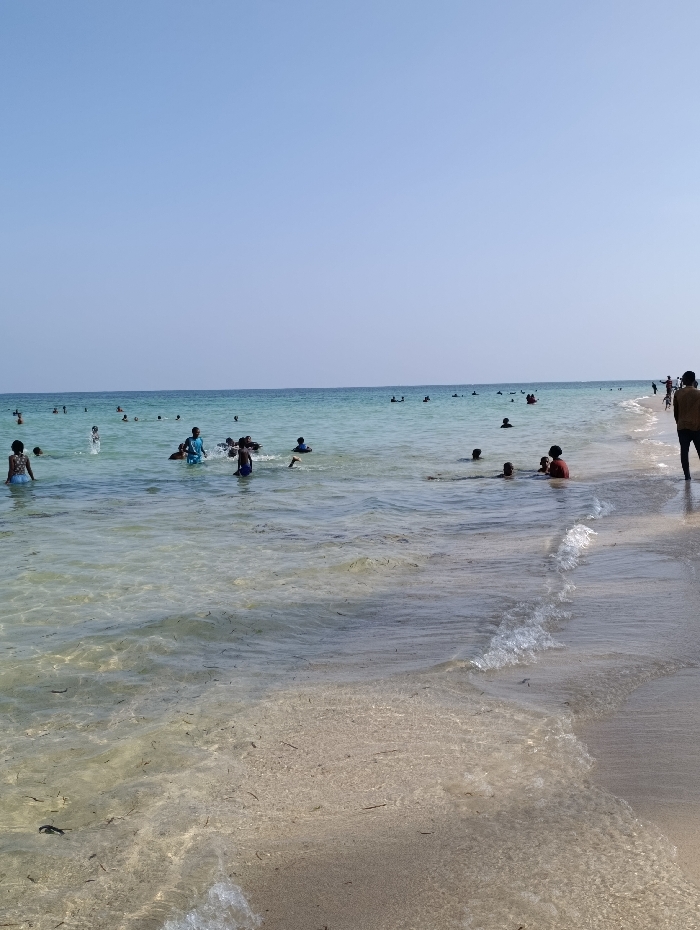
A daylight scene at a beach in Makadara/Mji Wa Kale ward, Kenya, shows approximately 20-30 individuals engaged in water activities. The upper third of the image is a clear, light blue sky, meeting the ocean at a defined horizon. The ocean water is clear and light turquoise near the sandy shore, gradually deepening to a darker blue further offshore. Numerous people are observed standing, wading, or swimming in the water, with depths ranging from ankle to chest level. Small waves crest onto the light brown sand beach, which appears wet at the water's edge and contains scattered dark organic material. On the far right, a partially visible individual in dark trousers and a light top stands on the wet sand, facing away from the viewer. No other distinct objects or specific interactions are visible.
Makadara/Mji Wa Kale ward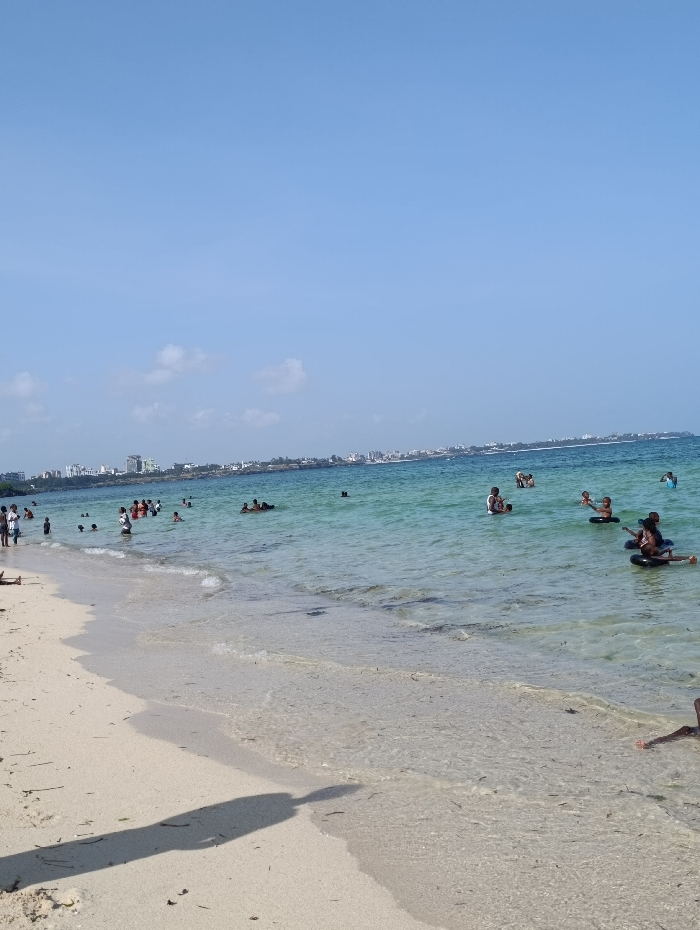
The image depicts a sunlit coastal scene in Makadara/Mji Wa Kale ward, Kenya, featuring a sandy beach and clear blue-green ocean water under a predominantly light blue sky with minimal cloud cover. Approximately 20-30 individuals, including adults and children, are present. Most people are observed in the water, wading, standing, or swimming; some are chest-deep, while others are closer to the shore. Two individuals on the right side are using black inflatable inner tubes. A few figures are visible further down the beach to the left, near the water's edge. The foreground features light-colored sand with scattered dark debris and a prominent elongated shadow extending from the lower-left towards the water. In the distant background, a coastline dotted with numerous white and light-colored urban buildings is visible along the horizon. The scene indicates recreational activity on a clear day.
Makadara/Mji Wa Kale ward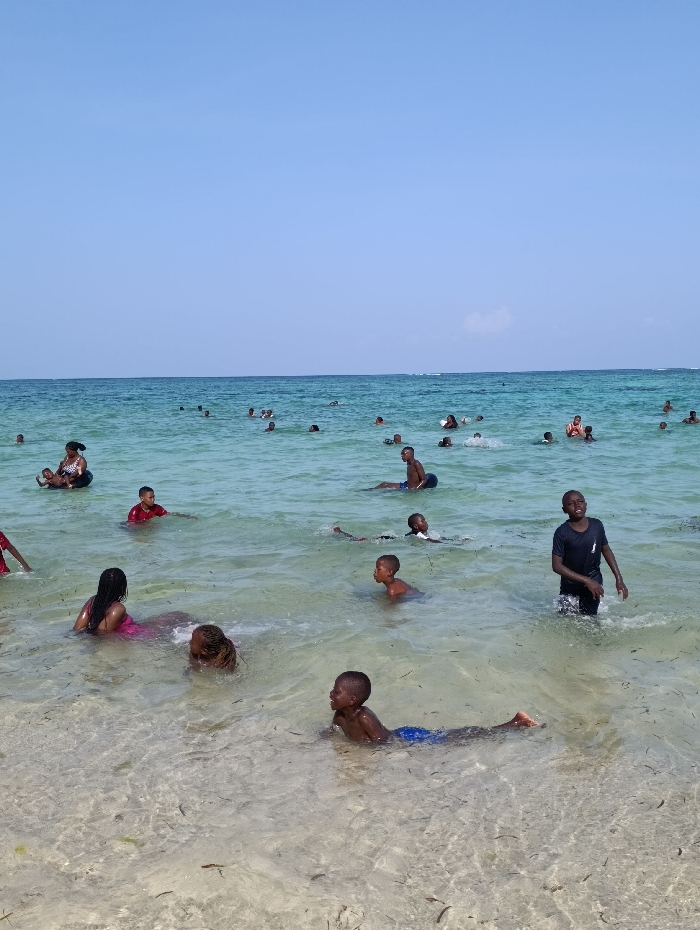
A sunny beach scene shows many people, mostly children, enjoying the shallow, clear ocean water. Some are swimming, wading, or floating. The water is calm and light turquoise, fading to a deeper blue further out. The sandy beach is visible in the foreground. The sky is clear blue. The overall impression is of a joyful and relaxed atmosphere.
Makadara/Mji Wa Kale ward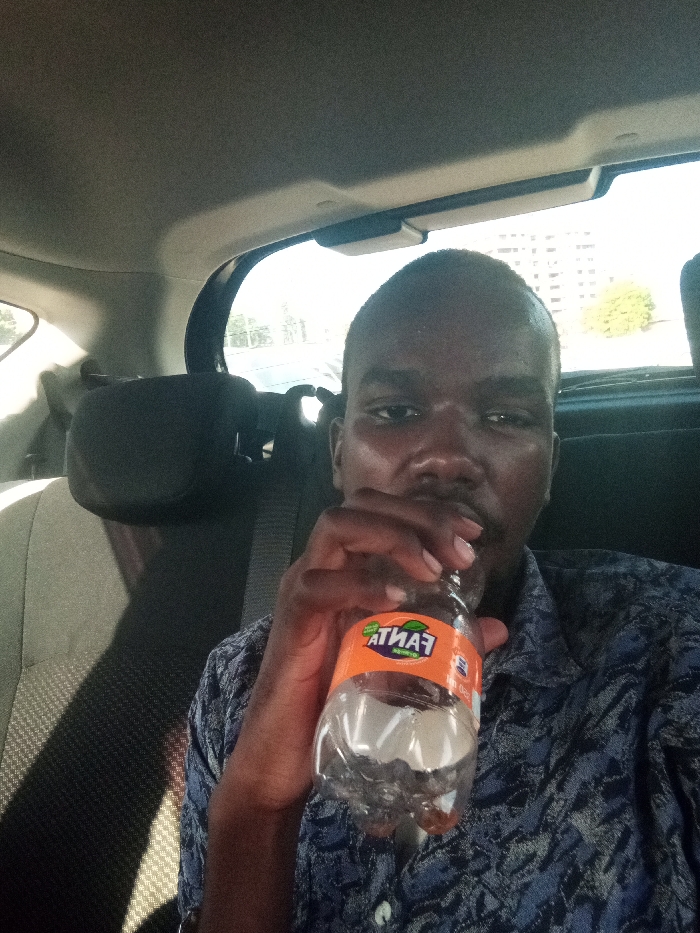
An adult male, with dark skin and short dark hair, is depicted from the chest up, seated in the back of a vehicle. He wears a blue, patterned, short-sleeved collared shirt with visible buttons. His right hand holds a clear plastic bottle, labeled "FANTA" with an orange graphic, to his mouth, suggesting he is drinking from it. The bottle contains a clear liquid. To his left, a dark-colored fabric seat with a headrest and a visible seatbelt is present. Through the vehicle's rear window, a brightly lit outdoor scene is visible, featuring a road or open area on the left and a multi-story building with green foliage on the right. The scene occurs during daylight hours within the city of Makadara/Mji Wa Kale ward, Kenya.
Makadara/Mji Wa Kale ward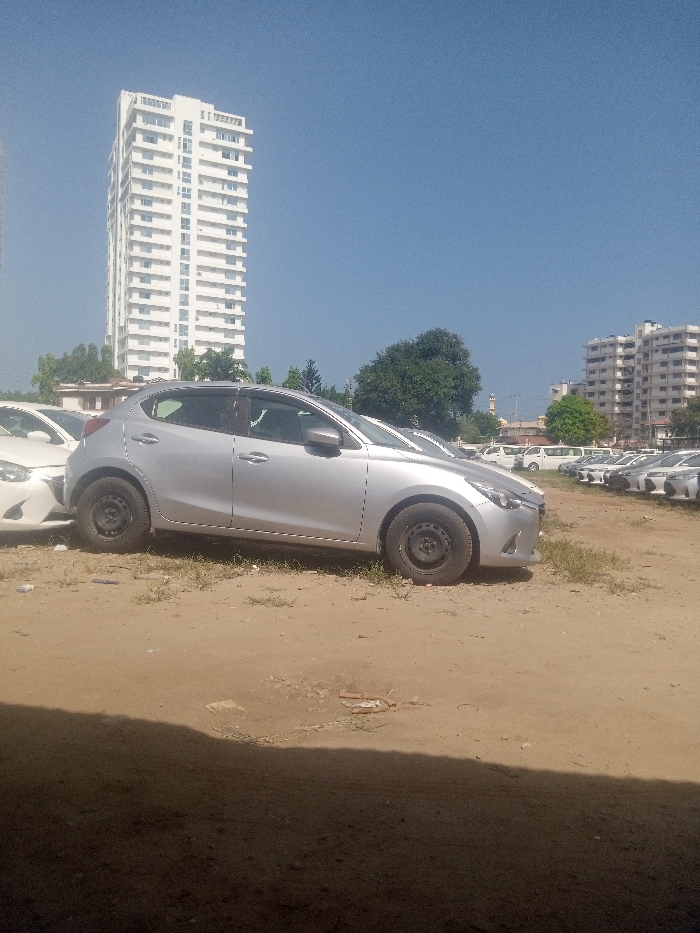
The image depicts an open-air commercial car parking and storage lot under a clear blue sky, located in Makadara/Mji Wa Kale ward, Kenya. The foreground consists of a shaded, unpaved dirt ground with sparse patches of dried weeds and scattered debris, including what appears to be segments of a chain and broken brick-like objects. In the midground, a silver 2015-2019 Mazda 2 (Demio) hatchback is prominently parked on the dirt, oriented to the right. It features black steel wheels without hubcaps. To its immediate left, the front section of a white compact car is partially visible. Extending into the right midground and background, multiple rows of identical white or silver compact sedans are parked in an organized manner, suggesting a car dealership or import lot. Further back, several white vans or minibuses are also visible. The background features an urban environment. To the left, a tall, slender, modern white skyscraper with numerous balconies dominates the skyline. To the right, a cluster of multi-story buildings, appearing older and less uniform, is visible, along with a mosque minaret. Green trees and bushes are interspersed between the buildings and the car lot. No people are visible in the scene. The lighting indicates bright daylight.
Makadara/Mji Wa Kale ward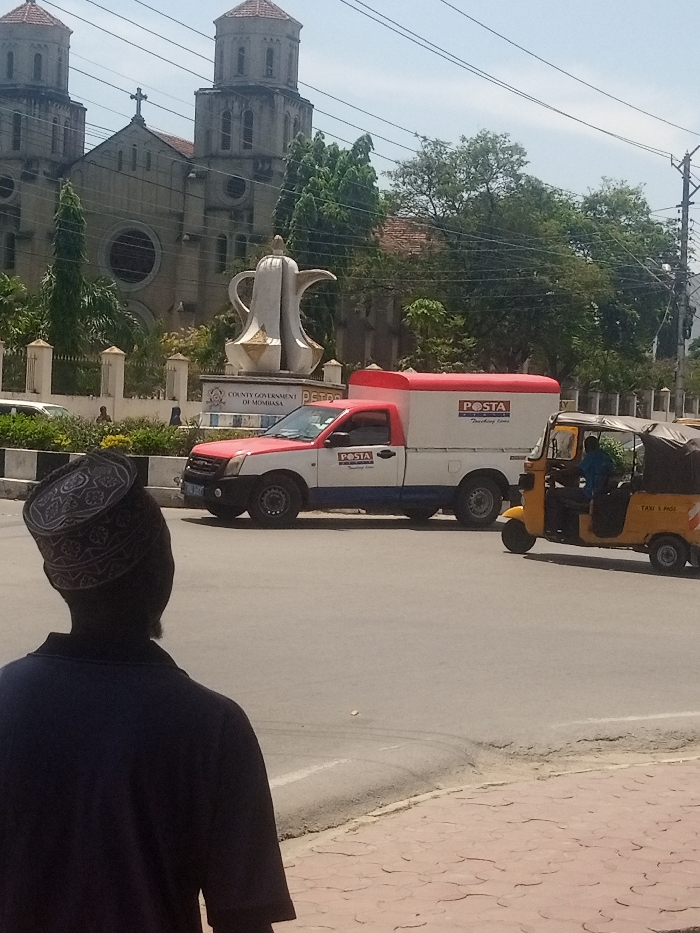
The image depicts a daytime street scene in Mombasa, Kenya, specifically at the Makadara/Mji Wa Kale ward near the Mkomani Roundabout. In the foreground, the back of an individual wearing a dark shirt and a patterned kufi cap is visible, facing away from the camera and towards the street. The midground features an asphalt road. A red and white Kenya Posta pickup truck with an enclosed cargo bed, marked "POSTA Tracking Lines," is positioned on the left side of the road. To its right, a yellow auto-rickshaw (tuk-tuk) with a black canopy, displaying "TAXI 5 PASS," is also on the road. A person in a blue shirt is visible inside the tuk-tuk, presumably the driver. The road is bordered by a raised curb and a reddish-brown patterned sidewalk on the right. In the background, a large, white monument shaped like a traditional Arabic coffee pot (dallah) stands on a circular pedestal. The pedestal bears partially visible text, "COUNTY GOVERNMENT OF MOMBASA." Behind this monument, a grand, light-colored stone church, identified as the Holy Ghost Cathedral, dominates the skyline with its two prominent bell towers, conical roofs, and a central cross. A large circular window is visible on the church's facade. Green trees are interspersed throughout the background, partially obscuring parts of the church and surrounding area. Overhead utility lines are visible against the clear sky.
Makadara/Mji Wa Kale ward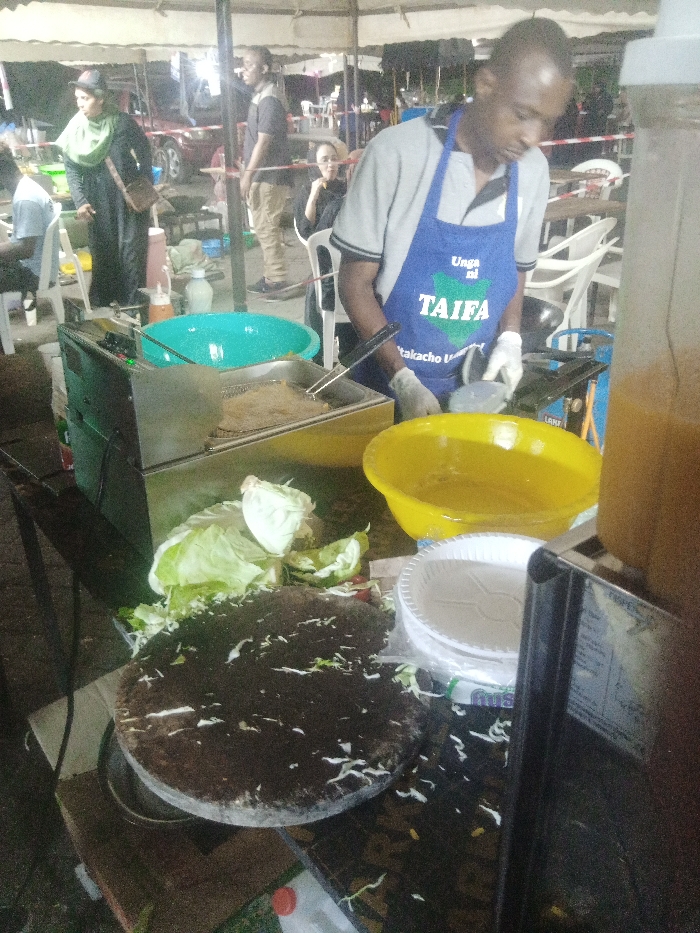
The image captures an outdoor or semi-sheltered food stall, likely operating at night or in low-light conditions, illuminated by artificial overhead lighting. The scene is consistent with an informal street food establishment in an urban area like Makadara/Mji Wa Kale ward, Kenya. In the immediate foreground, a dark, circular wooden chopping board is present, covered with white shredded cabbage and other green vegetable scraps. To its left are larger, fresh pieces of white cabbage. Adjacent to the chopping board, a stainless steel deep fryer is visible, containing a rectangular food item immersed in hot oil, with a pair of metal tongs resting on its edge. To the right of the deep fryer, a large, empty turquoise plastic basin is positioned. A dark-skinned male chef, wearing a grey short-sleeved polo shirt, a blue apron bearing the text "Unga ni TAIFA" (Flour is Nation) with a map of Kenya logo, and white disposable gloves, stands centrally, actively engaged in food preparation. His right hand holds a utensil, possibly tongs, over a cooking area. His left hand is positioned near a gas burner connected to a blue gas cylinder visible below the counter. To the chef's right, a yellow plastic bowl holds a liquid, likely oil or batter. Below this, a stack of white, disposable paper plates, encased in clear plastic, rests on the counter. A tall, clear plastic beverage dispenser, filled with an orange liquid, is partially visible on the far right. In the midground and background, under a light-colored tent canopy supported by metal poles, several other individuals are present. To the far left, a person in a light blue shirt is partially visible, seated at a white plastic chair. To the left of the deep fryer, a woman dressed in a black garment, a light green headscarf (hijab), and carrying a brown shoulder bag, stands, observing the activity. Further back, a man in a dark t-shirt and light-colored pants stands. To the right, a woman with short dark hair, wearing a dark top, is seated at a white plastic chair. Multiple white plastic tables and chairs are scattered throughout the background, indicating a dining area. A red SUV is partially visible in the distant background, suggesting proximity to a street or parking zone.
Makadara/Mji Wa Kale ward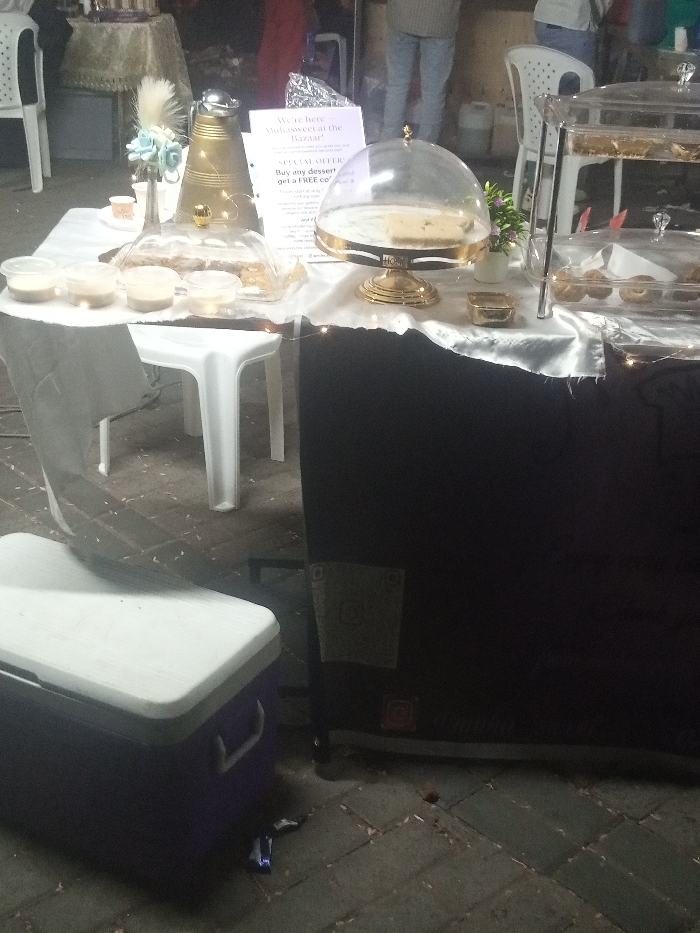
The scene depicts an outdoor market stall in the Makadara/Mji Wa Kale ward, Kenya, likely during evening hours. In the foreground, a dark blue cooler box with a white lid rests on interlocking grey pavers. A retail display table, covered with a white tablecloth over its top and a dark fabric skirt below, dominates the mid-ground. Small, warm-toned string lights are visible along the table's edge. On the table, from left to right, are: four small, clear plastic containers with white lids, each holding a light-colored substance; a small white object, possibly a cup; a tall, golden, traditional-style carafe with a lid; a clear vase containing a white feather and light blue artificial flowers; a white sign advertising "MohaSweet at the Bazaar!" with "SPECIAL OFFERS"; a golden pedestal cake stand with a clear dome cover, displaying a rectangular dessert; a small golden rectangular box; and a two-tiered clear plastic display case containing multiple small pastries. A small pot with green artificial foliage is situated between the cake stand and the tiered display. A white plastic stool supports the table from beneath, and another white plastic stool/chair is partially visible in the blurred background. In the background, several blurred figures of individuals are discernible, wearing casual attire such as jeans. Other market stalls with draped tables and white plastic chairs are also present. The ground is paved with dark grey interlocking bricks. A small piece of blue and silver refuse lies on the ground near the cooler box. No direct human interactions are clearly depicted in the foreground.
Makadara/Mji Wa Kale ward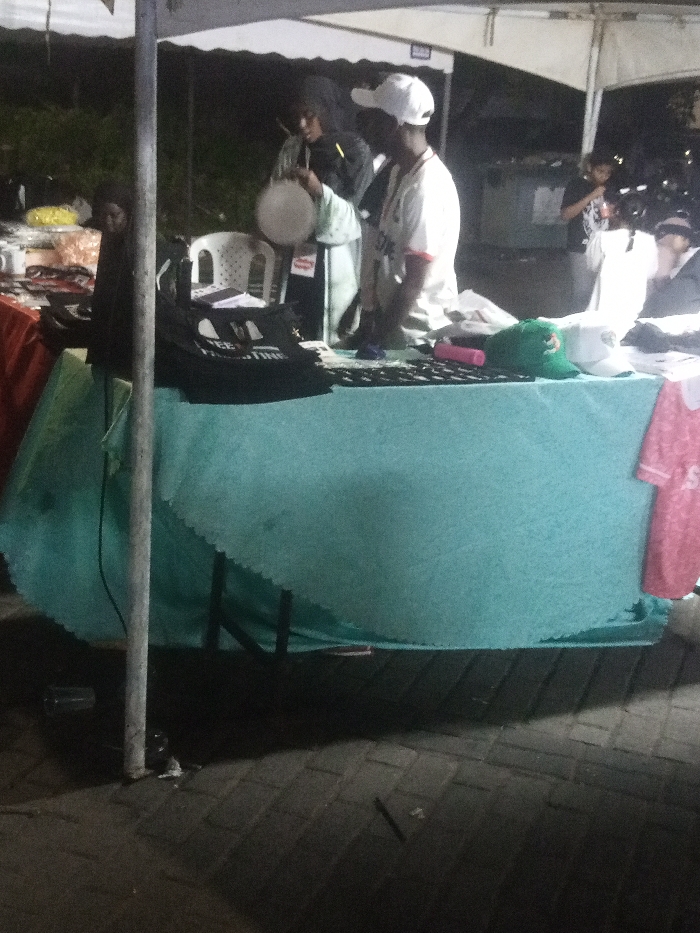
The image depicts an outdoor market stall at night within the Makadara/Mji Wa Kale ward, Kenya. Two individuals are positioned behind a table draped with a light blue tablecloth featuring a scalloped edge. One individual, wearing a white baseball cap and a white short-sleeved shirt with red trim, faces left. The second individual, dressed in dark clothing (possibly including a head covering), holds a light-colored, circular object resembling a plate or bowl, interacting with the first person. A child's face is faintly visible to the left of the table, positioned behind an orange-covered surface. The table displays various merchandise, including stacks of black t-shirts or bags, one prominently featuring "FREE PALESTINE" text in white. Other visible items on the table include a green cap, a white cap, and a pink cylindrical object, possibly a bottle or container. A white plastic chair is situated behind the table. A white canopy tent structure covers the stall, supported by a light-colored metal pole in the foreground. The ground is paved with dark interlocking blocks. In the background, a dark dumpster-like container is partially visible, and another person in a dark shirt stands near an adjacent white tent. A pink short-sleeved top with white trim hangs from the right edge of the table. The scene is illuminated by artificial light sources, indicating a nighttime setting.
Makadara/Mji Wa Kale ward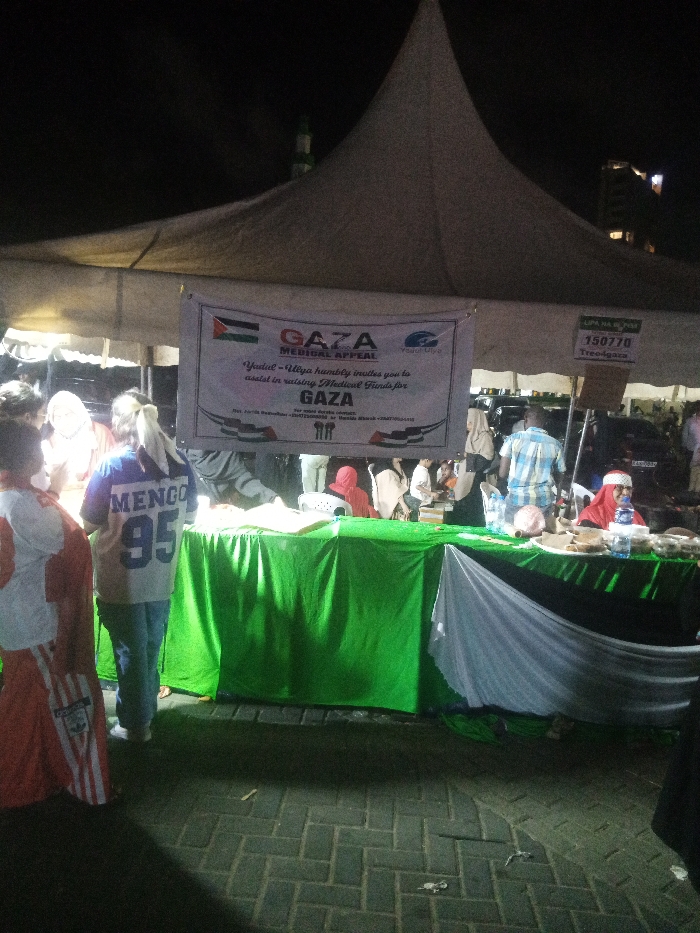
The image captures a nighttime outdoor event within the Makadara/Mji Wa Kale ward, Kenya, under a large white peaked tent. A prominent banner is centrally displayed, featuring the text "GAZA MEDICAL APPEAL," a Palestinian flag, and the "Yadul Ulya" logo, with the message, "Yadul-Ulya humbly invites you to assist in raising Medical Funds for GAZA." To the right of this banner, a smaller sign indicates "LIPA NA MPESA 150770 TreadGaza." Below the banner, two tables are positioned, covered primarily with green fabric. The table on the right also displays white and black fabric, completing the colors of the Palestinian flag. Various items, including food trays and bottled water, are arranged on these tables. Several individuals are present under the tent's artificial lighting. In the left foreground, a person is visible wearing an orange and white garment. Slightly behind them, another individual is seen from the back, wearing a blue and white shirt with "MENGO 95" printed on it. Further right, behind the table, a person wearing a red head covering is partially visible. The ground is paved with interlocking blocks. In the background, indistinct urban buildings and a structure resembling a minaret with a green top are faintly discernible against the dark sky.
Makadara/Mji Wa Kale ward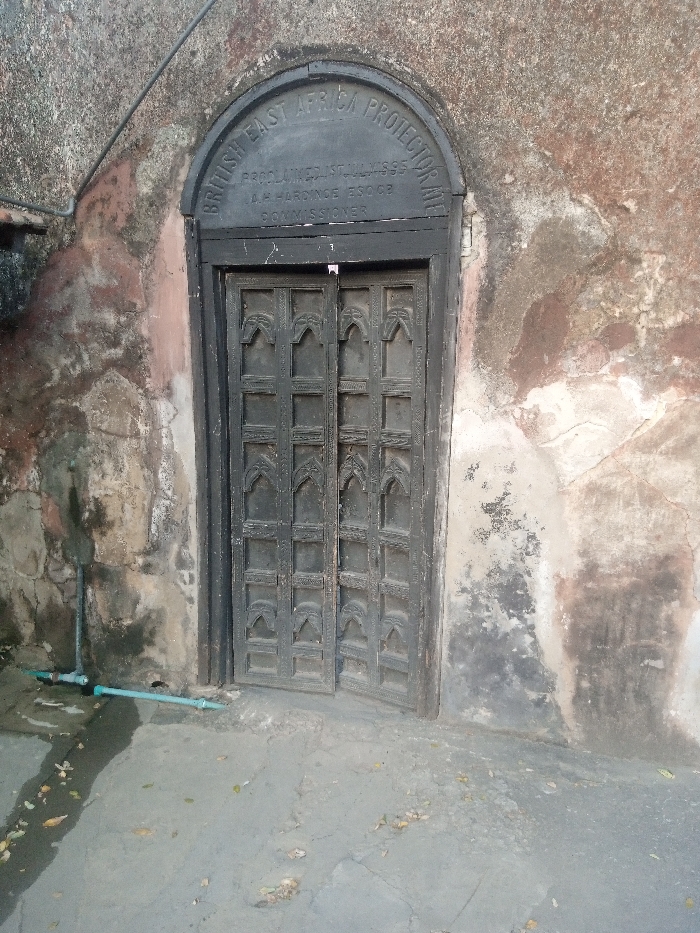
The image displays a dark, weathered, double-leaf wooden door set within a decaying, rough-textured wall. Above the door, an arched stone plaque is inscribed with "BRITISH EAST AFRICA PROTECTORATE PROCLAIMED 1ST JULY 1895 A.H. HARDINGE ESQR. COMMISSIONER." The door features multiple carved rectangular panels, each with an arched decorative motif. The surrounding wall, predominantly reddish-brown, grey, and off-white, shows significant peeling, staining, and material degradation. To the left of the door, a thin, dark cable descends diagonally from the top left corner. Near the base of the left wall, two light-blue plastic pipes are visible, one running vertically and the other horizontally along the ground, connecting at an elbow joint. The ground directly in front of the door is a grey, uneven paved surface with scattered dry leaves and dark stains, particularly near the pipes. No people are present. This scene is located in the Makadara/Mji Wa Kale ward, Kenya, consistent with the historical marker and architectural style of Mombasa's Old Town.
Makadara/Mji Wa Kale ward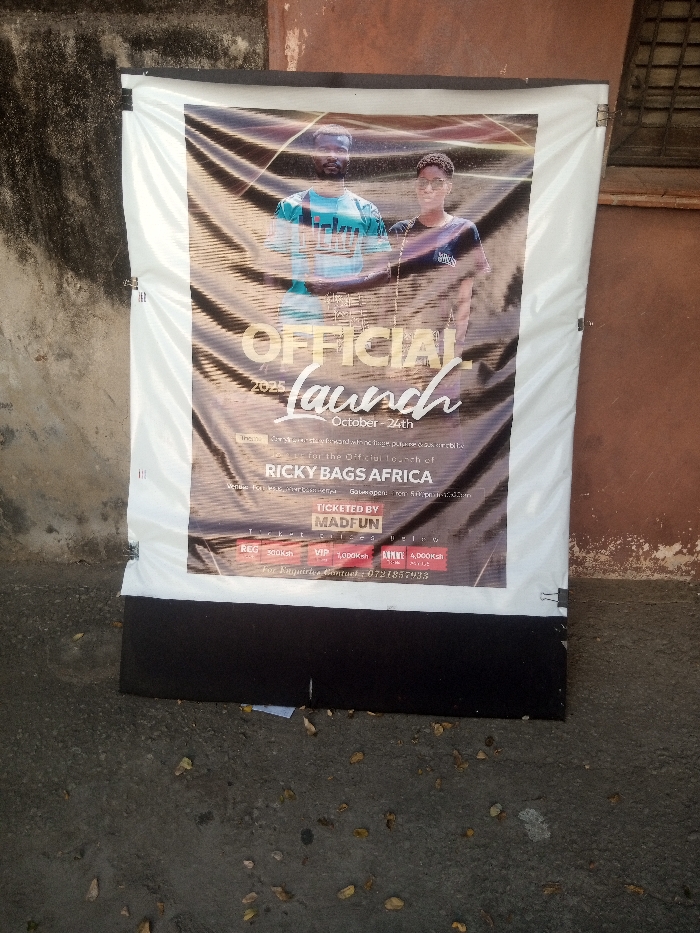
A vertical, wrinkled vinyl banner, advertising the "OFFICIAL Launch" of "RICKY BAGS AFRICA" for October 24, 2025, is displayed outdoors in Makadara/Mji Wa Kale ward, Kenya. The banner features two young adult males: one with a beard wearing a light blue/green patterned shirt, and another wearing glasses and a dark t-shirt. Event details include "TICKETED BY MADFUN" and ticket prices: REG 300Ksh, VIP 1,000Ksh, and ANNUL 4,000Ksh. A contact number, 0721857933, is provided for inquiries. The banner is affixed to a white frame, supported by a black base, and positioned against a light brown/orange, textured wall. The wall shows signs of wear and grayish-green discoloration on the left, with a small window or grate visible on the upper right. The ground in the foreground is dark grey, possibly concrete, with scattered brown leaves and white debris.
Makadara/Mji Wa Kale ward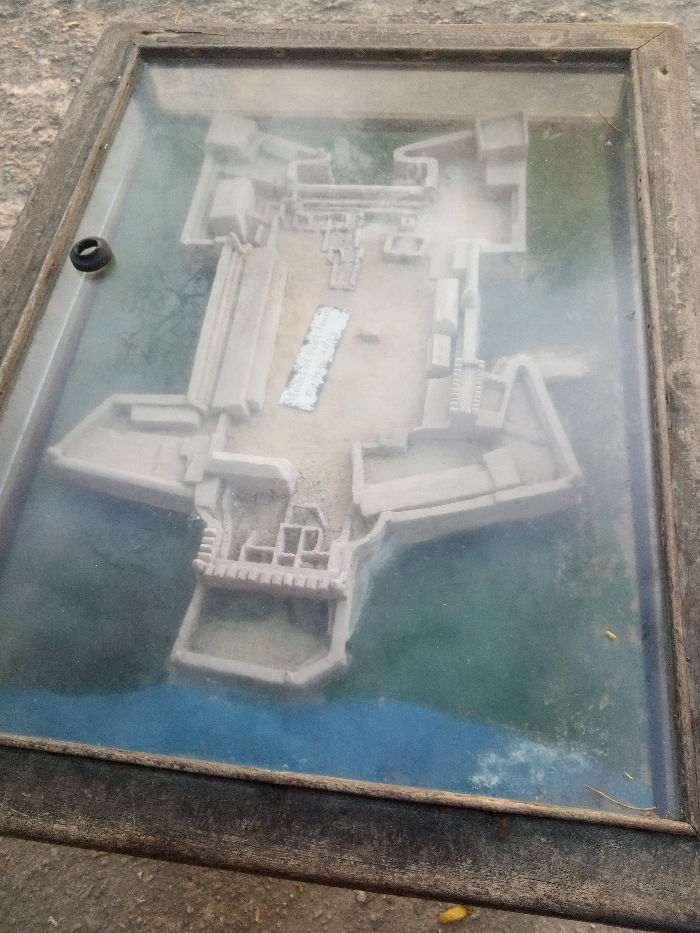
A weathered wooden-framed display case, covered by a dirty and reflective glass panel, is presented on a rough, light grey concrete surface. Inside the case is a beige-colored relief model depicting the layout of a historical fortification, identifiable as Fort Jesus in the Mji wa Kale ward of Mombasa, Kenya. The model features angular bastions, various rectangular structures, and internal courtyards. A significant portion of the model's perimeter, representing the surrounding environment, is colored dark blue for water and dark green for land/vegetation. A small, rectangular white label with faded, illegible black text is adhered within the central courtyard area of the model. A loose black rubber ring rests on the glass surface near the top-left corner. The wooden frame shows signs of aging and wear, secured by visible metal fasteners.
Makadara/Mji Wa Kale ward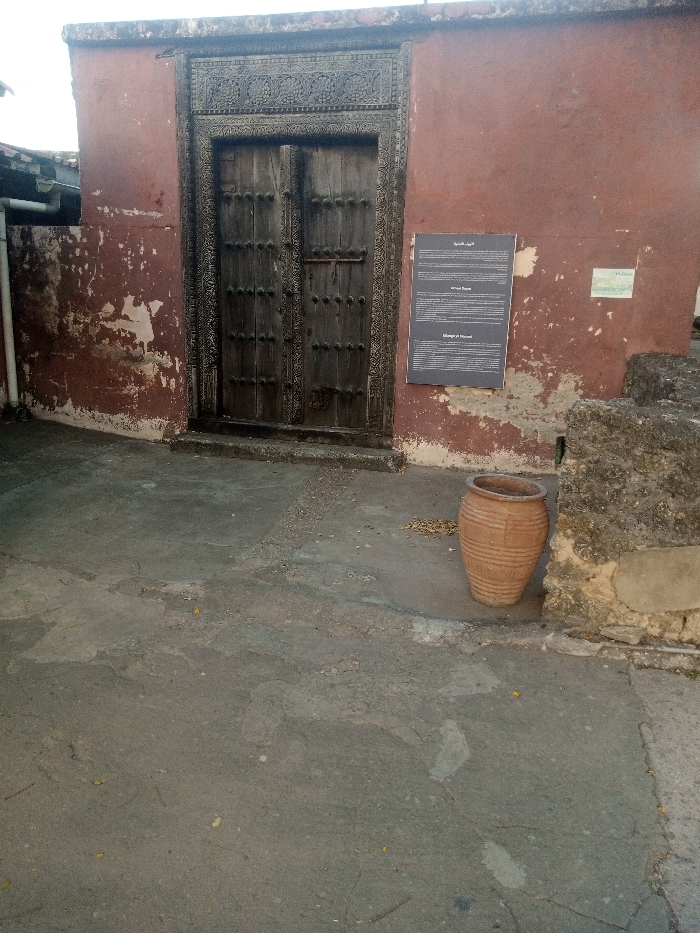
A weathered, reddish-brown plastered building facade, exhibiting significant peeling, features a centrally located, intricately carved dark wooden double door. The door and its frame display detailed Swahili-style carvings, and the panels are adorned with circular metal studs. To the left of the door, a white PVC downspout runs vertically. To the right, a dark grey rectangular information sign, partially showing "Munge at Msuri" and "Mungwana wa Nasari" below Arabic script, is affixed to the wall; a smaller, lighter sign is adjacent. A ribbed, unglazed terracotta pot, light brown in color, rests on the uneven, cracked grey concrete ground to the right of the door, beside a rough-hewn stone structure. The ground contains scattered organic debris. No people or active interactions are depicted. This scene is located in the Mji Wa Kale (Old Town) area of Mombasa, Makadara ward, Kenya.
Makadara/Mji Wa Kale ward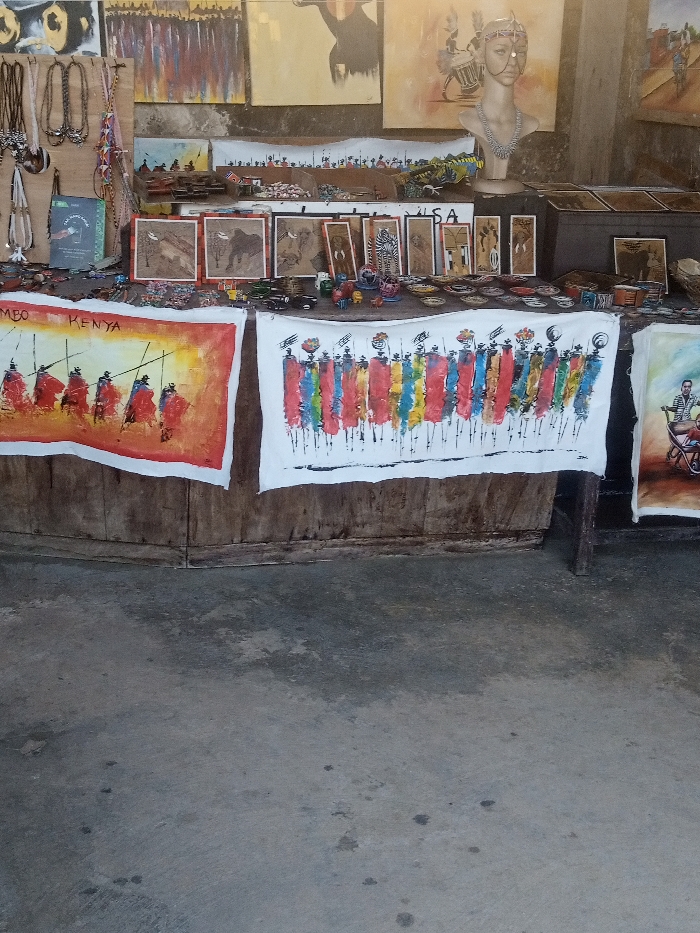
The image depicts an indoor or semi-outdoor art and craft stall, likely situated within a market area of Makadara/Mji Wa Kale ward, Mombasa, Kenya. The foreground consists of a grey concrete floor with various dark stains. At the lower mid-ground, two large fabric or canvas paintings are prominently displayed on a wooden surface. The left painting features "JUMBO KENYA" text above a vibrant red and orange background with silhouettes of five figures, possibly Maasai warriors, holding spears and facing left. The central painting, on a white background, depicts a horizontal line of approximately twelve stylized figures in brightly colored, vertically striped traditional attire. A partial view of a third painting is visible to the right. Above these large paintings, a tiered display table or shelf is filled with numerous smaller artworks and crafts. Several framed pieces portray African wildlife, such as an elephant and a zebra, alongside other abstract or figurative designs. Small decorative items, including miniature vehicles and animal figurines, are scattered across the display surface. A collection of small, round, flat decorative items (possibly coasters or dishes) is arranged centrally. A light-colored bust of a female head, adorned with a metallic necklace and headpiece, is positioned towards the upper right of this tier. A dark, chest-like object is visible to the right of the bust. The background wall is extensively covered with various larger paintings, depicting landscapes, abstract figures, and wildlife. To the far left, a vertical wooden panel displays multiple necklaces and other hanging accessories. A green book or pamphlet, with "KENYA" visible on its cover, is also displayed on the left side. No individuals are visible in the scene.
Makadara/Mji Wa Kale ward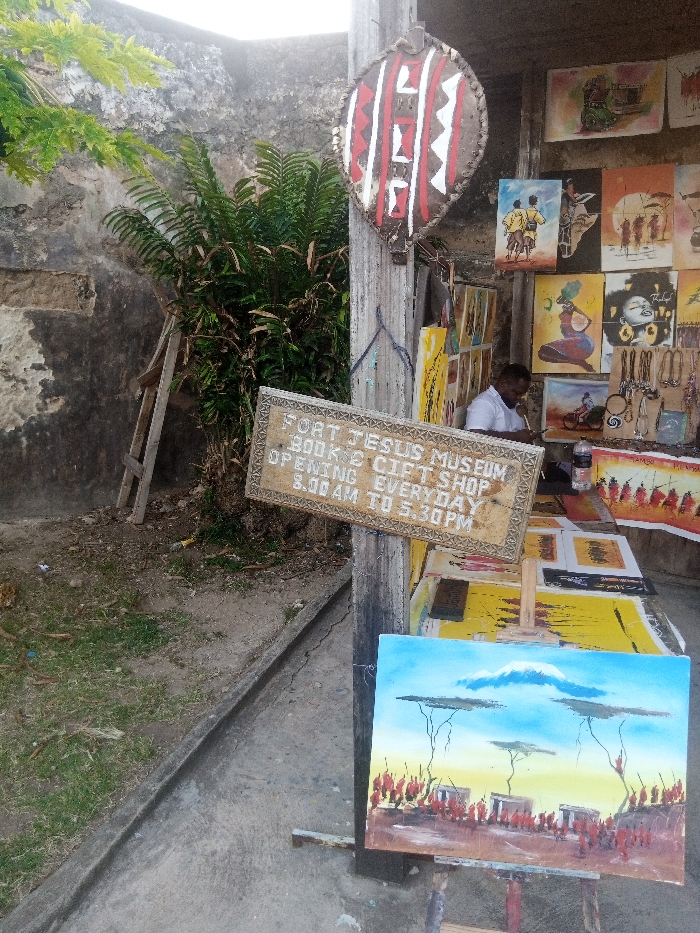
This image depicts an outdoor art and craft stall, confirmed by a visible wooden sign as the "FORT JESUS MUSEUM BOOK & GIFT SHOP," located in the Mji Wa Kale ward of Mombasa, Kenya. One adult male is present, seated behind a display table. He has dark skin, short dark hair, and wears a white short-sleeved collared shirt. He is leaning forward, seemingly engaged with an item on the table. The stall features numerous art pieces and crafts. A weathered wooden sign, framed and angled, hangs prominently, displaying the shop's name and operating hours: "OPENING EVERYDAY 8.00 AM TO 5.30 PM." An oval, shield-shaped decorative object with red, white, and brown geometric patterns hangs from a wooden post. Various unframed paintings, depicting African-themed subjects such as tribal figures, wildlife, landscapes with acacia trees, and stylized portraits, are displayed on a background wall and laid out on the table. A freestanding wooden easel showcases a landscape painting featuring a snow-capped mountain (likely Kilimanjaro), acacia trees, traditional huts, and numerous red-clad figures. A rack displays an assortment of necklaces and small craft items. A plastic water bottle is also visible on the table. The background includes a tall, dark, weathered stone or concrete wall, partially obscured by dense green foliage, including a large bush. A small wooden ladder leans against this wall and vegetation on the left. The foreground consists of a concrete or paved surface, transitioning to dirt and patchy grass on the left. The scene is illuminated by natural daylight.
Makadara/Mji Wa Kale ward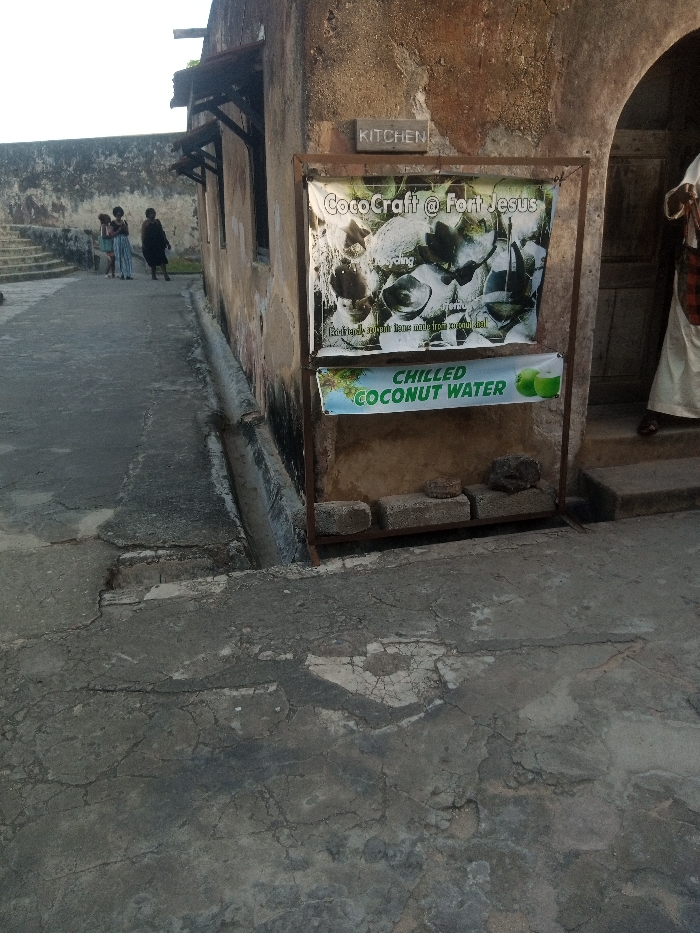
The image depicts an outdoor scene within Fort Jesus, located in the Makadara/Mji Wa Kale ward of Mombasa, Kenya. In the foreground, a cracked and uneven concrete ground surface occupies the lower half of the frame. To the right, an aged, textured stone wall runs vertically, featuring a narrow, concrete drainage channel at its base. A small, rectangular wooden sign reading "KITCHEN" is mounted on this wall. Below it, a metal stand holds two banners: the upper banner displays "CocoCraft @ Fort Jesus" with images of coconut shell crafts and text reading "Traditional artwork items made from coconut shell"; the lower banner advertises "CHILLED COCONUT WATER" with illustrations of green coconuts. Below these banners, the metal stand forms a shelf holding several rough-hewn concrete blocks and a dark, amorphous object. To the far right, partially visible at an entrance, a person stands wearing a long, light-colored garment and sandals, with a red and black plaid bag hanging over their shoulder. To the left of the wall, a concrete walkway extends into the midground. Three individuals are visible on this walkway further down: one in light-colored clothing and shorts, another in a striped garment, and a third in dark attire. Their specific actions are indeterminate. Further left, a series of stone steps ascend along another stone wall that forms the outer perimeter of the structure, visible in the background against a light sky. The overall lighting suggests ambient daylight, casting some areas into shadow.
Makadara/Mji Wa Kale ward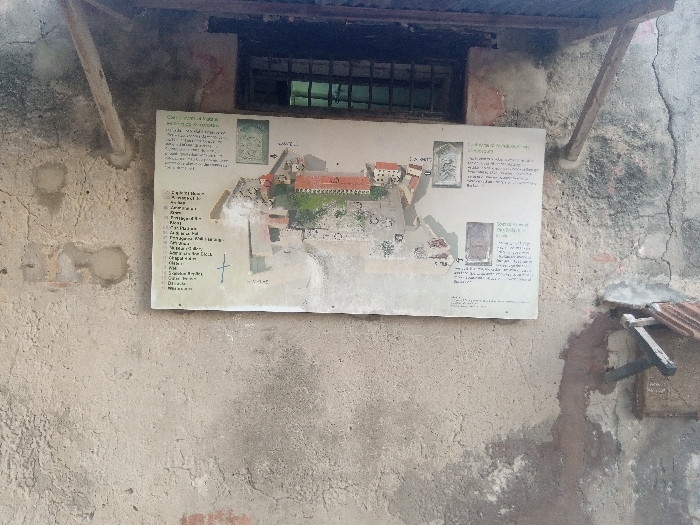
A weathered, light-colored plastered wall, exhibiting significant discoloration, cracks, and patches of exposed substrate, is depicted in the Makadara/Mji Wa Kale ward, Kenya. Centered on this wall is a large, rectangular informational sign, primarily white, featuring an illustrated map or aerial rendering of a historical settlement, identified by text including "Citta Vecchia Mombasa" (Old Town Mombasa). The sign also contains multiple columns of descriptive text and smaller inset images or diagrams. Above the sign, a rectangular window with dark, horizontal bars reveals a shadowed interior. An angled corrugated metal overhang projects above the window, supported by visible wooden struts, one extending from the upper left portion of the wall towards the top edge of the frame. To the lower right of the sign, a smaller, dark L-shaped bracket with a terracotta-colored cap is affixed to the wall. No individuals are present in the scene.
Makadara/Mji Wa Kale ward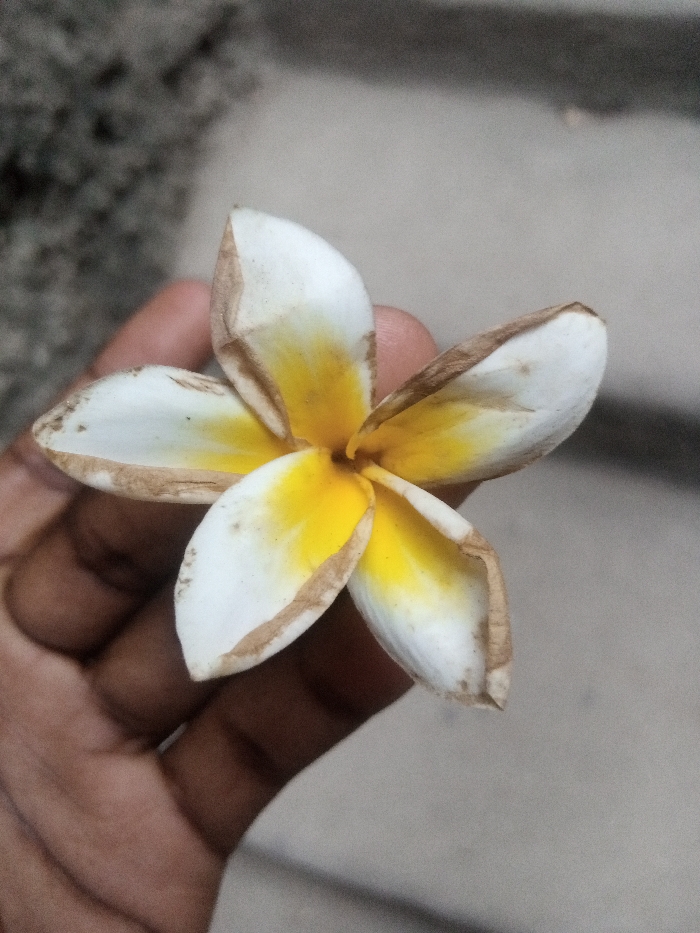
A single frangipani (Plumeria) flower, characterized by five white petals transitioning to bright yellow at their bases, is held in the center of the image. The petals exhibit brown discoloration and desiccation along their edges and tips. A dark-skinned hand, with the thumb and forefinger visible, grasps the flower's stem from below. The background is a uniformly blurred, mottled grey surface, consistent with concrete or stone. The image does not contain identifiable visual information to determine the specific location within the city of Makadara/Mji Wa Kale ward, Kenya.
Makadara/Mji Wa Kale ward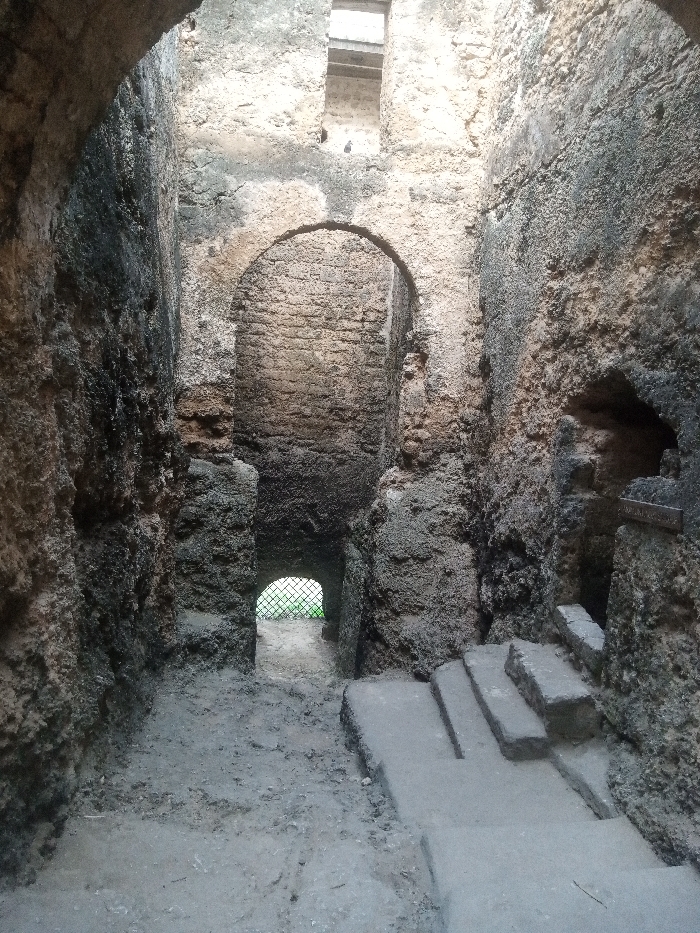
The image shows an ancient coral stone passage within Fort Jesus, located in the Makadara/Mji Wa Kale ward, Mombasa, Kenya. The high, rough-hewn stone walls display significant weathering, erosion, and dark biological staining. A prominent arched entryway is visible centrally in the mid-ground, leading further into the structure. At the passage's end, a smaller, lower arched opening reveals a metal grate and distant green vegetation. On the right, a set of uneven, rectangular stone steps ascends. A small rectangular wooden sign affixed to the right wall above the steps displays the word "SLAVERY" in faded white lettering. Natural light enters from a rectangular opening positioned high above and from the distant arched exit, creating varied illumination across the textured stone surfaces. No individuals are present.
Makadara/Mji Wa Kale ward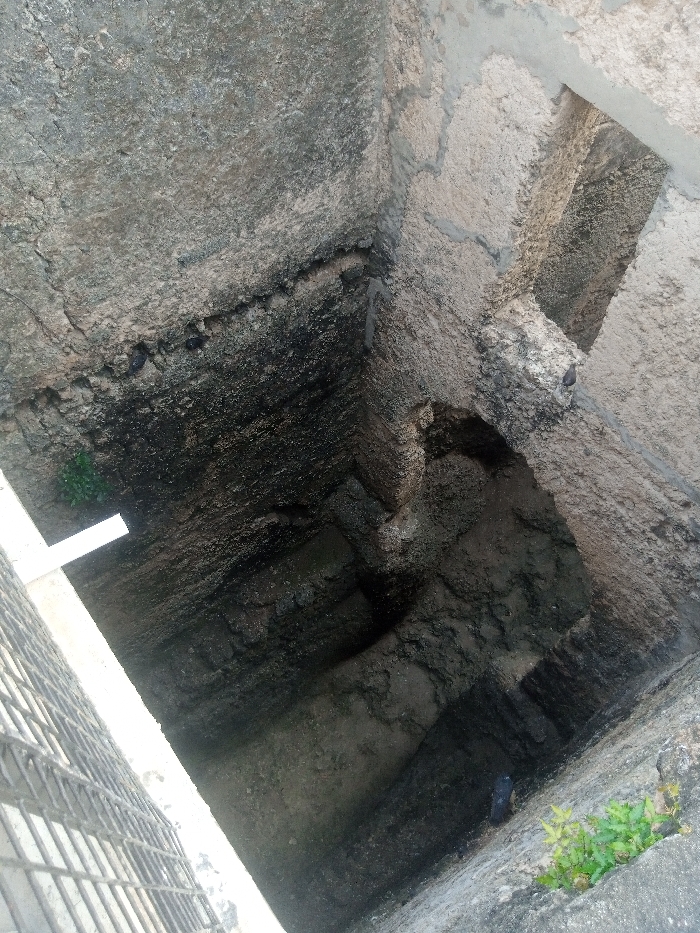
An aerial-perspective image depicts the interior of a deep, square-shaped stone or concrete well or cistern located within the Makadara/Mji Wa Kale ward of Mombasa, Kenya. The rough, textured walls vary in shades of grey and brown, displaying extensive dark staining, consistent with prolonged exposure to moisture and grime, particularly on the upper and mid-level sections. The internal structure features multiple irregular ledges and recesses. At least four dark-plumaged pigeons are present: two are perched on an upper-left ledge, one rests on an L-shaped concrete beam in the upper-right quadrant, and another is situated on a deeper ledge towards the middle-right. Small patches of green vegetation grow from various crevices on the well's walls, notably in the lower-left and lower-right areas. A portion of a light-colored metal grate or cover is partially visible at an upward angle in the bottom-left corner, indicating the well's top opening.
Makadara/Mji Wa Kale ward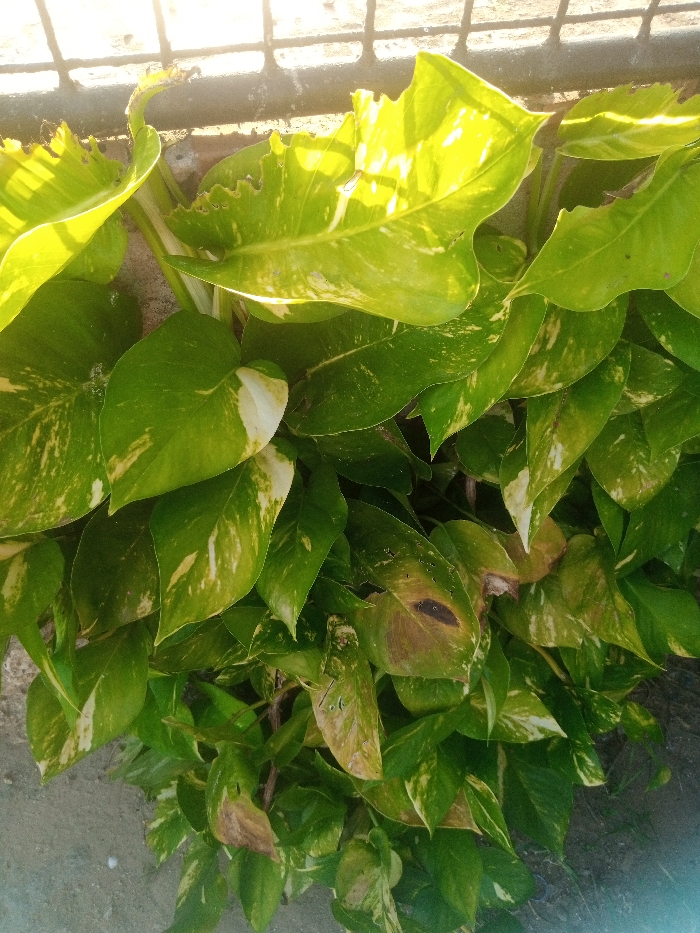
The image displays a dense cluster of variegated Pothos plants (Epipremnum aureum) in a vertical close-up. The ovate leaves are predominantly deep green, interspersed with irregular patches of lighter green, yellow, and cream mottling. Several upper leaves exhibit irregular holes and notches along their margins. Multiple central and lower leaves show areas of brown discoloration and desiccation. Strong, direct sunlight illuminates the upper foliage, creating bright highlights. A dark metallic grating structure is visible in the upper background, positioned above the plants, against a lighter-toned, undefined surface. The lower foreground consists of light-colored, granular ground. No human subjects or discernible human actions are present. The specific location within Makadara/Mji Wa Kale ward, Kenya, cannot be visually determined from the image alone.
Makadara/Mji Wa Kale ward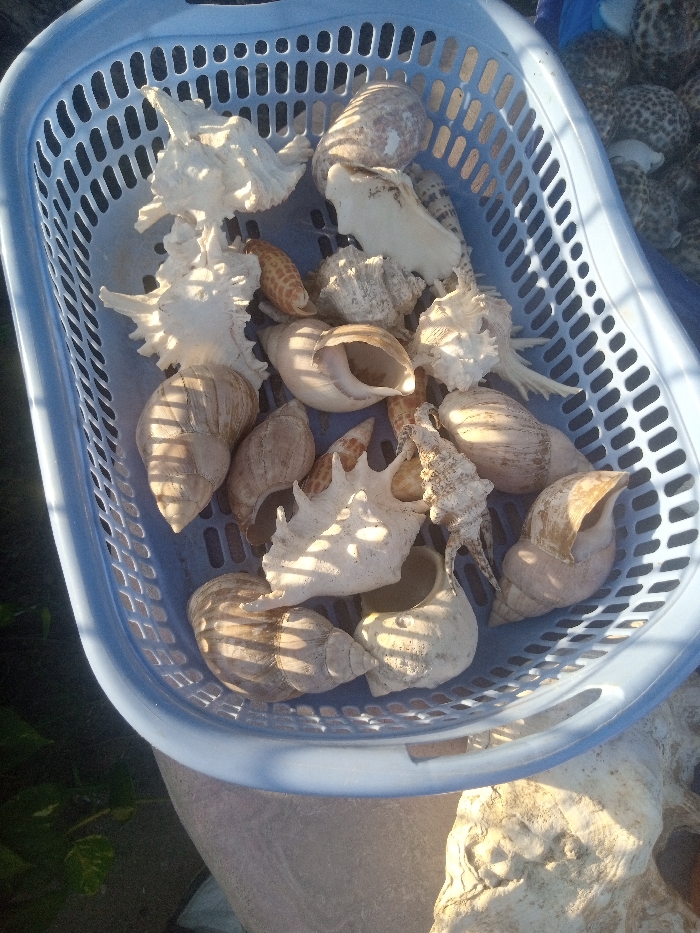
The image displays an overhead view of a light blue rectangular plastic basket containing a varied collection of seashells, situated in the Makadara/Mji Wa Kale ward, Kenya. The basket, constructed from perforated plastic, exhibits a grid pattern and features integrated handles on its shorter sides. It is filled with approximately two dozen marine gastropod shells of various sizes and species. Dominant shell types include several large, off-white, spiky conch shells (e.g., *Murex* or *Strombus* species), which feature prominent spines and ridges. Interspersed among these are numerous smooth, spiraling shells in shades of beige, cream, and light brown, some displaying subtle banding or blotchy patterns. One smaller, elongated shell with a distinct reddish-brown checkered pattern is also visible. The shells are casually piled, appearing natural and unpolished. Strong, directional sunlight illuminates the scene from the upper right, casting sharp, striped shadows from the basket's perforations across the shells and the basket's interior, indicating an outdoor setting. The immediate environment includes indistinct dark green foliage visible to the bottom left. To the bottom right, a textured, lighter-colored natural object, possibly coral or another large shell, is partially visible. In the upper right corner, a dark, out-of-focus object with a mottled pattern, possibly more shells or fabric, is discernible. No people, specific actions, or direct interactions are depicted.
Makadara/Mji Wa Kale ward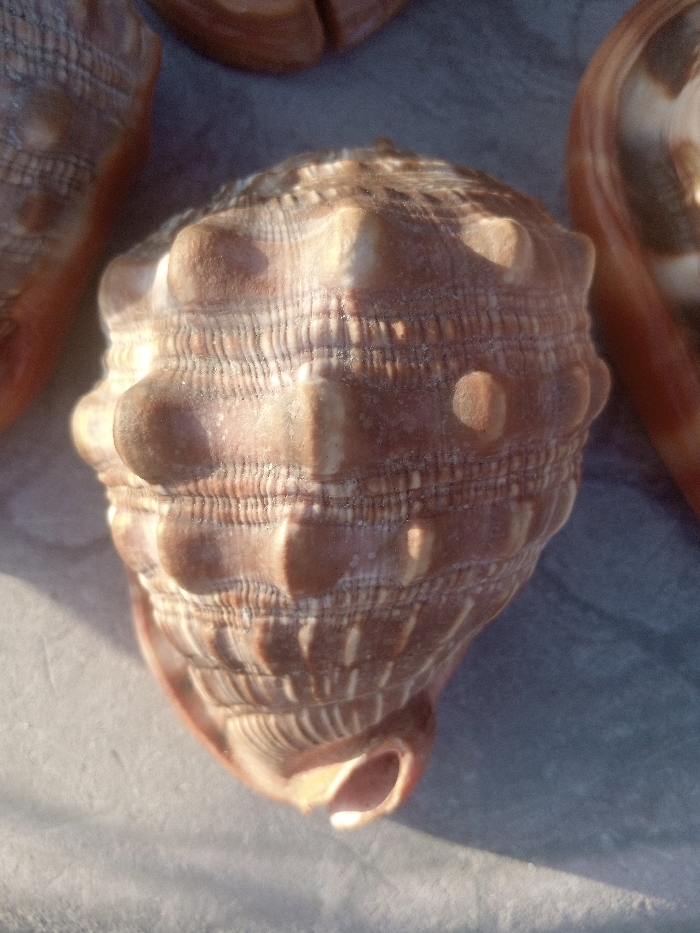
A robust gastropod seashell, approximately 15-20 cm in length, is depicted in a close-up, top-down view, positioned on a light gray, textured surface in Makadara/Mji Wa Kale ward, Kenya. The shell exhibits a light brown to tan coloration with subtle reddish-brown hues, featuring a prominent spiral form with a distinct series of rounded, nodular protrusions arranged in rows along its body whorl. The surface is further characterized by numerous fine, horizontal growth ridges. Strong directional lighting, likely sunlight, illuminates the shell from the upper left, casting distinct shadows to the right of its features, enhancing its three-dimensional texture. Portions of two other similar seashells are partially visible and blurred in the upper left and upper right background. No people, actions, or interactions are present in the scene.
Makadara/Mji Wa Kale ward