Vijaypur, India
9 memories from Vijaypur, India

The image depicts an outdoor courtyard scene on a sunny day, likely in Vijaypur, India. In the foreground, a tiled patio features a prominent water hose coiled on the ground. A blue bucket and a shovel are positioned near a concrete wall, which forms the boundary of the courtyard. Clothes, including a yellow shirt and dark blue trousers, are hung on a clothesline strung across the wall. Behind the wall, several trees with lush green foliage are visible, with a light-colored building situated in the background. The building has a distinct architectural style, possibly indicating it's a residential or religious structure, with decorative elements on its roofline. The overall impression is one of a domestic or community space, bathed in bright sunlight.
Vijaypur
A white car is parked on a paved surface with a patterned design. In front of the car, there is a cot with clothes piled on it. A utility pole stands to the left of the car, and lush green trees are visible behind it. A concrete wall runs along the background, with an Indian flag mounted on a pole above it. The sky is clear and bright, suggesting a sunny day. The location is identified as Vijaypur, India.
Vijaypur
The image depicts an outdoor scene in Vijaypur, India, focusing on a storage area near a building entrance. The foreground is dominated by a grey marble-patterned floor with dark grey grout lines forming a diamond pattern. In the middle ground, several large sacks of building materials, likely cement or plaster, are piled on the floor. A blue plastic bucket containing some debris sits to the right of the sacks. A broom made of dried twigs with a green tie is leaning against the sacks. To the left of the sacks, a white building pillar with marble-like cladding is visible. In the background, the wall features two distinct tile patterns: a lower section with horizontal purple and white striped tiles, and an upper section with dark grey square tiles arranged in a grid with a raised, diamond-shaped pattern. A black plastic chair is placed against the striped wall, with some fabric draped over its back. Leaning against the wall are large flat boards, possibly construction materials. To the far right, a black metal shoe rack is partially visible, holding several pairs of shoes and sandals. A blue and white floral patterned fabric is draped over the top of the shoe rack, partially obscuring it. A green plastic bag rests on top of this fabric. The overall impression is of a temporary storage area for construction materials, possibly outside a residential or commercial building in Vijaypur. No people are present in the image.
Vijaypur
An artificial vine with red flowers and green leaves hangs down a tiled wall. The tiles are a mix of white and dark brown stripes. To the right of the vine, a dark brown curtain with a white pattern hangs. The background appears to be a light pink wall. There are no people or actions depicted. The location is a room in Vijaypur, India.
Vijaypur
A bright pink stuffed dog toy with a white muzzle and a red tongue sticking out is placed on a black metal shelf. Behind the toy, a beige and brown patterned wallpaper is visible. Above the pink toy, another stuffed toy, partially visible, appears to be yellow with pink and red accents. The shelf is part of a multi-tiered black metal stand. The bottom of the image shows parts of two framed pictures. The overall scene suggests an indoor domestic setting, likely a room in a home. There are no visible people or outdoor elements. The image does not provide any specific details about the location within Vijaypur, India, beyond it being an indoor environment.
Vijaypur
The image shows three teddy bears displayed on a black metal shelf. The top teddy bear is a light pink color, wearing a red hat with a pattern, and holding two red heart-shaped objects. The middle teddy bear is yellow and fluffy. The bottom teddy bear is red and is holding a white heart-shaped object with writing on it. The shelf is positioned against a wall with a patterned tile design. Above the tiles, there is a section of horizontal wood-like paneling. The overall scene appears to be indoors. The image does not provide any information about the city of Vijaypur, India, or any specific location details within it.
Vijaypur
The image is a photograph of a university examination paper. The paper is for the course "ORGANISATIONAL BEHAVIOUR" and has a course code of MCOM C 152. The paper is divided into two sections, A and B, and is scheduled for external examination. The total time for the examination is 3:00 Hours, with a maximum mark of 70. Section A comprises 4 questions of 5 marks each, and all questions are compulsory. The questions in Section A are: 1. What is a Group? Explain the Benefits of groups in an organization. 2. What are the hygiene factors and dissatisfiers of Herzberg theory of motivation? 3. Define a Conflict. What is the significance of conflict in an organization? Explain organizational development. 4. Transactional Analysis helps in understanding individual behavior. Do you agree with the statement? Section B comprises 6 questions of 10 marks each. Students are required to attempt any 5 questions. The questions in Section B are: 1. P. Sibba Rao, Organisational behaviour, Himalaya Publishing House, Indore, M. P., 12th March 2017. 2. Fred Luthans, Organisational Behaviour, McGraw Hill Companies, 2005. 3. K. Aswathappa, G. Sudarsana Reddy, Management and Organisational Behaviour, Himalaya Publishing House, 2020. 4. R.R. Kapoor, Organisational Behaviour, Black & Black, 2024. 5. Define Organisational Change. How an organisation can manage resistance to change through a specific strategy? 6. "Types of groups in an organisation may lead dynamic approachability" comment on this statement. 7. Explain the theories of Motivation proposed by Victor Vroom, and Porter and Lawler. 8. Define the term Organisational Behavior. There is also a section labeled "NOTE FOR PAPER SETTING" which states that the paper will be divided into two sections, covering the whole of the syllabus. Each unit will comprise of four questions of short answer type from all four units, selecting one from each unit. All questions will be compulsory and each question will carry 5 marks (4 x 5 = 20 marks). There is also a section for one long answer type question from all four units, selecting at least one question from each unit. Each question will carry 5 marks (4 x 5 = 20 marks). This contradicts the section descriptions for the exam paper. Additionally, there is a note about "Internal Assessment Assignment will be of 30 Marks". The text at the top right of the image indicates "Centre for Distance and Online Education", "University of Jammu", and "External Examination".
Vijaypur
The image is a close-up, slightly angled shot of a document with printed text. The document appears to be a syllabus or course outline, likely from a university, as indicated by "UNIVERSITY OF JAMMU" and "M.COM. Semester - I (NON-CBCS)" at the top. The main title of the document is "ORGANISATIONAL BEHAVIOUR". Key details from the text include: - Course Code: MCOM C152 - Credit: 4 - Time: 3.00 Hrs. - Max Marks: 100 Marks, External: 70 Marks, Internal: 30 Marks - Syllabus for examinations to be held in 2025, 2026 & 2027 onwards. - Course Objectives and Course Outcomes are listed. - The document is divided into Units, with "UNIT I INTRODUCTION" and "UNIT II DIMENSIONS OF INDIVIDUAL BEHAVIOUR" visible. The text is printed in black on a light-colored paper, with some shadows and slight blurriness due to the photograph. The background is out of focus and appears to be a flat surface, possibly a table. There are no people, actions, or interactions depicted. The environment is that of a document being presented for viewing, likely in an academic setting. The location "VIJAYPUR" is not mentioned or depicted in the image.
Vijaypur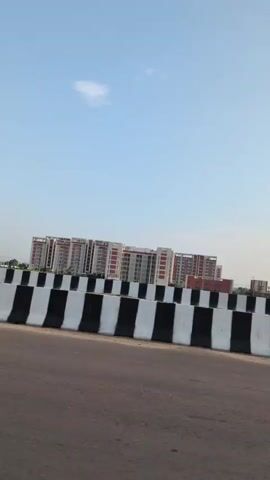
The video shows a view of a highway with a rider on a motorcycle in the foreground. In the background, there are several tall apartment buildings and a clear blue sky. The highway is separated by a barrier with black and white stripes. The rider on the motorcycle is wearing a helmet and is moving across the frame.
Vijaypur