
Stake attention in this memory
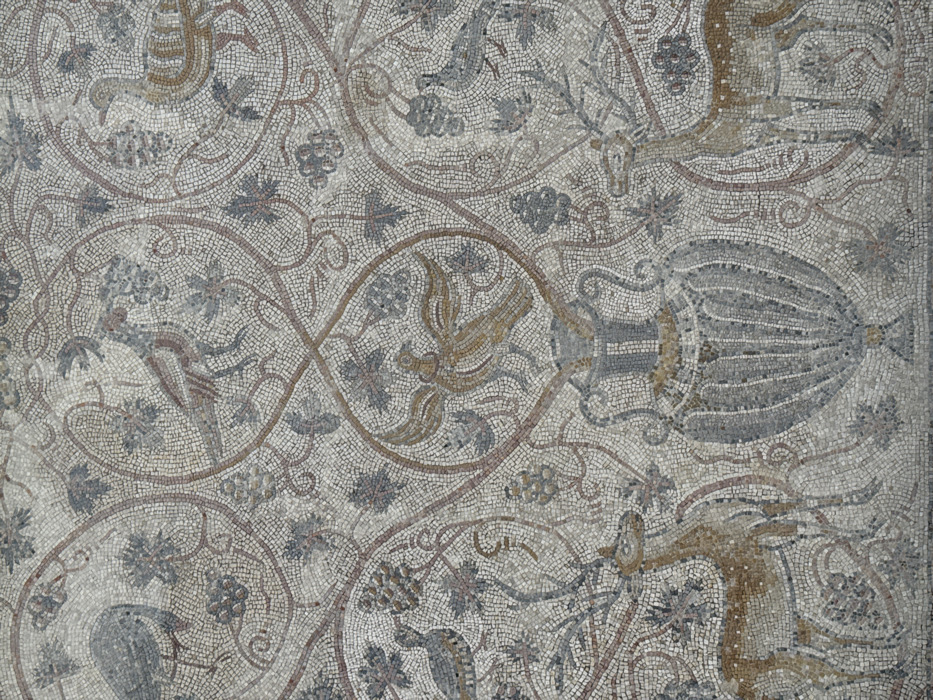
This image depicts a large, intricate mosaic pavement, identified as the "Birds Mosaic" from Caesarea Maritima, currently displayed at the Eretz Israel Museum in Tel-Aviv, Israel. The mosaic features a symmetrical, flowing design originating from a prominent, fluted krater (vase) positioned at the bottom center. From this krater, an extensive vine scroll emerges, developing into a complex network of interconnected medallions across the entire surface. Within these vine-formed medallions and integrated into the surrounding scrollwork, various animal and botanical subjects are meticulously rendered. Two light-brown deer, depicted with antlers, stand symmetrically on either side of the central krater, facing inwards. Numerous birds are scattered throughout the medallions, including larger, peacock-like figures and smaller perching birds, all intricately composed of tesserae. Grape clusters and various vine leaves are prominently integrated into the decorative scroll pattern. The mosaic employs a muted color palette, primarily consisting of shades of gray, brown, reddish-brown, and off-white for the background. Darker tesserae in blues and grays are used for some foliage and bird details. The tesserae are small and tightly set, characteristic of ancient Roman or Byzantine mosaic craftsmanship. The pavement shows signs of age, with some minor discoloration and possible missing tesserae, but remains largely intact, showcasing its original detailed artistry.
Symbol
09137
Volume
3,870
Creator
+$0.00
Revenue
+$0.00
TVL
$0.28
Loading AttnAds…