
Sign in
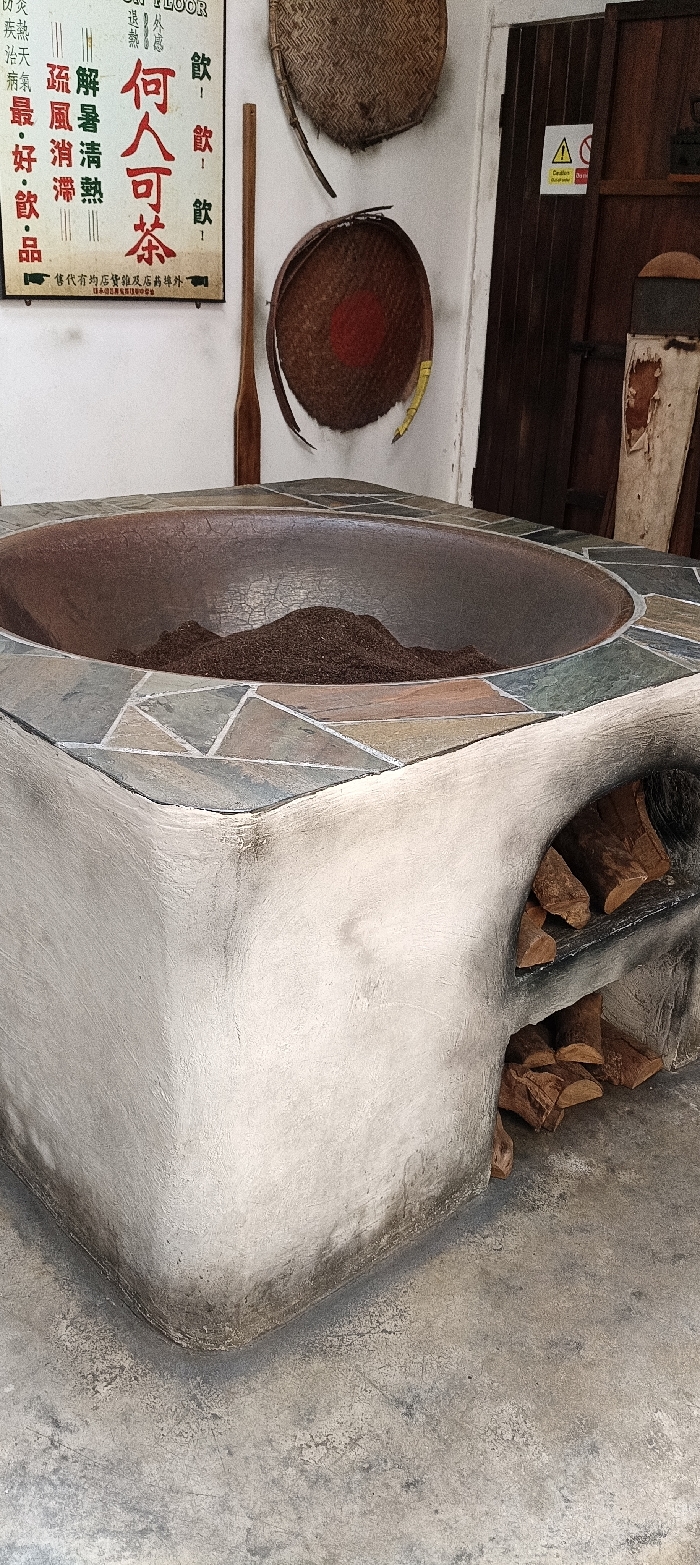
The image captures a rustic and traditional setting, likely an outdoor or semi-enclosed area, featuring a large, purpose-built structure with a basin.

In the foreground and center, a substantial, block-like structure dominates the lower part of the frame. It appears to be constructed from concrete or a similar material, with a textured, somewhat rough surface, and exhibits signs of weathering and discoloration, particularly around its base. On the right side of this structure, there's an arched recess where neatly stacked pieces of chopped firewood are visible, suggesting its function as a stove or furnace. The top surface of this structure is adorned with irregularly shaped, multi-colored (greys, browns, greens, and muted blues) slate or stone tiles, creating a mosaic-like border around a large, circular, dark-colored basin. The basin itself appears to be made of metal or earthenware, showing signs of age with some visible cracks or texture on its inner surface. Inside the basin, a significant mound of dark, granular material is present, resembling dried herbs, tea leaves, or other organic matter.

The background consists of a light-colored, possibly white or off-white wall. On the left side of this wall, a vintage-style sign in portrait orientation is affixed. The sign features vertical columns of traditional Chinese characters, predominantly in red and black ink. The visible text, as transcribed by OCR, includes:
- "飲飲飲" (yǐn yǐn yǐn - drink, drink, drink)
- "何人可茶" (Hé Rén Kě Chá - Ho Yan Hor tea, a well-known Chinese herbal tea brand)
- "解暑清蒸" (jiě shǔ qīng zhēng - relieves summer heat and clears dampness)
- "疏風消滯" (shū fēng xiāo zhì - dispels wind and relieves stagnation)
- "妖妖糕最・好・飲・品" (yāo yāo gāo zuì・hǎo・yǐn・pǐn - this phrase seems to have some OCR errors, but the overall context likely points to the tea being the best drink/product)
- "售代有均店費雜及店药準外" (shòu dài yǒu jūn diàn fèi zá jí diàn yào zhǔn wài - likely referring to sales at various stores, pharmacies, etc.)
- "外" (wài - outside)
- "LOOR" (possibly a partial English word like "FLOOR" or "OUTDOOR" from an adjacent sign or object not fully captured)
- "退熱" (tuì rè - reduces fever)
- "Δ" (a triangle, possibly part of a logo or warning symbol).

To the right of the sign, leaning against the wall, is a long, flat wooden paddle or stirrer. Above and to the right of the paddle, two circular, woven baskets or trays hang on the wall. The upper basket is lighter in color and appears to be tightly woven. The lower basket is darker, larger, and shows more wear and tear, featuring a distinct red circle painted in its center and some yellow material attached to its rim.

Further to the right, a dark wooden door is partially visible, on which a yellow triangular warning sign with a black exclamation mark is attached, alongside a red circular sign with a diagonal line (prohibition symbol). On the far right edge of the image, another rustic wooden structure with peeling light-colored material is partially seen. The floor throughout the scene is made of concrete.

The overall impression is that of a traditional setup for preparing and serving herbal tea or medicine, emphasizing a historical or cultural context.
FM-uHS2K2

Feb 4, 2026

Ipoh, Malaysia

Stake attention in this memory

oven
wood
sign
pottery
hearth

The image captures a rustic and traditional setting, likely an outdoor or semi-enclosed area, featuring a large, purpose-built structure with a basin. In the foreground and center, a substantial, block-like structure dominates the lower part of the frame. It appears to be constructed from concrete or a similar material, with a textured, somewhat rough surface, and exhibits signs of weathering and discoloration, particularly around its base. On the right side of this structure, there's an arched recess where neatly stacked pieces of chopped firewood are visible, suggesting its function as a stove or furnace. The top surface of this structure is adorned with irregularly shaped, multi-colored (greys, browns, greens, and muted blues) slate or stone tiles, creating a mosaic-like border around a large, circular, dark-colored basin. The basin itself appears to be made of metal or earthenware, showing signs of age with some visible cracks or texture on its inner surface. Inside the basin, a significant mound of dark, granular material is present, resembling dried herbs, tea leaves, or other organic matter. The background consists of a light-colored, possibly white or off-white wall. On the left side of this wall, a vintage-style sign in portrait orientation is affixed. The sign features vertical columns of traditional Chinese characters, predominantly in red and black ink. The visible text, as transcribed by OCR, includes: - "飲飲飲" (yǐn yǐn yǐn - drink, drink, drink) - "何人可茶" (Hé Rén Kě Chá - Ho Yan Hor tea, a well-known Chinese herbal tea brand) - "解暑清蒸" (jiě shǔ qīng zhēng - relieves summer heat and clears dampness) - "疏風消滯" (shū fēng xiāo zhì - dispels wind and relieves stagnation) - "妖妖糕最・好・飲・品" (yāo yāo gāo zuì・hǎo・yǐn・pǐn - this phrase seems to have some OCR errors, but the overall context likely points to the tea being the best drink/product) - "售代有均店費雜及店药準外" (shòu dài yǒu jūn diàn fèi zá jí diàn yào zhǔn wài - likely referring to sales at various stores, pharmacies, etc.) - "外" (wài - outside) - "LOOR" (possibly a partial English word like "FLOOR" or "OUTDOOR" from an adjacent sign or object not fully captured) - "退熱" (tuì rè - reduces fever) - "Δ" (a triangle, possibly part of a logo or warning symbol). To the right of the sign, leaning against the wall, is a long, flat wooden paddle or stirrer. Above and to the right of the paddle, two circular, woven baskets or trays hang on the wall. The upper basket is lighter in color and appears to be tightly woven. The lower basket is darker, larger, and shows more wear and tear, featuring a distinct red circle painted in its center and some yellow material attached to its rim. Further to the right, a dark wooden door is partially visible, on which a yellow triangular warning sign with a black exclamation mark is attached, alongside a red circular sign with a diagonal line (prohibition symbol). On the far right edge of the image, another rustic wooden structure with peeling light-colored material is partially seen. The floor throughout the scene is made of concrete. The overall impression is that of a traditional setup for preparing and serving herbal tea or medicine, emphasizing a historical or cultural context.

transactions
revenues
stakers
Earliest
Latest
Highest stake

No transactions found

More from this user

More from Ipoh

FM-uHS2K2

Feb 4, 2026

Ipoh, Malaysia

Licensed under Creative Commons Attribution 4.0 International License. You are free to share and adapt this content with proper attribution.