
Stake attention in this memory
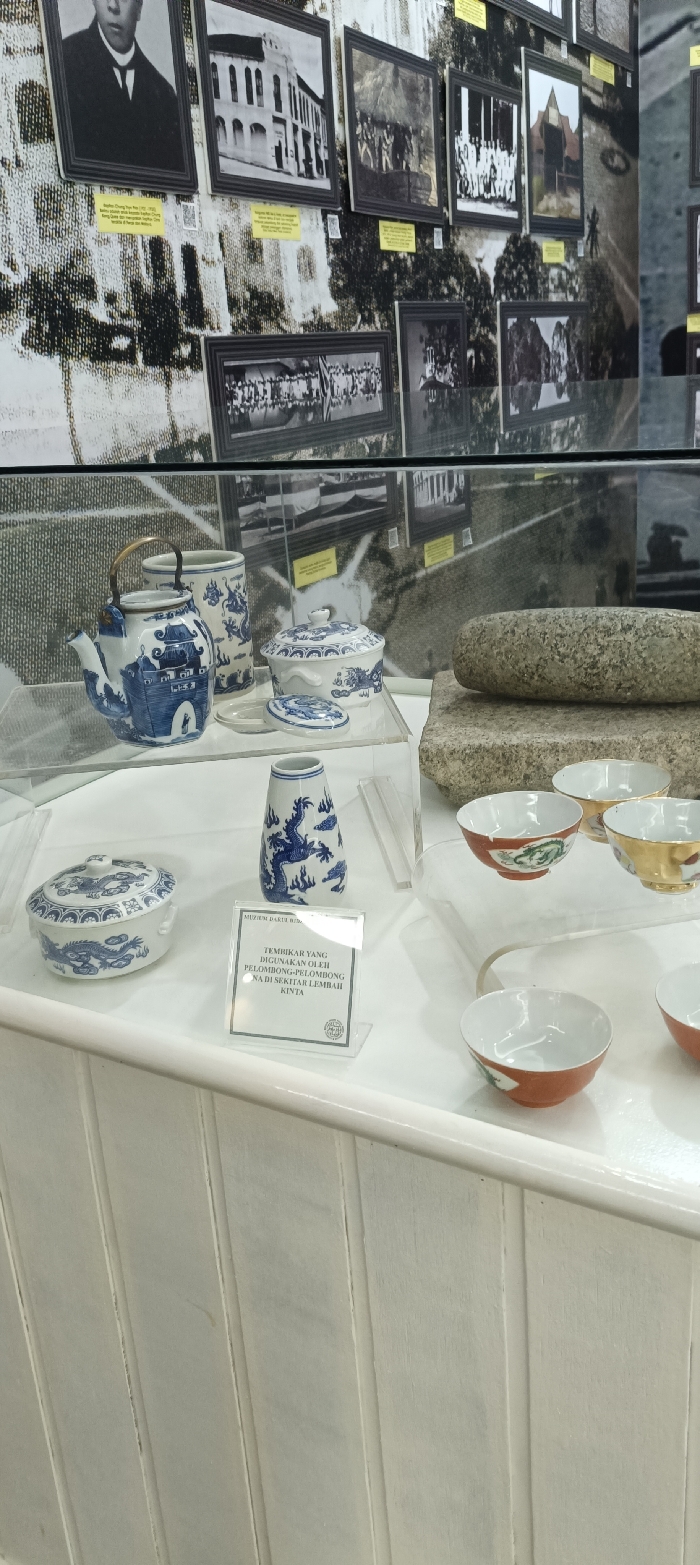
The image captures a detailed display within what appears to be a museum or historical exhibition. The scene is divided into two main sections: a wall display of framed photographs at the top and a glass-encased collection of artifacts below. The upper section features numerous black and white framed photographs mounted on a textured, light-colored background that resembles an old, faded mural or patterned wallpaper. The frames are dark, possibly black or dark wood. One prominent photo on the far left depicts a portrait of a man in a dark suit, tie, and white collared shirt, identified by a yellow label beneath it as "Kapitan Chung Keng Kwee (1822 - 1901)". The accompanying text further describes him as "Seorang Kapitan Cina yang diiktiraf oleh Residen British dan memerintah Taiping. Dia tiba di Perak dari Melaka." Next to this, another framed photo shows a historical street scene with two-story buildings and what looks like an early 20th-century streetscape. Other visible photographs include group portraits of people, some in traditional attire, and various historical buildings or landscapes. Small yellow information labels and QR codes are placed below several of the photos. Below the wall display, a clear glass shelf encloses a collection of artifacts. Reflections of the upper wall and photos are visible on the glass surface. On the left side of this shelf, there is an ornate blue and white ceramic teapot with intricate landscape or architectural designs and a brass handle. Next to it stands a tall, cylindrical ceramic vase or container, also in blue and white, decorated with dragon motifs. Further right, a lidded ceramic dish or bowl with similar blue and white dragon patterns and a separate small, round lid are displayed. On the right side of this upper display shelf, two large, grey, rough-hewn stone objects are arranged: a flat, rectangular base stone and a cylindrical stone resting on top, consistent with traditional grinding stones. The lower part of the display case, beneath the glass shelf, holds more items. On the far left, another small, lidded ceramic container with blue and white dragon designs is visible. Adjacent to it, a smaller, tapering vase or cup, predominantly white with blue dragon patterns, is displayed. In the center of this lower shelf, a clear acrylic stand holds a white information plaque with text in Malay. The plaque reads: "Muzium Daku Bukit Merah - TEMBIKAR YANG DIGUNAKAN OLEH PELOMBONG-PELOMBONG NA DI SEKITAR LEMBAH KINTA" (Bukit Merah Daku Museum - CERAMICS USED BY MINERS IN THE KINTA VALLEY AREA). To the right of this plaque, several small, shallow ceramic bowls are arranged, some on clear acrylic risers. These bowls feature different designs: some are white with a red-orange band around the rim and green dragon illustrations, while others have a gold rim and more intricate, possibly colorful, interior patterns. The base of the entire display is a white, paneled wooden structure. The overall lighting suggests an indoor museum environment, possibly with artificial lighting illuminating the exhibits. The artifacts appear well-preserved and are presented for historical or cultural appreciation, focusing on regional history, particularly related to mining and Chinese community leaders in the Kinta Valley.
No transactions found